
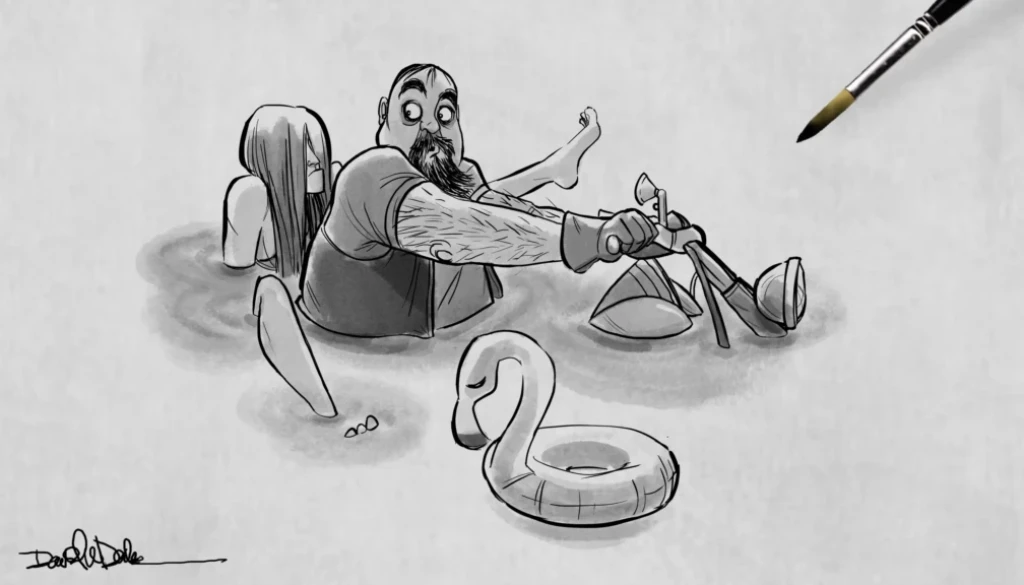
This original character design illustration captures a moment between motion and stillness. A bearded man grips the handlebars of a motorcycle submerged in water. At the same time, a mysterious figure rises beside him, partially hidden and unreadable. The scene sits somewhere between reality and dream, where physical space gives way to emotional tension.
From the start, this image explores visual storytelling for animation. Instead of presenting a complete narrative, it invites questions. Who are these characters? How did they get here? And more importantly, what happens next?
The Idea Behind This Original Character Design Illustration
This piece began with a simple idea: movement interrupted. A motorcycle usually represents speed and control. However, placing it underwater removes both. In their place, resistance and uncertainty take over. That contrast drives the entire image.
At the same time, the second figure introduces ambiguity. Their presence shifts the scene from physical to psychological. They could represent a threat, a memory, or something else entirely. The image leaves that open on purpose.
Original Character Design Illustration and Storytelling
In animation, character design often starts with silhouette, gesture, and clarity. Here, the approach leans more on atmosphere. The rider’s posture, combined with the stillness of the water, creates tension without action. As a result, the moment feels suspended in time.
Images like this often serve as early development work. They help define tone before a script exists. In this case, the goal was discovery, not explanation. This approach also connects to my broader work in animation storytelling and concept design, where ideas begin visually before they become narrative.
Visual Style and Black-and-White Technique
The illustration uses a black-and-white style to emphasize contrast and depth. Without color, the focus shifts to composition and mood. As a result, the viewer pays closer attention to form and texture.
In addition, the water becomes a key visual device. It acts as both a barrier and a distortion. It separates the characters while also connecting them within the same space. This layered effect strengthens the surreal tone of the image.
For additional context, this type of work connects to a broader tradition of visual development in animation. Animation concept art and visual development often begin with images like this, where mood leads and story follows.
Original Animation Concept Art and Portfolio Work
This piece is part of a larger body of original animation concept art. The focus remains on mood, character, and implied narrative. Rather than telling a full story, the goal is to create a moment that suggests something bigger.
As a portfolio piece, this original character design illustration shows how tension and composition can carry a scene. It reflects the early stages of animation development, where ideas take shape visually before they become fully structured stories.
“Every story starts with a moment you can’t fully explain yet.”
This piece lives in that space.