
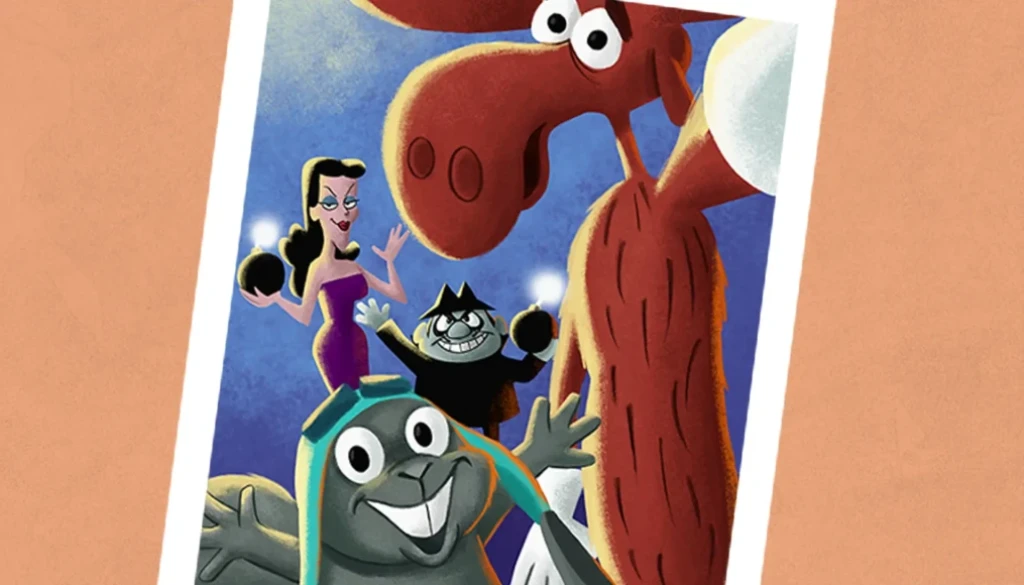
There is something strangely familiar about Rocky and Bullwinkle when viewed through the lens of Rocky and Bullwinkle and the internet. At first glance, the series feels like a product of a much simpler time—minimal animation, exaggerated characters, and straightforward storytelling. However, the more closely you examine it, the more it begins to resemble the fast-paced, fragmented way we consume content today.
Rocky and Bullwinkle and the Internet: A Shared Structure
The original show was not built like traditional television. Instead, it unfolded in short segments—quick bursts of story, humor, and commentary that constantly shifted tone and perspective. One moment featured a serialized cliffhanger, while the next delivered parody or satire. This format closely mirrors how modern audiences scroll through content on platforms like YouTube and TikTok.
Rather than asking viewers to commit to a single narrative, the show provided a sequence of ideas, each designed to capture attention quickly. In that sense, it feels less like classic television and more like an early version of a content feed.
“Rocky and Bullwinkle wasn’t just telling a story—it was offering a sequence of content experiences.”
For more analysis on how media continues to evolve, visit Derksworld for additional insights on storytelling and culture.
Meta Humor and Modern Content
Another defining feature of the series is its self-awareness. Characters frequently break the fourth wall, and the narrator often interrupts the story to comment on the action. Today, this kind of meta humor is a core part of digital culture, where creators regularly acknowledge their audience and the platforms they use.
In many ways, this style of humor feels tailor-made for the internet era. It is fast, layered, and often self-referential, aligning closely with how modern audiences engage with content.
Why Rocky and Bullwinkle and the Internet Still Matter
This illustration was created to explore that connection visually. Instead of presenting the characters purely as nostalgic icons, the goal was to place them within a modern context—one that reflects the fragmented, high-speed nature of today’s media landscape.
Ultimately, this project is not about nostalgia. It is about recognizing patterns. The connection between Rocky and Bullwinkle and the internet highlights how storytelling techniques evolve, yet often return in new forms. What once felt experimental now feels completely natural in the digital age.
“It didn’t predict the internet—but it feels like it belongs to it.”
For historical context on the series, see the Encyclopedia Britannica entry on Rocky and Bullwinkle, which outlines its influence and legacy.