The Creator-Built Hit Just Became Hollywood’s Newest Power Move
Two films made outside the studio system just rewrote the rules on what a hit looks like, where it comes from, and who gets to make it next.
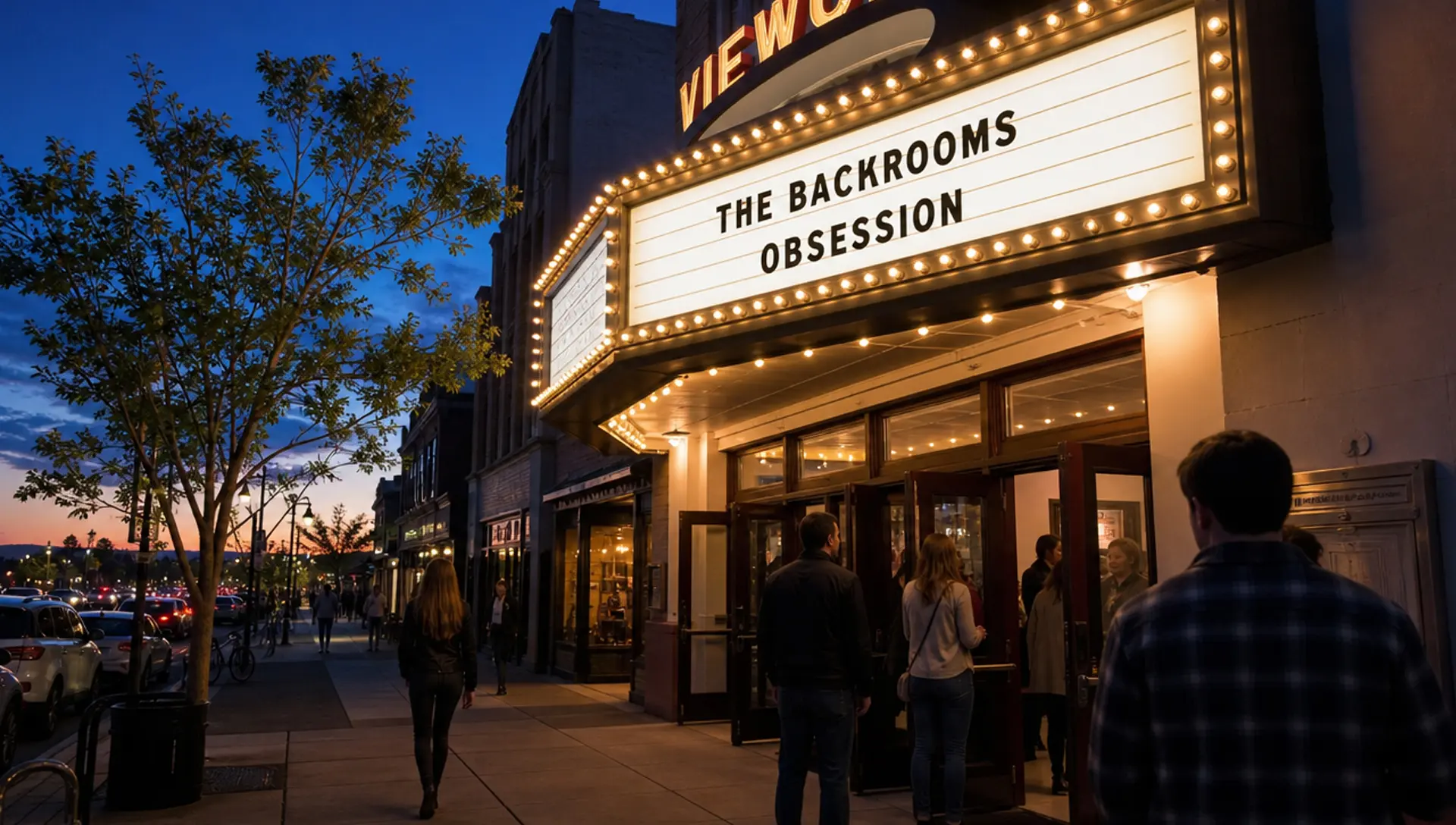
Kane Parsons was a teenager when he started posting horror videos on YouTube based on a piece of internet mythology called the Backrooms. He wasn’t pitching studios. He wasn’t in film school. He was building an audience around a world he found genuinely terrifying, and he kept going until that audience was too large to ignore. By the time his feature film debuted, he was 20 years old. It opened at number one and became the biggest opening weekend in A24 history.
Around the same time, a film called Obsession, directed by Curry Barker and made for well under a million dollars, crossed $100 million domestically through a theatrical release with Focus Features. Barker had spent years building his filmmaking voice through online video before anyone in Hollywood paid attention. Then they had to.
These two films are worth paying attention to, not simply because they succeeded, but because of what their success reveals about where the industry is actually heading.
Hollywood is no longer discovering every important filmmaker through the traditional studio pipeline.
Creator-built audiences are becoming a form of leverage because they prove demand before a studio spends heavily on production and marketing.
The next major film franchise may not begin inside a studio. It may begin on YouTube, TikTok, Discord, or inside a creator community that already cares.
Watch: Backrooms Official Trailer
The Numbers Changed the Conversation
Hollywood gets independent hits every few years. What’s different about Backrooms and Obsession is the math behind them. A studio can make ten films at this budget level for the cost of a single tentpole production. If one breaks out the way Backrooms did, the return is enormous. If it doesn’t, the loss is manageable. That risk profile is starting to look very attractive inside studios that have spent the last decade betting everything on franchise blockbusters.
The question that used to dominate strategy meetings was how to build the next massive franchise from scratch. The question now is whether that approach still makes sense when films like these arrive with audiences already built, fan communities already active, and creative worlds that people already care about. The math on spending $250 million to manufacture that from nothing is getting harder to justify.
Hollywood is moving from trying to manufacture enthusiasm to finding creators who have already earned it.
That changes the calculation. A studio can still bring financing, marketing muscle, theatrical distribution, and awards-season polish. But the emotional spark may now come from somewhere else. It may come from a creator who spent years making strange work online until an audience formed around it.
The Path Into Hollywood Just Reversed
For most of film history, the path ran in one direction. A studio decided what to make, invested in building an audience, and hoped the market would respond. Creators waited to be discovered and permitted to work at scale. That model assumed the studio sat at the center of everything, controlling access to both resources and audiences.
What Parsons and Barker represent is something structurally different. Neither of them waited. Parsons built an audience for the Backrooms world online before anyone in Hollywood had seen his work. By the time A24 got involved, the audience had already validated the idea. Barker followed the same path. The community came first. The studio came later.
Watch: The Original Backrooms Video
That sequence completely changes who holds leverage in the relationship. The conversation happening inside studios right now isn’t about finding the next Marvel property. It’s about finding the next creator who already has a world people care about and an audience ready to show up for it.
The most valuable thing a creator can bring into a studio meeting may not be a script. It may be proof that people already care about the world the creator has built.
Watch: Obsession Official Trailer
Young Audiences Came Back to Theaters. Nobody Expected That.
For years, the working assumption inside Hollywood was that younger audiences had moved on from theaters for good. Streaming had made staying home the easier choice, and the industry mostly accepted that as permanent. Then Backrooms and Obsession opened, and the numbers said something different.
What those films proved is that young audiences will show up when something feels genuinely worth the trip. Both films built real anticipation online before they ever opened, and fans responded by going to see them together, because that shared experience was part of the point. Streaming can deliver a film. It cannot deliver that.
The theater is not dead to young audiences. The ordinary moviegoing habit is. The event still matters.
That distinction matters because it changes how studios should think about theatrical releases. Young audiences may not show up simply because a film exists. They show up when the release feels like a shared cultural moment, especially when the anticipation has already been built online.
Horror Keeps Proving the Point
There’s a reason so many of these stories keep coming out of horror. The genre has become Hollywood’s most reliable laboratory for exactly this kind of discovery. A horror film can be produced at a fraction of the cost of almost any other genre. If it connects, the financial return can be remarkable. If it doesn’t, the studio absorbs the loss and moves on. That structure makes horror the natural place to take chances on new filmmakers, new worlds, and new audiences.
Jordan Peele built a career through that door. So did Damien Leone and Parker Finn. Parsons and Barker are the newest names in that line. The pattern keeps repeating because the economics keep rewarding it. Horror gives emerging filmmakers room to prove themselves at a scale that actually matters.
Horror works especially well in the creator economy because fear travels quickly online. A disturbing image, a strange premise, or a mysterious world can move through culture before a feature film ever exists.
Original Ideas Are Becoming Less Risky, Not More
There’s an irony buried in all of this. The success of creator-driven films may actually push studios toward more original content, not less. Not because executives have suddenly become interested in artistic risk-taking, but because the old definition of risk has shifted. Original ideas used to feel dangerous because studios had to spend enormous amounts building awareness around something unfamiliar. The new model finds creators who already have that awareness and figures out how to scale what they’ve built.
That is a fundamentally different strategy, and it changes which projects look safe and which ones look expensive. A film with no existing audience and a $200 million budget is now the riskier proposition. A film built around a creator with a loyal community and a world people already inhabit is starting to look like the smarter bet.
The riskiest project may no longer be the original idea. It may be the expensive idea with no real audience behind it.
The Bigger Shift Underneath All of This
The most important thing about Backrooms and Obsession isn’t either film on its own. It’s that both started completely outside the Hollywood system and arrived at the center of it anyway. Twenty years ago, that path barely existed. Today, it feels increasingly normal, and the pace at which it’s becoming normal is accelerating.
The studio’s role in all of this is shifting from inventor to amplifier. From the place where ideas are born to the place where ideas that have already proven themselves get the resources to reach everyone. That’s a fundamental change in how creative power gets distributed, and it opens a door that didn’t exist a generation ago.
The next Hollywood power center may not be a studio lot. It may be a creator with a world, an audience, and enough momentum to make the industry come looking.
So if you’re a creator sitting on a world you believe in, the question worth asking is what’s actually stopping you. Kane Parsons didn’t wait for permission. He put the work on YouTube, kept going, and built something real before anyone in Hollywood knew his name. The platform is there. The audience is out there looking for something worth their time. The only thing that stands between an idea and its moment is the decision to start.
Related Reading
Continue exploring the changing entertainment landscape through DerksWorld’s coverage of industry, culture, and movies.