10 Animated Films of the 1990s That Found Their Audience and Became Cult Classics
The films selected for this list were chosen based on several key factors, including delayed audience recognition, the development of a dedicated fanbase, creative risk, and long-term cultural influence. Rather than achieving instant mainstream success, these animated films found their audiences over time through repeat viewing, word-of-mouth, and sustained relevance across generations.
With that context in mind, here are ten animated films from the 1990s that became cult classics—and why their cultural impact continues to grow.
The Nightmare Before Christmas (1993)
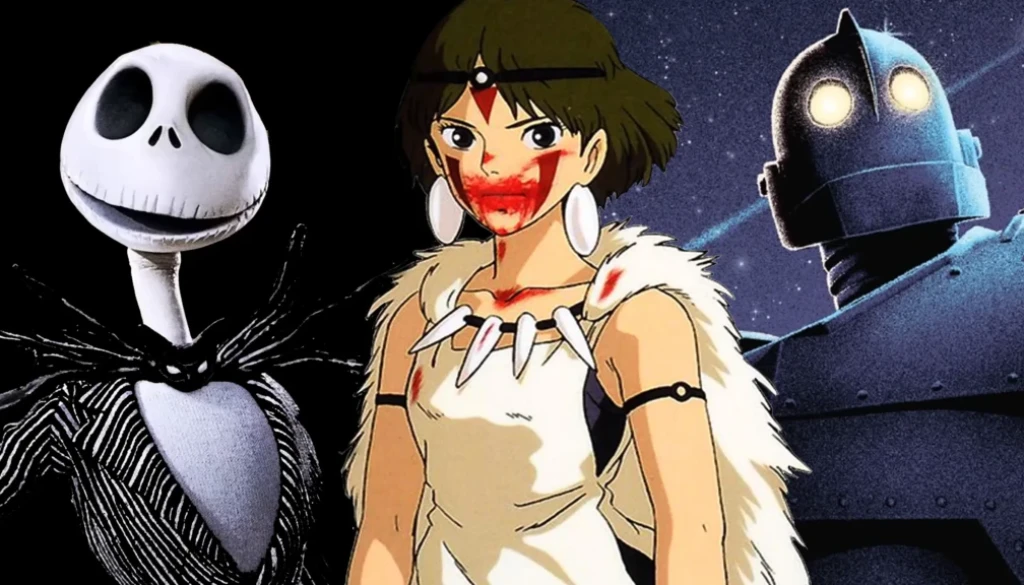
Produced by Tim Burton and directed by Henry Selick, The Nightmare Before Christmas defied easy categorization upon release. Its dark visual style, stop-motion animation, and genre-blending tone set it apart from traditional Disney animated films.
Over time, those differences became strengths. Danny Elfman’s music, the film’s outsider themes, and its Halloween-meets-Christmas ambiguity helped turn it into a year-round cultural ritual.
The Iron Giant (1999)
Despite critical acclaim, The Iron Giant struggled commercially due to limited marketing. Audiences who later discovered it found a deeply emotional story centered on empathy, choice, and sacrifice.
Set against Cold War fears, the film’s pacifist message resonated more strongly with repeat viewings. Like many animated films that became cult classics, its legacy grew through long-term audience devotion.
Princess Mononoke (1997)
Hayao Miyazaki’s Princess Mononoke challenged Western assumptions about animated storytelling. Rather than simple heroes and villains, it presented moral ambiguity, environmental conflict, and the cost of industrialization.
Its mature themes and detailed hand-drawn animation helped introduce global audiences to serious, adult-oriented anime.
Ghost in the Shell (1995)
Ghost in the Shell gained cult status through influence rather than popularity. Its philosophical exploration of identity, consciousness, and technology positioned it as a cornerstone of cyberpunk animation.
The film encouraged discussion and analysis, inspiring future works such as The Matrix.
Perfect Blue (1997)
A psychological thriller that pushed animation into unsettling territory, Perfect Blue explored fame, obsession, and fractured identity with rare intensity.
Its disturbing narrative limited mainstream appeal but attracted a devoted audience interested in bold, adult storytelling.
Batman: Mask of the Phantasm (1993)
Released quietly and overshadowed in theaters, Batman: Mask of the Phantasm found its audience through home video.
Its noir tone, emotional depth, and tragic romance elevated it beyond typical superhero animation.
South Park: Bigger, Longer & Uncut (1999)
An R-rated animated musical, South Park: Bigger, Longer & Uncut embraced controversy with sharp satire and original songs.
Its irreverent humor and political commentary resonated strongly with fans of the series.
A Goofy Movie (1995)
Initially overshadowed by Disney’s prestige releases, A Goofy Movie gained cult status through emotional sincerity.
Its relatable coming-of-age story and father-son relationship resonated more deeply over time.
James and the Giant Peach (1996)
Blending live-action and stop-motion animation, James and the Giant Peach stood apart from typical family films of the decade.
Its darker fairy-tale tone and surreal imagery ensured long-term appreciation.
The Thief and the Cobbler (1993)
Few animated films have a history as complex as The Thief and the Cobbler. Decades in production and released in multiple altered versions, it never reached a definitive final form.
Still, its intricate animation and ambitious vision fascinated animation enthusiasts.
Why These Animated Films Became Cult Classics Over Time
What unites these animated films that became cult classics is delayed recognition. Each embraced creative risk and trusted its audience, even when success wasn’t immediate.
Ultimately, cult classic animated films prove that animation history isn’t written on opening weekend. Instead, it’s written over time—through rediscovery, discussion, and devotion.