The phrase “Chuck Jones fired” is one of those that instantly changes how you see a film. What starts as a fun animation deep-cut can suddenly become a pivotal studio-era turning point.
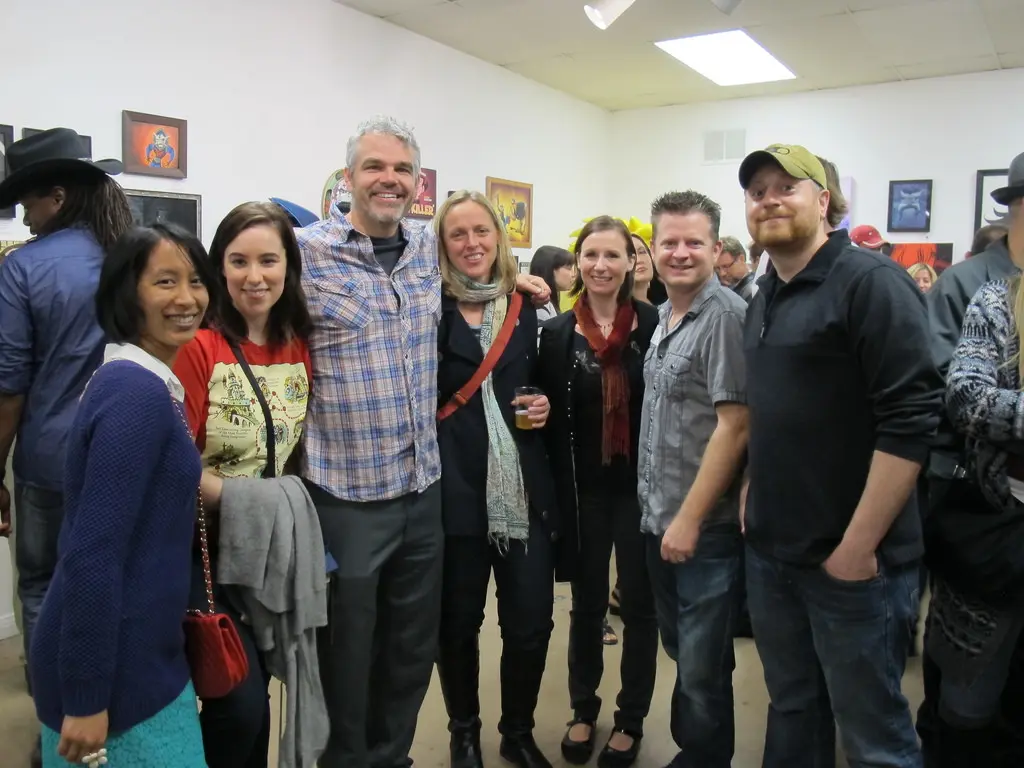
That’s exactly what happened for me while creating work for When Good Toons Go Bad: Villains of Animation at Van Eaton Galleries—a group show where 100 artists each reimagined an animated villain.
The premise sounded simple. The outcome had real history attached.
Choosing a Villain With History
With no restrictions on character choice, the challenge wasn’t deciding what to create—it was deciding what to leave behind. Animation is packed with famous villains, and many are already overrepresented in pop culture and gallery art.
I wanted to go off the beaten path.
That led me back to Gay Purr-ee (1962), an elegant, slightly odd animated feature produced by UPA and released by Warner Bros., with voices by Judy Garland, Robert Goulet, and Paul Frees.
For basic show and date context, Van Eaton keeps an event archive here: Van Eaton Galleries events.
Meowrice as a Creative Entry Point
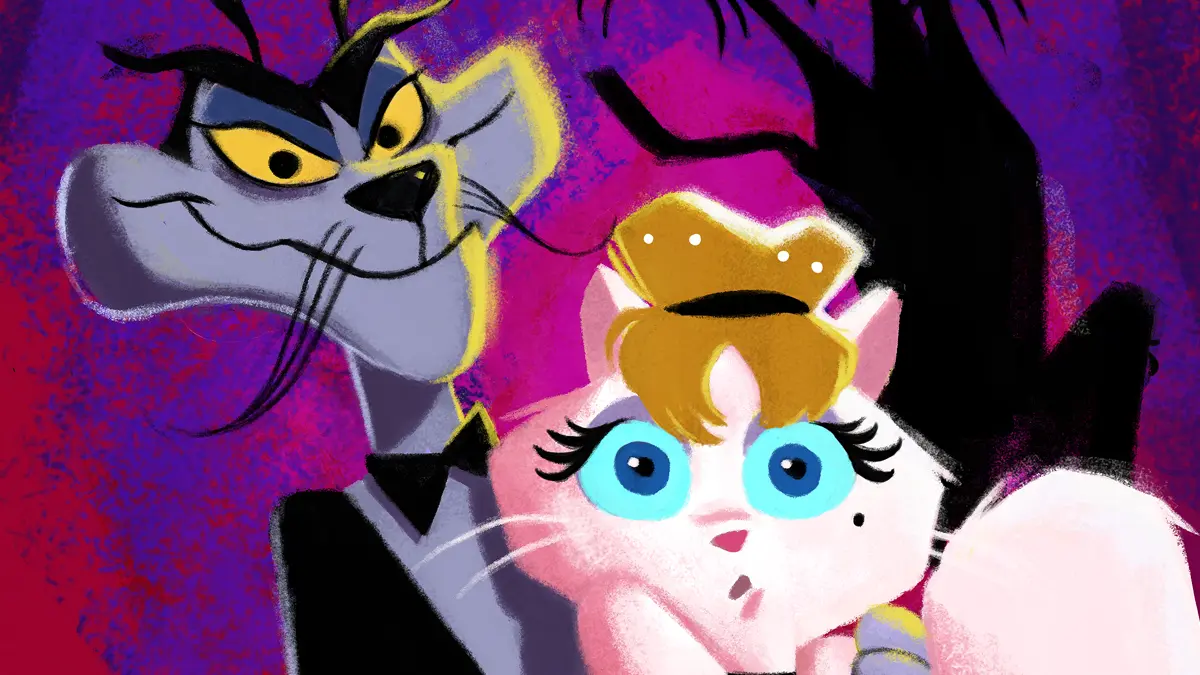
Meowrice isn’t a villain defined by brute force. He’s theatrical, calculated, and charming in a way that turns unsettling the longer you sit with it. He also fits perfectly inside UPA’s mid-century visual language.
That balance made him an ideal subject.
Working from limited reference—mostly stills and short clips—I built a composition that honored the film’s vibe while leaving room for my own interpretation. The final piece became Meowrice Makes His Move on Mewsette.
Van Eaton Galleries and the Power of Context
One of the strengths of Van Eaton Galleries is their respect for animation history. Their shows don’t just display artwork; they create context. They highlight how studios, artists, and creative risks intersect over time.
That context matters significantly in Gay Purr-ee. Once you dig into it, you encounter the story that still shocks people.
For a great overview of the show itself, IndieWire covered the event here: IndieWire’s show preview.
Chuck Jones Fired: The Turning Point
This is the part where Chuck Jones fired stops being trivia and starts being a real industry moment.
In 1962, Chuck Jones was under an exclusive contract with Warner Bros. During that period, he worked on Gay Purr-ee for UPA. When Warner Bros. discovered his involvement (as the film moved into distribution), he was terminated for violating that exclusivity agreement. His animation unit was also shut down soon after.
The irony is hard to miss: Warner Bros. ultimately distributed Gay Purr-ee.
And if you want a strong, animation-focused discussion of the film’s legacy, Cartoon Research has excellent coverage: Cartoon Research on Gay Purr-ee.
Jones later continued his legendary career, including directing How the Grinch Stole Christmas. But Gay Purr-ee remains the film most associated with that career jolt—one more example of how fragile creative freedom could be, even for the most celebrated artists.
Why This Balance Endures
This is where the gallery and the history converge.
When Good Toons Go Bad wasn’t just a showcase of villains. It was a chance to revisit overlooked characters and the creative risks tied to them. By placing Meowrice on the gallery wall, the work became part of a larger conversation—one that stretches from mid-century studios to contemporary exhibitions.
Sometimes a villain isn’t just a character.
Sometimes, they’re a doorway into history.
Keep Going
Be sure to read more on the gallery exhibition’s opening night by visiting Kristina Bustamante’s blog.