
Warner Bros. tried to bury Coyote vs. Acme. Like the character at its center, the movie refused to stay down.
Why Wile E. Coyote Still Works After 75 Years
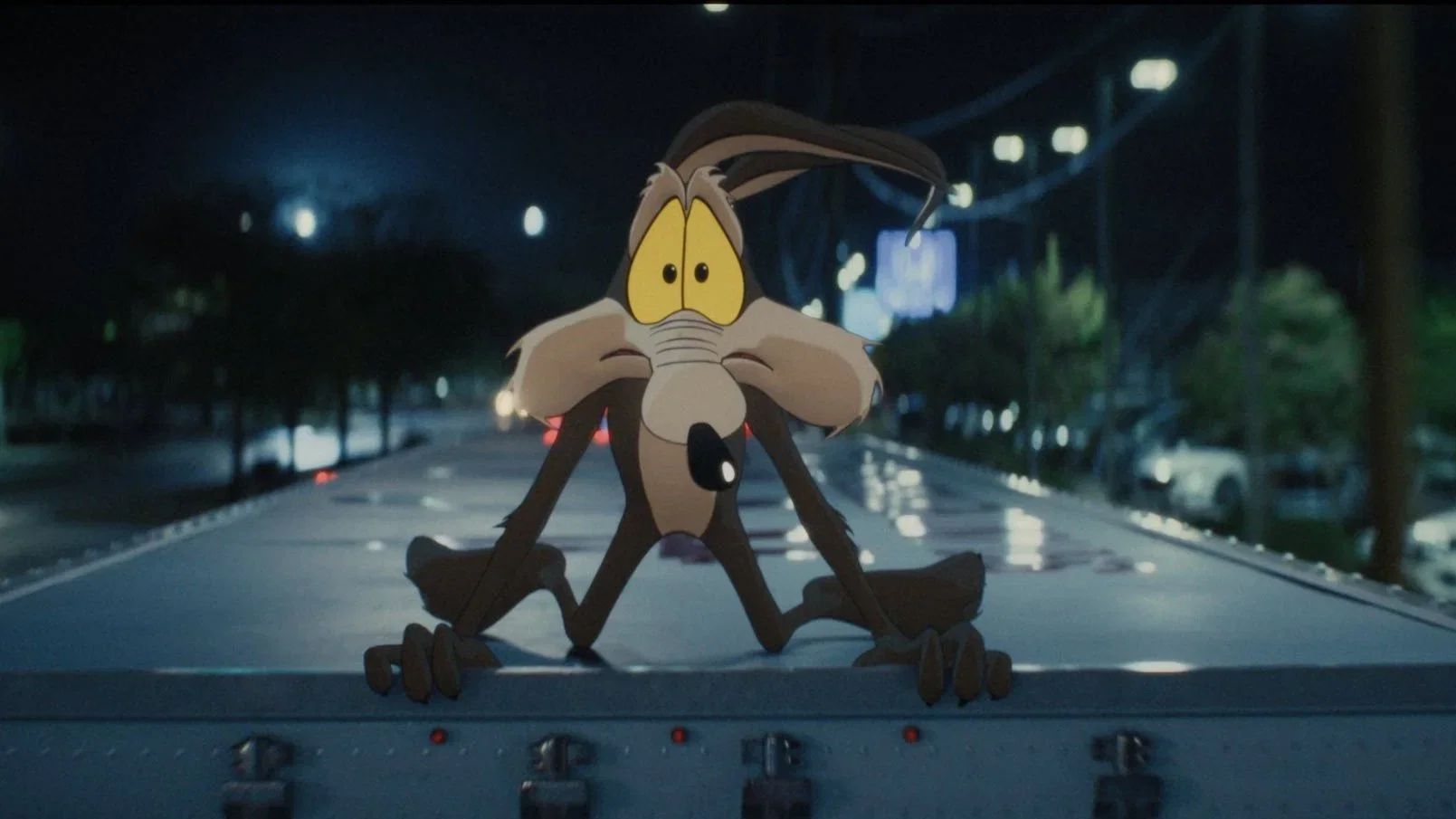
Warner Bros. had already dropped the anvil. By 2023, the studio held a finished cut of Coyote vs. Acme, its hybrid of live action and animation, already shot and edited, and test audiences had seen it and liked it. Then Warner Bros. Discovery announced it would never release the film, and for a while it looked as though nobody outside the studio would ever see it.
Then something very Wile E. Coyote happened, because the movie survived. An unusually public backlash from the animation community and its fans pushed Warner Bros. to let other distributors take a look. Ketchup Entertainment eventually acquired the film for a reported $50 million and handed it something that once seemed impossible, an actual theatrical release. The irony almost writes itself. Hollywood tried to dispose of a movie about a character who has spent more than three quarters of a century proving that nobody can dispose of him, and once again Wile E. Coyote picked himself up off the canyon floor.
A Chase Stripped to the Bone
Chuck Jones launched Wile E. Coyote and the Road Runner across the desert in Fast and Furry-ous, the 1949 Warner Bros. short written by Michael Maltese. The premise barely fills a sentence. Coyote wants Road Runner, so Coyote hatches a plan, the plan backfires, Coyote pays for it, and then the whole cycle starts over. The shorts offer almost no dialogue and even less backstory, and neither character needs an elaborate motivation. Viewers can drop into practically any Road Runner cartoon at any moment and grasp the situation within seconds.
Yet audiences keep watching more than 75 years later, and that staying power suggests Jones and Maltese accomplished something more sophisticated than the premise lets on. They took the familiar cartoon chase, boiled it down to its essential ingredients, and then built a set of rules around what remained. In their hands, the limitations became the comedy.
The Rules That Built a Universe
Jones famously laid out the Road Runner cartoons’ rulebook in his 1989 memoir, Chuck Amuck, and the list still circulates widely today. The Road Runner could never intentionally harm the Coyote, so Wile E. had to bring every disaster on himself, usually through his own schemes or through some gadget he ordered from the fictional ACME Corporation. The action never left the Southwestern desert, and the Road Runner never left the road. Dialogue all but vanished apart from that familiar “Beep-Beep,” while gravity remained the Coyote’s most dependable enemy.
Rather than restricting the possibilities, those rules created them. Once the audience understood how this universe worked, Jones no longer had to explain anything. We knew the enormous rocket strapped to Wile E.’s back would probably malfunction, and we knew that painting a tunnel on the side of a mountain could only end badly. What we didn’t know was exactly how it would go wrong, and that gap made all the difference. A Road Runner cartoon hands the audience enough information to anticipate the disaster while holding back just enough to keep the disaster funny. Jones understood that comedy often hits harder when the audience knows the rules.
The Half Second Before the Fall
Watch any of the classic shorts and notice how long Jones sometimes makes us wait for the punchline. Wile E. builds the machine, positions it, checks it and fires it up, and nothing happens. So he checks it again, while we sit there knowing full well this is a terrible idea. Then, every so often, Wile E. figures it out too, and he turns and looks straight at us.
That look carries the whole joke. For one brief moment, the character and the audience share exactly the same thought, and then the boulder lands or gravity finally notices that the Coyote has been standing on thin air. Jones and Maltese built the Road Runner shorts around sequences of visual gags, but timing turned those gags into character comedy. The explosion often wasn’t the funniest part. The laugh lived in the second before it, when Wile E. understood exactly what was coming and could do absolutely nothing to stop it.
That kind of joke needs no dialogue, and it doesn’t belong to any particular generation. It barely requires language at all, which helps explain why it travels so well across the decades. Jones understood that better than anyone, and he once summed up the series’ global reach in a single line.
“‘Beep-Beep!’ is the Esperanto of comedy.”
Chuck Jones, Chuck Amuck
Committed, Not Pathetic
On paper, Wile E. Coyote ranks among the greatest failures in popular culture. He has spent decades chasing a single goal and has almost nothing to show for it. Still, few of us think of him as pathetic, and somewhere along the way many of us start rooting for him.
The reason comes down to commitment. Wile E. is imaginative and resourceful, an inventor and engineer who also happens to be ACME’s most loyal customer. He builds extraordinarily complicated machines in the middle of the desert with little more than a wooden crate and an instruction manual, delivered by whatever passed for mail order in cartoon America. Then the machine explodes, so he orders another one.
His great flaw isn’t stupidity, since in many ways he’s remarkably intelligent. His real problem is obsession, because he cannot stop, and that’s exactly where a cartoon character starts to feel strangely human. Most of us have never strapped a rocket to a pair of roller skates, but nearly everyone knows the feeling of believing the next attempt will work because this time we’ve finally figured everything out. Then life drops an anvil, and eventually we try again. Jones himself pointed to that recognition as the secret to the Coyote’s longevity.
“He makes the same kind of errors we do.”
Chuck Jones, on Wile E. Coyote
The Customer Is Always Wrong
As the series continued, the ACME Corporation grew almost as important to the mythology as the Road Runner himself. ACME sold Wile E. everything from rockets and giant magnets to bird seed and contraptions that seemed to violate several basic principles of engineering and product safety. Eventually that raised an obvious question about why he kept buying this stuff.
In 1990, Ian Frazier took the question seriously enough to turn it into a brilliant piece of comic writing for The New Yorker. His “Coyote v. Acme” imagined Wile E. finally doing what generations of viewers might reasonably have suggested all along, and he sued. Frazier framed the piece as a product liability complaint filed on behalf of a client who had suffered years of catastrophic injuries using the company’s merchandise. The joke landed because he treated an absurd cartoon premise with total seriousness.
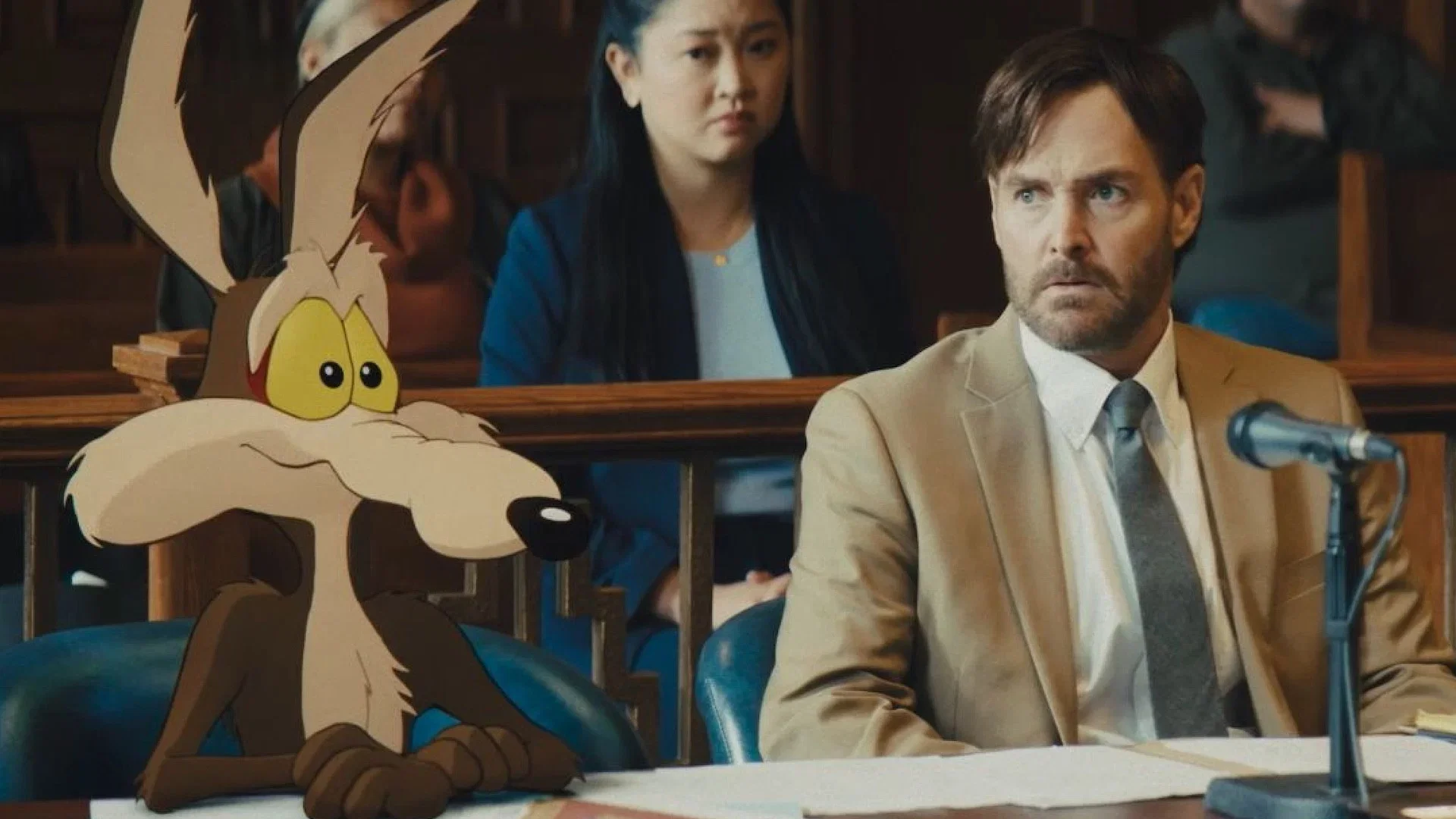
More than three decades later, that idea became the foundation of Coyote vs. Acme. Work on the screenplay began around 2015, with James Gunn among its eventual credited writers, and years of development followed before cameras finally rolled in 2022. Director Dave Green and screenwriter Samy Burch expanded Frazier’s legal parody into a story about Wile E. and a struggling lawyer who take on the powerful corporation behind so many of the Coyote’s injuries. Then reality started imitating the cartoon.
Hollywood Drops a Real Anvil
Warner Bros. Discovery completed Coyote vs. Acme at a reported production cost of about $70 million, and then the studio shelved it. The decision quickly folded into a much larger debate across Hollywood about what happens when finished creative work turns into an entry on a corporate balance sheet. This wasn’t an unfinished project that collapsed mid-production. The movie existed, and test audiences had already watched it, yet Warner Bros. Discovery decided not to release it anyway.
The backlash came immediately. Filmmakers and animation professionals protested alongside fans, and the shelving became a symbol of something larger than one Looney Tunes movie. Writer-director Brian Duffield, who had seen the film, vouched for it publicly, posting, “I have seen this movie, and it is excellent.” Creators started asking an uncomfortable question. If a studio can spend years employing hundreds of people to make a finished film and then decide nobody should ever see it, what does it actually mean to finish something?
The Uncomfortable Question: What does it mean to finish a film that nobody is allowed to see?
Rescued From the Vault
Warner Bros. eventually let potential buyers screen the movie, but the film still didn’t escape right away. For a stretch, Coyote vs. Acme joined the strange ranks of Hollywood mythology: a finished movie that people had seen and liked but that the public still couldn’t watch. Then Ketchup Entertainment stepped in and bought it, and the Coyote survived the fall once again. Ketchup even turned the saga into marketing. Its April 2026 trailer needles Warner Bros. directly, closing with a narrator announcing that the Acme Corporation is releasing the film for accounting purposes only.
The Audience Gets the Final Word
Coyote vs. Acme finally opened in American theaters on August 28, 2026. “‘Coyote vs. Acme’ is finally, gloriously, in theaters now,” Dave Green posted that Friday, and by Sunday the film had pulled in roughly $15.5 million domestically, good for second place at the box office. More telling, the audience stuck around after opening weekend. The film earned more than $11 million in its second three-day frame, a drop of less than 30 percent, and its domestic run eventually climbed to roughly $58.8 million. By early October, industry reports had the film past $100 million worldwide, a remarkable final act for a movie once destined never to reach a theater at all.
The enthusiasm went beyond ticket sales. Critics overwhelmingly embraced the film, and audience scores ran just as strong, with an “A” CinemaScore and a 95 percent rating on Rotten Tomatoes. People weren’t merely turning out to support a rescued movie or to make a point about studio accounting. They genuinely enjoyed it, and perhaps that shouldn’t have surprised anyone. Underneath the corporate drama and the unusual road to release sat a character whose basic appeal had already outlasted every shift in how audiences watch, from theatrical shorts and network television to home video, cable and streaming. The Coyote still worked.
Modernizing Without Fixing
One of the easiest mistakes a studio can make with a classic character is assuming that modernizing him means changing everything that once defined him. Coyote vs. Acme took another route and let Wile E. remain Wile E. He didn’t suddenly turn into a wisecracking animated hero explaining his motivations in contemporary dialogue. Instead, he stayed largely nonverbal, and the filmmakers let his human attorney speak for him while his personality came through in the visual performance.
That choice matters, because Chuck Jones had already given the character everything he needed. Wile E. wants something and believes he’s clever enough to get it, so he devises increasingly elaborate ways to succeed. He fails spectacularly, and then he tries again. Nobody needs to update that formula. A filmmaker only needs to understand it.
Bigger Than Nostalgia
It’s tempting to chalk up the Looney Tunes’ staying power to nostalgia. Generations grew up watching Bugs Bunny, Daffy Duck, Porky Pig and the Road Runner on television, and that affection certainly plays a role. Nostalgia alone, however, can’t explain why a joke still lands, since people can feel real warmth toward something they watched as kids without finding it funny anymore.
Wile E. Coyote stays funny because Jones and Maltese built him around something far more durable than topical references. They built him around ambition and the confidence that fuels it, along with the frustration and humiliation that follow and the persistence that sends him back for more. The Road Runner rarely changes because he doesn’t need to. He’s the objective, while Wile E. is the story. We know he’s going to fail, yet we keep watching him draw up the next plan, and in some strange way we want it to work. Maybe that’s because we recognize a little of ourselves in him.
The Coyote Outlives the Company
The story has one more twist. As of this writing in October 2026, Warner Bros. itself stands on the edge of another transformation. After clearing its final regulatory hurdles, Paramount Skydance is preparing to close its acquisition of Warner Bros. Discovery, with the deal expected to close on October 6. David Ellison has said the combined parent company will go by Skydance while the Paramount and Warner Bros. names continue as distinct studio brands. What that means for Looney Tunes and Wile E. Coyote remains to be seen, and perhaps that’s the right place to leave him.
The Warner Bros. that released Fast and Furry-ous in 1949 bears little resemblance to the corporation that exists today. Executives and owners have come and gone, and the company has merged and reorganized more times than anyone cares to count. The ways audiences watch animation changed too. Theaters gave way to television and Saturday morning cartoons gave way to cable, while VHS yielded to DVD and streaming swapped schedules for libraries. Eventually YouTube handed independent animators a distribution system Chuck Jones could scarcely have imagined, and through all of it, Wile E. kept running.
The One That Got Away
There’s a peculiar irony in the fact that Warner Bros. itself nearly stopped him. The studio once decided audiences would never see Coyote vs. Acme, and the finished film looked destined to become another Hollywood project remembered mostly for what might have been. Instead, the movie escaped. Another distributor put it in theaters, and audiences showed up in numbers that proved people still want to watch a character created more than three quarters of a century ago.
The Larger IdeaGreat characters can outlive the companies that own them.
Perhaps that’s the larger lesson of Wile E. Coyote. Studios and their owners change, and so do the pipes that carry movies to audiences, but great characters can outlive every one of them. Chuck Jones spent decades dropping Wile E. off cliffs and blowing him up with his own defective ACME merchandise. Hollywood nearly managed something the Road Runner never could when it almost made him disappear. But Wile E. Coyote survived that too. Of course he did.
Further Reading
- The Guardian (2023). “Warner Bros shelves completed $70m Coyote vs Acme movie.” The Guardian
- NPR (2023). “Why Warner Bros. has shelved another finished movie.” NPR
- NPR (2024). “Warner Bros. shelved ‘Coyote vs. Acme.’ Here’s why some finished films are mothballed.” NPR via WHYY
- Animation World Network (2025). “‘Coyote vs. Acme’ Saved: Ketchup Entertainment Makes it Official.” AWN
- /Film. “Read The Article That Inspired Coyote Vs. Acme.” /Film
- Looper (2026). “Coyote Vs. Acme: Everything You Need To Know Before Watching.” Looper
- Associated Press (2026). “Meep, meep. ‘Coyote vs. Acme’ opens with $15.5 million, ‘Spider-Man’ stays No. 1 for fifth weekend.” ABC News
- Cartoon Brew (2026). “‘Coyote Vs. Acme’ Climbs To Third At Global Box Office.” Cartoon Brew
- Geek Culture (2026). “‘Coyote vs. Acme’: Canned Warner Film Hits Back With US$100M Global Gross.” Geek Culture
- Variety (2026). “David Ellison Says Paramount Hopes to Close Warner Bros. Deal in ‘Approximately Two Weeks’ in Staff Memo.” Variety
DerksWorld