
Hazbin Hotel started as a YouTube pilot, and Lackadaisy raised $2 million from its fans. For independent animators, building an audience has become the easy part. Turning a hit cartoon into a company that lasts is the real test.
Can One Animator Build the Next Great Animation Studio?
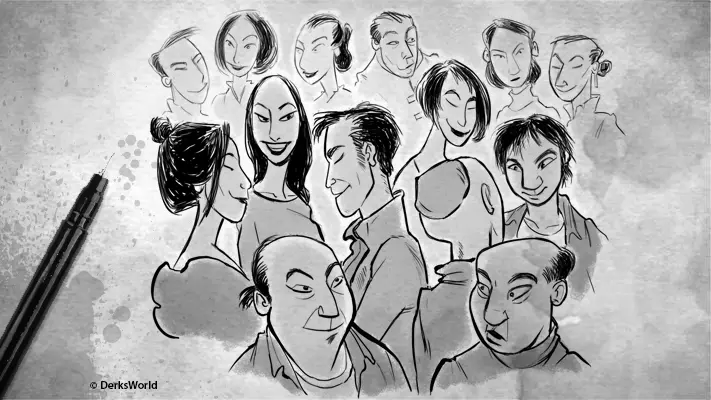
From Vivienne Medrano’s SpindleHorse to Glitch Productions and Lackadaisy, a new kind of animation entrepreneur is turning original characters into production companies. Building the audience only opens the door.
For most of animation’s history, an artist with an original idea faced two separate problems. Creating a character required talent and patience. Financing that character’s adventures, however, required the blessing of a studio executive or network buyer who believed in the idea. An artist might spend years drawing model sheets and producing test animation, only to watch the project stall in a development office. Even when a project moved forward, the creator often surrendered some ownership or creative authority to get it made.
That system still exists, and the major studios still hold enormous advantages in financing and global distribution. Outside their walls, however, something interesting has taken shape. Independent animators now build audiences before they sign distribution deals. They introduce original characters directly to viewers and fund production through crowdfunding and merchandise sales. A few of those efforts have grown into working studios, part of a movement larger than most of Hollywood realizes.
Whether an independent animator can make a hit cartoon is no longer an open question, since several already have. The better question is whether that artist can become an animation entrepreneur and turn a hit into a lasting company. Doing so means keeping the creative independence that made audiences care in the first place.
When the Artist Becomes the Studio
Few artists illustrate the rise of the animation entrepreneur better than Vivienne Medrano, known online as VivziePop. Medrano built a distinctive artistic identity through online animation that paired expressive character work with dark comedy and theatrical musical numbers. Rather than waiting for a network to introduce her characters to the public, she went out and found her audience herself.
In October 2019, she released the pilot for Hazbin Hotel on YouTube. The adult animated musical comedy introduced Charlie, the princess of Hell, and her plan to rehabilitate demons by running a hotel. It remains the least plausible business model in this article. The pilot drew enormous attention and eventually led to a professional series. A24 and Bento Box Entertainment came aboard, and Hazbin Hotel premiered on Prime Video in January 2024. Medrano kept creative command as the series’ creator and director.
A Second Show Takes Flight
Hazbin Hotel did not mark the end of her independent ambitions, though. Through her studio, SpindleHorse, Medrano also developed Helluva Boss, an adult animated series set in the same infernal universe. The show launched on YouTube in 2020 and built its own following around new characters and original music. Prime Video added the first two seasons in September 2025. The third season, the first produced entirely under Amazon, premiered there on October 14, 2026. That 15-episode season arrives in two parts, and Amazon has already committed to a fourth and final season.
That progression describes something more complicated than an artist getting discovered by Hollywood. Medrano established an audience and a working production operation before she deepened her ties with major entertainment companies. Her career shows that independent development and traditional distribution can work as partners rather than opponents.
The ownership and financial arrangements behind these productions are not fully public. It would be a mistake, therefore, to assume that one person controls every piece of the business. Still, Medrano’s rise raises a question that gets far less attention than the shows themselves. What happens when an artist becomes responsible for the people who bring her imagination to life?
An Audience Before a Network
Television development traditionally depended on convincing a small group of decision-makers that a project could find viewers. A creator prepared a pitch and perhaps a pilot, then took meetings with networks and studios. That process could stretch for years and end without a single episode in production.
Independent animation has opened another route. An artist can now publish directly to YouTube and other platforms. There, viewers discover characters, share episodes, draw fan art and argue about storylines long before a distributor enters the picture. That shift doesn’t eliminate the financial risk of production, but it does change when the audience enters the equation. Instead of relying on projections, a creator can point to real engagement and real sales as proof of demand. In that sense, the audience has become the new intellectual property.
The audience may have arrived, but somebody still has to pay the artists.
That evidence carries weight, yet popularity alone cannot guarantee a profitable production. A viral pilot can attract millions of viewers without earning enough to finance a series. Meanwhile, animation remains labor-intensive no matter how many people press play, and expectations tend to grow faster than income. The audience may have arrived, but somebody still has to pay the artists.
Studio Snapshot
SpindleHorse
- Founder
- Vivienne “VivziePop” Medrano
- Breakout
- Hazbin Hotel pilot (2019), followed by Helluva Boss
- Model
- Patreon-backed YouTube pilots that grew into Prime Video series with A24 and Bento Box
Studio Snapshot
Glitch Productions
- Founders
- Kevin and Luke Lerdwichagul, 2017
- Breakout
- Murder Drones and The Amazing Digital Circus
- Model
- Self-funded and YouTube-first, with in-house distribution, merch and a staff of 100-plus
Studio Snapshot
Iron Circus Animation
- Roots
- Tracy Butler’s webcomic and Spike Trotman’s Iron Circus Comics
- Breakout
- Lackadaisy pilot (2023)
- Model
- Crowdfunding and merchandise, now co-producing the series with Glitch
Glitch Productions and the New Studio Model
Australia’s Glitch Productions offers a different view of how an independent animation business grows. Brothers Kevin and Luke Lerdwichagul founded the company in 2017. It evolved from internet-based creative work into a studio with its own production and distribution infrastructure. Today Glitch is best known for Murder Drones and The Amazing Digital Circus, the latter created by Gooseworx.
Glitch shows how an animation entrepreneur moves from a personal project to a company that supports several productions at once. By its own description, the studio employs more than 100 people. It handles development, production, distribution, marketing and merchandise in-house while remaining self-funded and independent. Those functions mirror what established studios do, even though Glitch grew up in a different distribution environment altogether. We took a closer look at how Glitch built its studio outside Hollywood in a previous story.
The Amazing Digital Circus also demonstrated how far online animation can travel. The series built a global following that extended into merchandise and licensing deals, with distribution reaching well beyond YouTube. Its success suggests that a modern studio no longer needs to begin with a television deal. It does, however, need an organization capable of turning creative ideas into finished entertainment.
A hit cartoon can establish a brand, but a studio has to produce more than one project.
As Glitch has grown, its identity has expanded beyond any single creative personality. The company now collaborates with outside creators while keeping a recognizable house style. That may be the most important distinction in this emerging model. A hit cartoon can establish a brand, but a studio has to produce more than one project and support the people who make them.
Lackadaisy and the Price of Independence
The story of Lackadaisy offers a revealing look at the money behind independent animation. Tracy Butler launched it as a webcomic in 2006. The story unfolds in a fictional version of Prohibition-era St. Louis, where anthropomorphic cats run a struggling speakeasy. Its sepia-toned artwork and character-driven storytelling earned a devoted readership along with an Eisner Award nomination.
Butler eventually partnered with animator and director Fable Siegel on an animated adaptation, and the project ran into a familiar wall. Traditional television buyers hesitated to finance an adult animated production that didn’t match their expectations for the genre. Rather than abandon the idea, the team turned to crowdfunding with publisher Spike Trotman and Iron Circus Comics. A 2020 Kickstarter campaign set out to raise $85,000 and closed at roughly $330,000. That money funded a pilot that premiered on YouTube in March 2023.
From Pilot to Full Season
The pilot’s reception set up a second campaign that summer. Iron Circus opened it with a goal of $125,000 for a single episode. More than 16,000 backers then pushed the final total to $2,008,728, enough to turn that lone episode into a full season. Later, Glitch Productions joined Iron Circus as a co-producer, and the series expanded to six full-length episodes. That alliance says a good deal about how this corner of the industry operates.
Lackadaisy by the Numbers
$85K2020 Kickstarter goal for the pilot
~$330KWhat backers actually pledged
$2.01MRaised in 2023 against a $125,000 goal
16,000+Backers on the season campaign
20–40Crew members working at any one time
Two million dollars sounds like a fortune to an animation entrepreneur working from a home studio. In practice, however, that money has to cover a team of skilled professionals for the long months it takes to finish a series. In an August 2024 interview with Toon Boom, Siegel noted that Lackadaisy could have between 20 and 40 people working on it at once. Siegel added that YouTube advertising revenue was small compared with the cost of an episode. As a result, merchandise became a central pillar of the project’s financial strategy.
Creative freedom, it turns out, comes with paperwork.
Freedom Comes With Paperwork
That distinction matters. View counts alone cannot measure the health of an animated series. A production needs enough revenue to carry the work between releases, since each new episode takes months to complete. To manage that responsibility, the team established Iron Circus Animation to support Lackadaisy and potentially other productions. What began as a webcomic had become a collaborative animation enterprise.
Lackadaisy demonstrates both the promise and the limits of creator-led production. Independence allowed the team to pursue an artistic vision that traditional buyers had dismissed as too risky. Preserving that independence, however, required the creators to shoulder the financing and management themselves. Creative freedom, it turns out, comes with paperwork.
The Business Behind the Characters
A popular animated character can become far more than the star of a film or series. Successful characters support merchandise, publishing, licensing, live events and games. In fact, the traditional studios have built empires on that principle for a century. The logic is familiar, since audiences want a relationship with a character that continues after the credits roll. What has changed is that an independent animation entrepreneur can now cultivate those relationships directly.
An online series can stream for free while merchandise funds the next episode. Crowdfunding can supply production capital, while licensing places characters on products that other companies make and sell. A streaming agreement, meanwhile, can introduce the property to new audiences and bring financing of its own.
Follow the Money
What it brings in
What it costs
MerchandiseSteady income between episodes, and a direct line to fans
Design, manufacturing, inventory, customer service and fulfillment
CrowdfundingProduction capital before a single frame is finished
Real obligations to backers who expect rewards on schedule
LicensingCharacters on products other companies make and sell
Legal oversight and less control over how the property appears
Streaming dealsNew audiences and financing of their own
Possible limits on where the work can appear, and shared rights
Each of those opportunities carries its own costs and complications. Merchandise demands design and manufacturing along with inventory, customer service and fulfillment. Crowdfunding creates real obligations to backers who expect their rewards on time. Similarly, licensing agreements require legal oversight, and distribution partnerships may restrict where the work can appear.
Ownership becomes more important as a property grows. Creating a character and controlling how that character makes money are separate matters. Copyright, trademarks, distribution rights and merchandising rights may each sit with a different party. Any animation entrepreneur who wants to build a lasting company has to understand those distinctions, especially now that animation is returning to creator ownership. The goal is not one profitable cartoon but a business that funds future work while protecting the original property.
When the Animation Entrepreneur Becomes the Boss
There is a romantic image of the independent animator working alone late into the night. That image captures something true about artistic determination, but it grows less accurate as a production expands. A successful animated series requires writers, storyboard artists, character designers, background painters, animators, editors, compositors, sound designers, voice actors, musicians and production managers. Even a modest production depends on specialists who each need direction and a paycheck.
As the organization grows, the job of an animation entrepreneur changes in ways that have little to do with drawing. The person who once focused on storytelling becomes responsible for budgets, hiring, schedules and contracts on top of creative supervision. Decisions about staffing and delivery dates can matter as much as decisions about character design or dialogue.
Talent Is Not Management
That transformation tests every animation entrepreneur, because artistic talent and management ability are different skills. A creator can possess an extraordinary visual imagination with no experience running a business. Learning to delegate, and to balance ambition against available resources, requires a different kind of education. The pressure intensifies when audiences expect a steady stream of new episodes. After all, a few minutes of finished animation can represent months of coordinated work. A sustainable studio has to build its expectations around that reality.
The true measure of success is not a celebrated pilot but an organization where artists can keep working and improving for years.
Responsibility to the artists matters too. A successful independent company should aspire to offer reliable pay and realistic schedules. It should also give talented people room to keep developing their craft. Otherwise, a business founded on creative independence risks reproducing the very pressures its founders hoped to escape. The true measure of success is not a celebrated pilot but an organization where artists can keep working and improving for years.
Independence Doesn’t Mean Isolation
One persistent misconception holds that creative independence requires complete separation from the traditional entertainment industry. The careers of Medrano and her contemporaries suggest a more nuanced relationship. An independent artist can develop a project and build its audience online, then partner with a streamer as the work grows. Such an arrangement doesn’t erase the project’s independent origins. Nor does it guarantee that the creator keeps full authority. Instead, the outcome depends on how the financing is structured and who controls which rights.
For an animation entrepreneur, building an audience first means walking into negotiations with proof of demand. For distributors, creator-led projects offer recognizable characters and audiences that already exist. That asset grows more valuable as entertainment companies hunt for properties that inspire devotion. The Lackadaisy partnership with Glitch shows the same logic working between independents, with one creator-led studio lending its infrastructure to another. Seen this way, independent animation and traditional distribution may become complementary parts of one ecosystem. Artists no longer wait for permission to begin. Instead, they decide which partnerships make sense as their projects mature.
Timeline
From Free Pilot to Big Platform
- Tracy Butler launches the Lackadaisy webcomic.
- Kevin and Luke Lerdwichagul found Glitch Productions in Australia.
- The Hazbin Hotel pilot debuts on YouTube, followed a month later by the Helluva Boss pilot.
- The Lackadaisy Kickstarter turns an $85,000 goal into roughly $330,000.
- Glitch releases the Murder Drones pilot, its first project to break out financially.
- The Lackadaisy pilot premieres on YouTube, and a summer campaign raises $2 million for a full season.
- The Amazing Digital Circus pilot premieres and becomes a global phenomenon.
- Hazbin Hotel launches on Prime Video as the service’s largest global debut for an animated series.
- Prime Video adds the first two seasons of Helluva Boss.
- Helluva Boss season three premieres on Prime Video, the first produced entirely under Amazon.
What Makes a Great Animation Studio?
Hollywood history is crowded with studios that began with ambitious artists and entrepreneurs. Walt Disney and his brother Roy built a company around animated storytelling and an expanding production operation. Other animation businesses grew from their own mix of creative talent, financial backing, technical innovation and commercial opportunity. None of those companies ran on imagination alone. They needed capital and collaborators long before they needed a logo.
Today’s independent animators face many of the same challenges, even though the route to viewers has changed. The internet has lowered certain barriers to distribution, and digital tools have made some forms of animation more accessible. Crowdfunding and direct merchandise sales, meanwhile, have opened financing options earlier generations could hardly have imagined. None of those developments makes animation any easier to produce.
The Animation Entrepreneur’s Long Game
The distinction between a successful creator and a successful studio remains significant. A creator can build an audience around a single character or series. A studio, by contrast, must build a system that sustains production and supports its employees when a project underperforms. The strongest creator-led studios will likely be the ones that balance artistic identity with organizational stability. They will preserve what drew audiences in while building the infrastructure that growth demands.
Each of the studios profiled here takes a different approach to that challenge, and none of their long-term outcomes is settled yet. What connects them is a willingness to start building outside the conventional development process. Together, they show that independent animation can serve as the foundation for a lasting creative business.
The next great animation studio may not begin with a network deal or a building full of executives. It may begin with one artist and one original character that an audience refuses to forget. The hard part, as every animation entrepreneur eventually learns, is making that beginning last.
The Takeaway
What every would-be animation entrepreneur should know
- An audience is leverage. A proven fan base turns a pitch into evidence and gives creators a stronger hand when streamers come calling.
- Views don’t pay the crew. YouTube ad revenue rarely covers an episode, so merchandise and crowdfunding carry the work between releases.
- Know who owns what. Copyright, trademarks, distribution and merchandising rights can each land with a different party, and the contract decides who profits.
- The real leap is becoming an employer. Budgets, payroll and schedules arrive long before the next hit does.
Further Reading and Resources
Want to dig deeper into the shows, the studios and the craft behind them? These sources offer a good place to start.
Interviews and Industry Coverage
- Fable Siegel on Lackadaisy’s Mini-Episodes and How to Sustain Indie Animation (Toon Boom). The director talks staffing, YouTube revenue and the economics of independent production.
- Glitch Productions Partners With Lackadaisy Creators for Full Series Development (Cartoon Brew). How two creator-led studios joined forces.
- Gooseworx on Developing The Amazing Digital Circus (Cartoon Brew). The creator explains how the pilot came together at Glitch.
- Hazbin Hotel Scores Top Global Animation Debut on Prime Video (Animation Magazine). The numbers behind Medrano’s jump from YouTube to streaming.
- Hazbin Hotel Renewed for Fifth and Final Season (The Hollywood Reporter). Prime Video’s long-term commitment to the series.
Animation History
- Animation: History, Movies and Television (Encyclopaedia Britannica). A thorough overview of the medium from its earliest experiments onward.
- Walt Disney (Encyclopaedia Britannica). The original artist who became a studio boss, and the model every creator-led studio still measures itself against.
Official Sites
- Lackadaisy. Tracy Butler’s webcomic, where the whole story started.
Tools of the Trade
- Toon Boom Harmony. The industry-standard 2D animation program used across television production.
- OpenToonz. Free, open-source 2D animation software based on Toonz, which Studio Ghibli used for years.
- Blender. Free, open-source 3D software whose Grease Pencil tools also handle 2D animation.
- Krita. A free digital painting program with built-in frame-by-frame animation tools.
DerksWorld