The New Animation Studios: Why Brands, Toys, and Tech Companies Are Now Creating Cartoons
For decades, animation belonged to a small, well-defined group of companies. Today, a new wave of branded animation studios is beginning to reshape that landscape. Studios like Disney, DreamWorks, and Sony Pictures Animation did not just produce animated films and series. They defined the entire ecosystem. They controlled the pipelines, the distribution, and ultimately the cultural perception of what animation could be.
However, that model is evolving.
Today, animation is no longer confined to traditional studios. A wide range of companies, many of which have no historical connection to animation, are stepping into the space. Some are experimenting. Others are building long-term strategies. More importantly, a growing number are doing something even more significant: they are behaving like animation studios, whether they use that label or not.
From Advertising to Storytelling
To understand this shift, it helps to begin with how brands think about content. In the past, companies created advertisements that surrounded entertainment. They bought time slots, sponsored shows, or partnered with studios to place products inside existing narratives. The content came first, and the brand followed.
Now, that relationship is reversing.
Companies like Procter & Gamble and Maybelline are producing episodic stories designed specifically for mobile platforms and social distribution. These projects are structured more like shows than commercials, with characters, arcs, and serialized storytelling. Meanwhile, brands such as Crocs and JCPenney are experimenting with narrative formats that weave products directly into the story itself. In some cases, viewers can move almost instantly from watching a scene to purchasing what they see on screen.
What emerges from these efforts is not simply a new kind of marketing. It is a new kind of content strategy.
“Brands aren’t interrupting stories anymore — they’re becoming the storytellers.”
Although much of this work is currently live-action, the format naturally points toward animation. Animation offers scalability, flexibility, and a tightly controlled visual identity, all of which align perfectly with brand storytelling. As a result, the move from branded content into animated content feels less like a leap and more like the next logical step.
Toy Companies and the Blueprint for Modern Animation
If brand storytelling represents the present, toy companies offer a glimpse of the future. For years, companies like Mattel relied on partnerships with outside studios to bring their properties to life. Today, that approach is evolving. With the launch of Mattel Studios, the company is developing animated and live-action content tied directly to its intellectual property, including Hot Wheels and Masters of the Universe.
This marks a fundamental change. Instead of licensing characters to external studios and waiting for someone else to interpret them, Mattel is building its own narrative pipeline, where storytelling and product development move forward together.
An even more mature version of this model can be seen with Spin Master. With Paw Patrol, Spin Master did not simply adapt a toy into a show. It was designed both simultaneously. The result was a tightly integrated ecosystem in which characters, stories, and products reinforce one another at every level.
“The most successful animation today isn’t adapted — it’s engineered as IP from day one.”
In this framework, branded animation studios are not extensions of a business. They become the foundation of it. The characters are not merely mascots. They are the engine that drives attention, emotional investment, and commerce all at once.
The Rise of Creator-Led Animation
While corporations are building structured pipelines, another transformation is happening from the ground up. Digital creators are becoming studios.
Creators who once focused on short-form content are now expanding into character-driven storytelling and serialized formats. MrBeast, for example, has partnered with Moose Toys to develop an anime-inspired series tied to his broader brand and product ecosystem.
At the same time, companies like Visional Pop are working to transform viral animated content into scalable franchises. Their goal is simple but powerful: identify characters and concepts that resonate online, then expand them into global intellectual property.
The implication is hard to ignore. Distribution is no longer the bottleneck it once was. Creators can build audiences first and develop animated worlds second.
“The next animation studio might not start in Hollywood — it might start on YouTube.”
This is where branded animation studios begin to emerge—not as traditional production houses, but as systems built around storytelling, audience, and distribution.
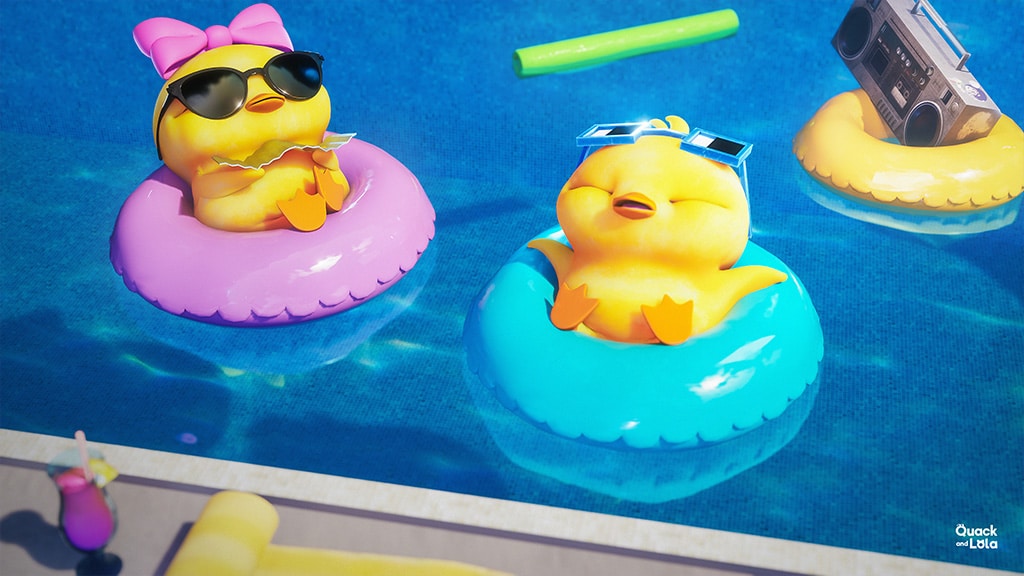
How the Work Is Actually Getting Made
As these changes unfold, it becomes clear that the shift is not just about who is creating content, but how that content is being produced in the first place.
Media and technology companies are expanding their role in animation, but not always in the ways we traditionally expect. TIME Studios, for example, has begun developing animated projects tied to digital-native properties, suggesting that animation can bridge emerging online ecosystems with more established forms of storytelling.
At the same time, companies like Apple, Spotify, and Airbnb are investing heavily in animation as part of their brand identity. From product explainers to motion-driven campaigns, animation is becoming a core communication tool rather than an occasional stylistic choice.
Behind much of this work, however, are creative agencies operating just out of view. Studios like Buck are producing high-end animated content for global brands, often at a level that rivals traditional animation houses.
Layered on top of all of this is a technological shift that is accelerating everything at once. AI-assisted tools are reducing the cost and complexity of animation production, allowing smaller teams—and in some cases individual creators—to produce work that previously required much larger infrastructures.
What makes branded animation studios different is not just who creates the content, but how tightly that content connects to identity, product, and community.
Taken together, these forces are reshaping the pipeline itself. The studio is no longer a single place. It is a network of creators, tools, and collaborators working across platforms, often without the audience ever seeing how the work came together.
“The studio system hasn’t disappeared — it’s been redistributed.”
View this post on Instagram
The Rise of Branded Animation Studios
What we are seeing is not a temporary fad. It is a structural shift in how stories are created, distributed, and monetized. Brands are becoming storytellers. Creators are becoming studios. Animation is becoming the connective tissue that links content, commerce, and community.
The number of companies entering this space will continue to grow. More importantly, the definition of participation will continue to expand. A company no longer needs to look like Disney or DreamWorks to function like a studio. It simply needs characters, narrative intent, and a system for reaching an audience.
That reality opens the field in ways that would have been difficult to imagine just a generation ago. The walls around animation are coming down, and in their place a much wider landscape is beginning to form.
You no longer need to be in a traditional studio to create animated worlds. You only need a story and the willingness to build it.