Brands Expanding Into Entertainment: Gap’s Hollywood Move and the Expansion of Brand Storytelling
Brands expanding into entertainment is no longer a theoretical idea. Instead, it has become a practical response to how culture now works. In earlier articles, I’ve explored how brands are no longer satisfied with simply advertising inside Hollywood. Rather than sitting on the sidelines, they want to operate within the same cultural ecosystem. As a result, storytelling and entertainment now help brands remain culturally relevant beyond the point of sale.
We’ve already seen this strategy take shape with brands like Chick-fil-A, which quietly launched a family-focused entertainment ecosystem through the Chick-fil-A Play™ app. Now, another major American brand is moving in the same direction. This time, however, the shift includes a physical presence on Sunset Boulevard.
Gap’s Hollywood Ambitions Take Shape
When Gap Inc. made its announcement on January 15, it signaled more than a routine executive hire. The retailer revealed it had appointed former Paramount executive Pam Kaufman as executive vice president and chief entertainment officer, a newly created role that reflects the company’s growing emphasis on storytelling and cultural connection.
Beginning February 2, Kaufman will report directly to Gap Inc. President and CEO Richard Dickson.
Importantly, the company framed the hire as a strategic move rather than a marketing shift. In the press release, Dickson positioned entertainment as a core driver of relevance and long-term brand growth.
“Fashion is entertainment, and today’s customers aren’t just buying apparel—they’re buying into brands that tell compelling stories and drive cultural conversations,” Dickson said. “Entertainment is a critical link to the consumer, and Pam’s deep expertise makes her the right leader to bring that vision to life.”
Gap is no stranger to cultural relevance. During the 1990s, its Khaki commercials dominated television, using innovative storytelling to stand out from competitors.
Fashion as Entertainment, Not Marketing
When announcing the move, Dickson made Gap’s philosophy clear. According to him, fashion already functions as a form of entertainment. Today’s consumers aren’t just buying clothes. Instead, they are buying into stories, identities, and cultural conversations.
This idea echoes a recurring theme explored in other articles. Increasingly, cultural relevance is built through participation rather than promotion. In this context, entertainment becomes the connective tissue between relevance and revenue.
Pam Kaufman’s Studio-Scale Experience
Kaufman’s background helps explain why Gap is making this move now. At Paramount, she served as president and CEO of international markets, global consumer products, and experiences. In that role, she oversaw media, gaming, hospitality, licensing, retail, and live experiences across more than 170 markets.
Additionally, she holds board leadership roles with Stella McCartney, Lindblad Expeditions, and the Rock & Roll Hall of Fame. Together, these roles reinforce her experience at the intersection of entertainment and commerce.
A Cultural Reset Already in Motion
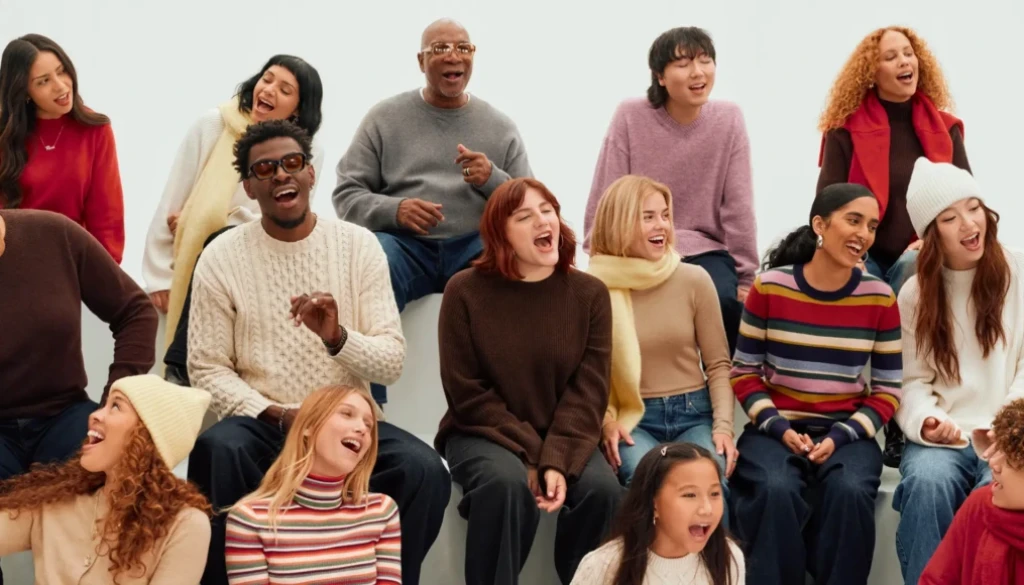
Importantly, Gap’s renewed interest in entertainment did not begin with this hire. Over the past several years, the brand has quietly reconnected with its cultural roots. For example, it revived iconic dance-driven ads from the 1990s and early 2000s while also collaborating with figures such as Gwyneth Paltrow, Apple Martin, Troye Sivan, and Parker Posey.
More recently, last year’s fall denim campaign featuring the girl group Katseye gained viral traction. In doing so, it demonstrated how brands expanding into entertainment can reach younger audiences without abandoning their legacy identity.
Gap reimagined Jungle’s “Back on 74” in a music video collaboration with singer Tyla for its #linenmoves campaign.
Gap Isn’t Alone
Gap is not the only brand moving in this direction. In August, Dick’s Sporting Goods launched an in-house entertainment studio. A few months later, Under Armour introduced Lab96 Studios. Together, these moves reflect a broader shift away from traditional advertising and toward entertainment-driven storytelling.
This same pattern has been explored in earlier coverage on Hollywood’s evolving creator economy.
Expanding the Brand Beyond the Storefront
What makes Gap’s move especially notable is its structure. By hiring a chief entertainment officer and opening a Sunset Boulevard office, the company is positioning itself closer to Hollywood’s operating logic without attempting to replace it.
Gap is not trying to become a studio. Instead, it is expanding the brand’s universe beyond the storefront. In doing so, the company allows the brand to live with audiences between purchases rather than only at the checkout line. Ultimately, this is the key takeaway of brands expanding into entertainment: presence matters more than impressions.
If this trend continues, the real question will not be why brands are expanding into entertainment, but which ones understood early enough that cultural relevance now lives outside the store.