Creator Economy Success Stories
How seven creator-led projects built devoted fan communities before traditional entertainment companies recognized their value.
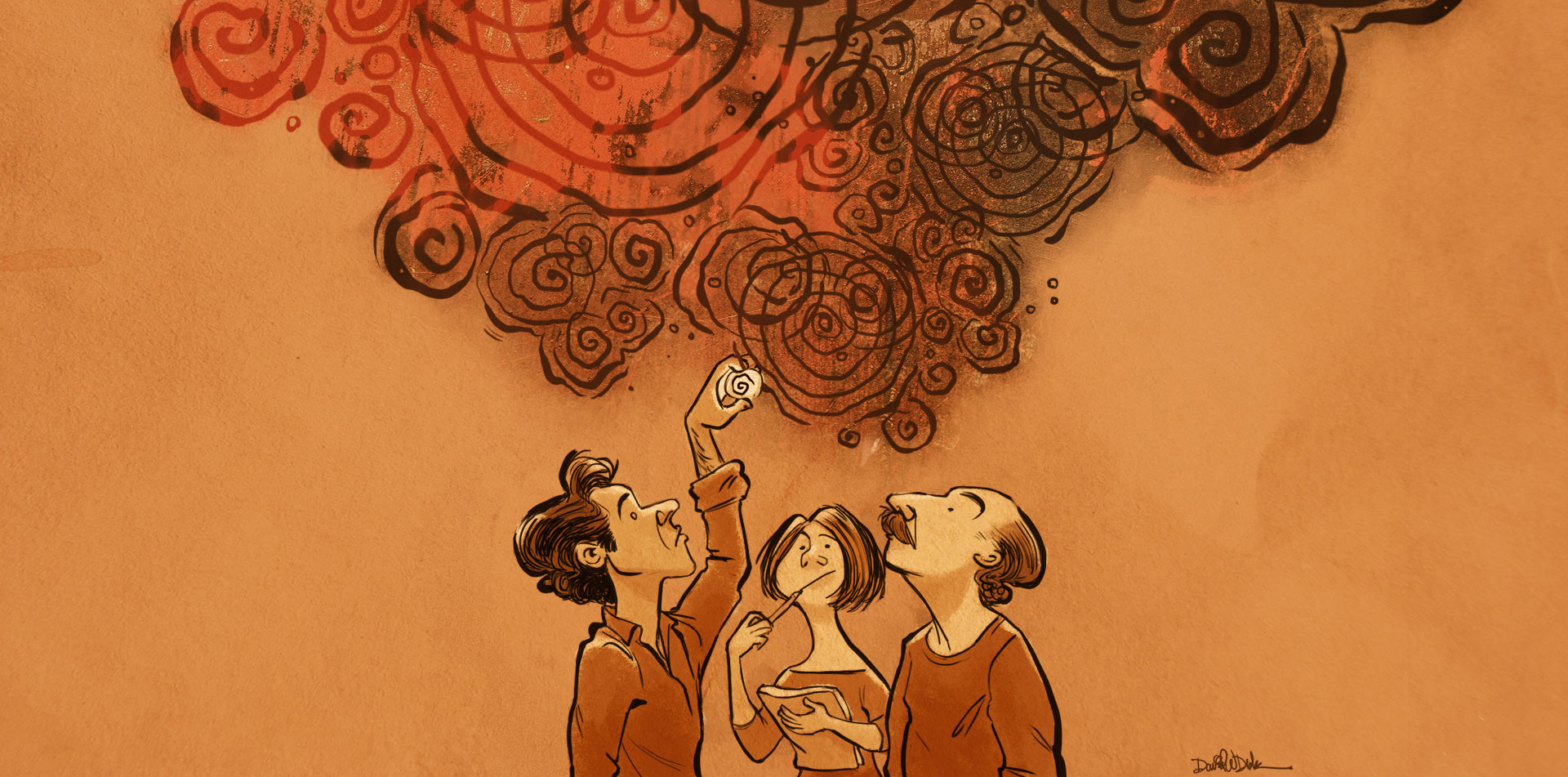
How seven creator-led projects built devoted fan communities before traditional entertainment companies recognized their value.
The creator economy has fundamentally changed how entertainment reaches audiences. For most of the twentieth century, Hollywood controlled the entertainment business through a single, overwhelming advantage: distribution. Studios decided which stories reached theaters, television networks, and eventually home video. Audiences could only discover what the gatekeepers allowed through the gate.
That equation has fundamentally changed.
Creators today publish directly to YouTube, Twitch, Kickstarter, Patreon, and other digital platforms. They build communities one loyal fan at a time, without asking anyone for permission. By the time Hollywood takes notice, millions of people may already be watching, buying merchandise, attending live events, and producing fan art. The audience arrives before the studio does.
This shift does not make Hollywood irrelevant. If anything, major studios matter more than ever as accelerants. The difference is that they are no longer the ones igniting the spark. They are amplifying fires that someone else already started.
Here are seven creator economy success stories that show how entertainment increasingly grows from the audience upward rather than from the studio downward.
The creator economy has changed how entertainment proves demand.
Audiences can now validate stories, characters, and worlds before studios become involved.
Hollywood still matters, but increasingly as an amplifier of communities that already exist.
1. Glitch Productions and the Creator Economy
Few companies illustrate this shift more clearly than Glitch Productions.
The Australian animation studio built a global audience through YouTube by producing creator-owned series rather than waiting for a television network to commission them. That strategy produced The Amazing Digital Circus, whose pilot attracted hundreds of millions of views and became one of the largest animation successes in YouTube history.
Glitch did not begin with a network contract. It began with a community. Only after that community had grown into something impossible to ignore did the broader entertainment industry start paying serious attention. That sequence represents a genuine structural change in how animation gets made. Proving worldwide audience demand no longer requires a network’s blessing. Creators can prove it themselves.
Watch: Glitch Productions
2. Critical Role Built an Audience Before Hollywood
Critical Role did not begin as a television series.
It began as a group of professional voice actors livestreaming their Dungeons and Dragons campaign on Twitch and YouTube. What started as friends playing a tabletop game around a table became one of the most valuable creator-owned entertainment brands in the industry.
That audience funded an animated adaptation through Kickstarter. Amazon later partnered on The Legend of Vox Machina and eventually expanded the relationship into additional projects.
The sequence tells the story. The community came first. The studio partnership came second. Hollywood did not manufacture the demand for Critical Role. It simply recognized demand that had been building for years in plain sight.
Watch: Critical Role
Critical Role matters because it demonstrates that a community can become the foundation for a much larger entertainment business.
3. Kane Parsons and The Backrooms
When Kane Parsons released his eerie Backrooms videos on YouTube, he was not an established Hollywood filmmaker pitching a feature concept through proper channels. He was a teenager with a camera and an idea.
His analog-horror shorts spread rapidly across the internet, attracting millions of viewers through atmospheric storytelling and visual effects that belied their modest origins. Eventually, A24 announced plans to develop a feature film based on Parsons’ work.
Parsons never spent years trying to convince executives that audiences wanted his concept. He demonstrated it himself. Hollywood recognized what viewers had already embraced and moved accordingly. The teenager validated the idea before any studio had a chance to reject it.
Watch: The Backrooms
4. Vivienne Medrano and Hazbin Hotel
Vivienne Medrano, better known online as VivziePop, spent years building an audience before Hazbin Hotel became an Amazon series.
The original pilot premiered on YouTube in 2019 and generated tens of millions of views. A passionate fan community formed around the characters and world almost immediately. That momentum attracted A24, which produced the series before its eventual release on Prime Video.
The audience existed long before the streaming debut. Fans validated the concept, proved its commercial viability, and sustained its cultural presence while traditional entertainment companies were still deciding whether to get involved. By the time a major studio committed resources, the hardest work had already been done.
Watch: Hazbin Hotel
Creators are no longer waiting for permission. They are proving demand directly.
5. Gooseworx Proves the Creator Economy Works
While Glitch Productions built the studio infrastructure, Gooseworx created one of its defining creative successes.
The Amazing Digital Circus demonstrated that original animation could become a worldwide phenomenon without following the traditional television pipeline at any stage. The series spread through YouTube, fan communities, reaction videos, cosplay, and social media conversation with a velocity that no marketing campaign could have manufactured.
The audience became the marketing campaign. That kind of organic, self-sustaining growth was functionally impossible during the broadcast television era, when distribution was scarce, and discovery depended on network scheduling. Today it is repeatable.
Watch: The Amazing Digital Circus
6. Andrew Hussie and Homestuck
Long before “creator economy” became an industry buzzword, Andrew Hussie’s Homestuck demonstrated how internet-native storytelling could generate an unusually devoted following.
The multimedia webcomic inspired conventions, fan art, original music, merchandise, and one of the largest online fandoms of its generation. Years later, interest in adapting the property emerged not because a studio identified it as a promising IP, but because the audience had spent a decade proving its own staying power.
The lesson here goes deeper than webcomics finding new audiences. Communities, when given time and the right creative material, can themselves become the intellectual property. The fandom was the asset.
Watch: Homestuck
7. Scott Cawthon and Five Nights at Freddy’s
No example makes the new entertainment pipeline more visible than Five Nights at Freddy’s.
Scott Cawthon developed the original indie horror game with modest resources. The franchise exploded after YouTubers began posting gameplay videos that spread virally across the platform. Fans generated lore theories, artwork, merchandise demand, novels, and conventions. The property became a genuine cultural force through audience participation before Hollywood ever entered the picture.
Only after all of that did a studio release a feature film adaptation. The movie succeeded because millions of fans already cared deeply about the characters and mythology. They had built emotional investment over years, through media they largely created themselves.
Cawthon built the franchise. The audience built the culture around it. Hollywood expanded what both of them had already made.
Watch: Five Nights at Freddy’s
What These Creator Economy Success Stories Have in Common
These creators work in different media. Animation, gaming, tabletop role-playing, webcomics, and independent filmmaking each operate under different conditions with different economics. Yet their paths share one striking structural similarity.
None of them waited for Hollywood to discover them.
Each of these creator economy examples demonstrates the same principle: audiences now validate entertainment ideas before traditional studios invest in them. That shift represents one of the biggest structural changes in Hollywood over the past two decades.
They built communities first and let those communities demonstrate demand in ways that spreadsheets and focus groups could not. They developed intellectual property that carried genuine emotional weight before any studio calculated its market value. And by the time traditional entertainment companies arrived with financing and distribution, the creators had already solved the hardest problem in the entire industry: earning people’s attention and keeping it.
For most of the twentieth century, entertainment companies invested enormous resources in manufacturing audiences for stories they had already decided to tell. That process required enormous capital, enormous infrastructure, and the ability to control what audiences could see. Studios built audiences because they had to. They had no other choice.
Today’s creator economy reverses that process at scale. Creators use digital platforms to prove demand, cultivate loyal communities, and develop IP long before traditional studios become involved. Hollywood still provides things that independent creators genuinely cannot replicate alone: major financing, global distribution, marketing infrastructure, and production resources that compress timelines and expand reach.
The difference is that the strongest entertainment brands emerging right now did not start inside Hollywood. They started with audiences who decided, without anyone’s permission, that something deserved to exist.
By the time Hollywood arrived, the hardest part was already finished.