Brain Divided Animated Short
How one viral YouTube film helped prove that independent animation could build a massive audience without waiting for a major studio.
Originally inspired by a 2015 article published on DerksWorld.
The Brain Divided animated short became one of YouTube’s earliest independent animation success stories. Long before creator-owned studios became commonplace and before audiences regularly discovered new animation through social media, this short demonstrated that exceptional storytelling could attract millions of viewers without the backing of a major studio.
In the summer of 2014, an animated short film quietly appeared on YouTube. It did not arrive with a massive marketing campaign. There were no television commercials, billboards, or theatrical trailers attached to blockbuster films.
Instead, it relied on something far more powerful: people sharing something they genuinely enjoyed.
That film was Brain Divided, created by Josiah Haworth, Joon Shik Song, and Joon Soo Song. What happened next was remarkable. The short accumulated millions of views online and quickly became one of those rare pieces of animation that seemed to spread everywhere at once.
Today, viral videos are common. However, in 2014, reaching an audience of that size with an independent animated short was still an extraordinary achievement.
The Brain Divided animated short showed that independent animation could reach millions of viewers online.
It arrived before creator-owned studios and YouTube-first animation became part of the entertainment conversation.
More than a decade later, it still feels like an early preview of today’s creator economy.
Watch: Brain Divided
Why the Brain Divided Animated Short Connected With Audiences
The premise was deceptively simple.
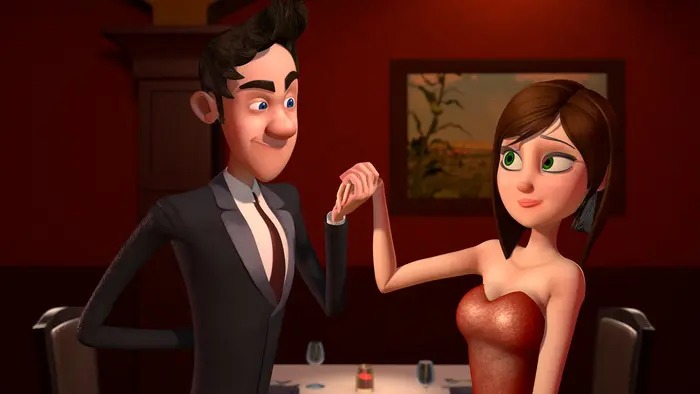
A young man arrives at a restaurant for a blind date. The moment he sees the woman across the table, his mind erupts into chaos. The logical, cautious side of his brain battles against the emotional, impulsive side as each struggles to control his actions.
The concept worked because it was instantly relatable.
Nearly everyone has experienced nervousness, self-doubt, overthinking, or the desire to make a good first impression. Brain Divided transformed those internal emotions into a visual comedy that audiences could understand within seconds.
Just as importantly, the film demonstrated a level of craftsmanship often associated with major animation studios. The character animation, timing, visual storytelling, and production quality elevated the material beyond a simple internet gag.
The filmmakers understood something many creators still overlook today: audiences respond to quality regardless of budget.
The Rise of Sophisticated Independent Animation
One of the most exciting aspects of the Brain Divided animated short was that it challenged assumptions about what independent animation could be.
Animation on the internet had often been associated with simple designs, limited movement, or short-form comedy sketches. Brain Divided showed that creators working outside the traditional studio system could produce work that felt cinematic.
That is not a criticism of stylized productions. Shows such as Adventure Time helped redefine television animation through distinctive visual design and creative storytelling. However, something was encouraging about seeing a more technically ambitious short find such a large audience online.
It demonstrated that viewers were hungry for a variety of animation styles and storytelling approaches.
The lesson was not that independent animation had to look like studio animation. The lesson was that audiences would respond when independent artists brought strong craft, clear storytelling, and emotional truth to the screen.
For more coverage of animation and the creator economy, visit the Animation section of DerksWorld.
The Curious Timing of Inside Out
Watching the Brain Divided animated short today is particularly fascinating because of its release date.
The short debuted before Pixar’s Inside Out arrived in theaters. While the stories are completely different, both projects explore the idea of internal emotions and competing thoughts being represented as characters.
The similarities are likely the result of talented storytellers exploring universal human experiences rather than one project influencing the other. After all, emotions, logic, fear, and impulse are themes that have fascinated writers and artists for generations.
Still, it remains an interesting reminder that great creative ideas often emerge in multiple places at the same time.
Watch: Inside Out Trailer
Sometimes the same big idea appears in different places because artists are responding to the same human experience.
How Animation Changed
The success of Brain Divided is also part of a much larger story.
For decades, animation in the United States was frequently viewed as entertainment primarily for children. While there were exceptions, much of the industry operated under that assumption throughout the 1960s, 1970s, and even much of the 1980s.
Then audiences began to change.
Television series such as The Simpsons demonstrated that animation could attract adult viewers. Later productions expanded the medium even further, proving that animated storytelling could tackle virtually any subject matter.
By the time the Brain Divided animated short arrived, viewers were ready to embrace animation as a storytelling medium rather than a genre.
Animation is not inherently for children any more than live-action filmmaking is. It is simply another way to tell a story.
What the Brain Divided Animated Short Really Proved
Looking back more than a decade later, the most interesting thing about Brain Divided may not be the view count. It was proof that exceptional storytelling could find an audience without a studio gatekeeper.
That idea looks almost prophetic now. Independent filmmakers launch careers through YouTube, TikTok, and social media. Creator-owned projects regularly draw millions of viewers. Entire studios have emerged from audiences built online.
In many ways, the Brain Divided animated short was an early preview of today’s creator economy. Modern animation successes such as creator-owned YouTube channels, independent web series, and audience-funded productions all operate on the same principle: build an audience first, then grow the business around that audience.
The film worked because it was funny, relatable, beautifully animated, and expertly made. The internet simply helped people discover it.
That remains as true in 2026 as it was in 2014.
If you’re interested in how creator-owned entertainment is reshaping Hollywood, you may also enjoy The Creator-Built Hit Just Became Hollywood’s Newest Power Move.