Daws Butler Voice Actor: Preserving a Moment in Animation History
Daws Butler voice actor is a phrase that doesn’t always feel historic in the moment.
Some moments don’t feel historic when they happen.
They feel like gatherings. Conversations. Just another night spent around people who love the same craft. It’s only years later—sometimes decades later—that you realize what you were actually part of.
Back in July of 2003, I helped organize an event centered on someone who didn’t just work in voice acting, but helped define it: Daws Butler.
At the time, I didn’t yet understand how rare that moment truly was.
Daws Butler Voice Actor and Why He Mattered
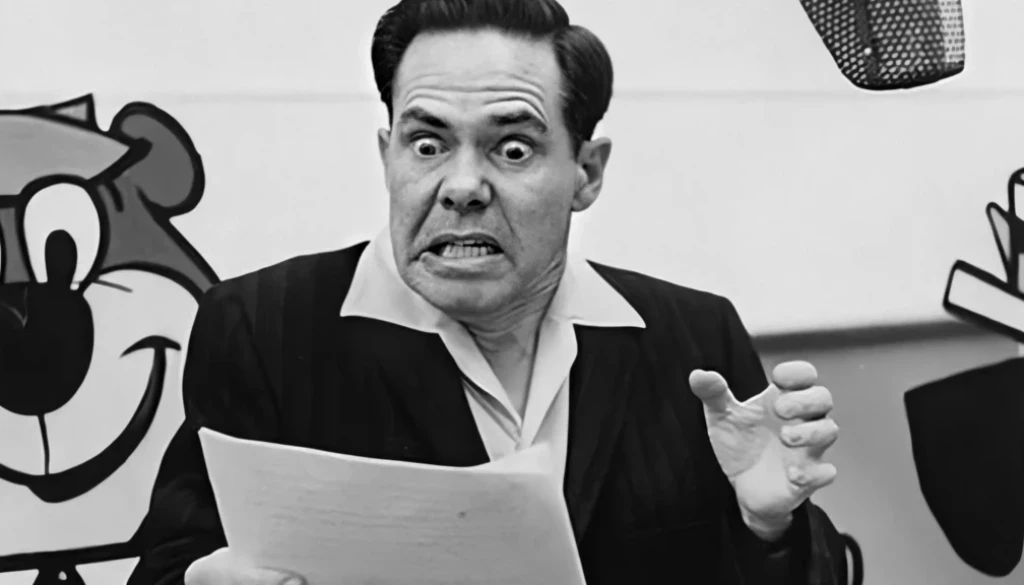
Daws Butler was one of the most influential American voice actors of the twentieth century. As a Daws Butler voice actor, his work helped define the sound of television animation, particularly through his long association with Hanna-Barbera Productions and the Walter Lantz cartoon studio.
At Hanna-Barbera, Butler originated the voices of an extraordinary lineup of characters that became cultural touchstones. These included Yogi Bear, Huckleberry Hound, Snagglepuss, Quick Draw McGraw and Baba Looey, Augie Doggie, Loopy De Loop, Wally Gator, Snooper and Blabber, Dixie and Mr. Jinks, Hokey Wolf, Lippy the Lion, Elroy Jetson, Lambsy, Peter Potamus, The Funky Phantom, and Hair Bear.
Earlier in his career, and alongside that work, Butler collaborated with Walter Lantz, providing voices for characters such as Chilly Willy, Smedley, Maxie the Polar Bear, Gooney, and Sam from the Maggie and Sam series.
Beyond his performances, Daws Butler was also a revered teacher and mentor. His workshops and scripts influenced generations of voice actors, shaping how performers approached character, rhythm, and storytelling. Many modern performers still trace their training back to Butler’s methods.
For additional historical context, resources such as Behind The Voice Actors help document his lasting impact.
A Room Full of Voices That Defined Generations
The event was hosted by Joe Bevilacqua, and even now, the guest list reads like a living archive of animation and voice acting history. Among those on the panel were June Foray, whose career included iconic roles such as Rocky the Flying Squirrel, Witch Hazel, and Granny; Corey Burton, known for his extensive work across animation and games, including Justice League and Captain Hook; and Nancy Cartwright, best known as the voice of Bart Simpson, along with her performances in Rugrats and many other productions.
Each of them shared personal stories about Daws Butler—not only as a performer, but as a mentor, teacher, and creative force who profoundly shaped their careers. The discussion never felt staged or formal. Instead, it felt like artists remembering someone who had genuinely changed their lives.
At one point, the group performed one of Daws Butler’s workshop scripts live, bringing his teaching philosophy and creative approach back into the room in real time.
Then came a moment no one expected.
Hearing Daws Butler in His Own Voice
During the event, a recording of Daws Butler himself performing one of his own scripts was played.
Hearing his voice—knowing it came directly from him—shifted the energy in the room. It wasn’t nostalgia. It was presence.
For a brief moment, it felt like Daws was still there. Still teaching. Still guiding.
Fifteen Years Later, in a Garage
About fifteen years later, while cleaning out my garage, I came across an old CD. On it was the entire audio recording of that 2003 event—the panel discussion, the stories, and the performances.
Alongside it were handwritten notes and business cards from that night.
It felt like opening a time capsule.
Instead of putting everything back into storage, I made a different choice.
Preserving the Moment for a New Audience
Rather than letting that recording fade into obscurity, I decided to upload the audio to YouTube, making it accessible to anyone who wanted to listen.
Not just fans.
Not just historians.
But students, voice actors, animators—anyone curious about where this craft came from.
Voice acting often survives in fragments: isolated performances, short clips, and stories passed down secondhand. What we had that night in 2003 was something rarer—a full conversation, captured in time, among people who were directly shaped by one of the medium’s great teachers.
Why Preserving These Moments Is So Important
Looking back now, what stands out most isn’t just the talent in the room.
It’s the realization that I was able to help preserve a moment in voice acting history, even without fully understanding it at the time. I was exposed to artists I hadn’t met before. I listened to stories I didn’t yet know how to fully contextualize.
But years later, the value became clear.
Moments like that don’t come back.
But recordings can.
And sometimes, simply keeping the record is enough.