John Carpenter’s Cathedral: Inside His New Graphic Novel and Album
At 78, John Carpenter turned a nightmare about a hell-bound elevator into a graphic novel and album instead of waiting for anyone’s permission to tell the story his way.
John Carpenter’s Cathedral: Inside His New Graphic Novel and Album
At 78, the director of Halloween, The Thing, and They Live still creates entirely on his own terms, and his newest project, Cathedral, shows exactly why he has never waited for anyone’s permission to tell a story.
Meeting John Carpenter feels refreshing in a way you don’t quite expect.
I got that chance this past weekend at Midsummer Scream in Long Beach. Carpenter and his wife and longtime creative partner, Sandy King, hosted a gathering there tied to Storm King Comics, the publishing company King founded and still runs. I’d watched Carpenter’s movies for decades before that night, so I assumed I knew what to expect walking in. Instead, I found a guy who looked like he was having the time of his life.
He cracked jokes with fans and lit up whenever he talked about the projects he loved. He radiated an excitement for making things, the kind most filmmakers lose long before they hit their seventies.
Watching him work the room, I kept circling back to one thought. John Carpenter is living exactly the life he wants to live, and he figured that out a long time ago. When he wants to tell a story, he simply tells it. He doesn’t sit around waiting for Hollywood to say yes.
Carpenter turned a hell-elevator dream into a graphic novel and album instead of chasing a movie deal that could cost hundreds of millions of dollars.
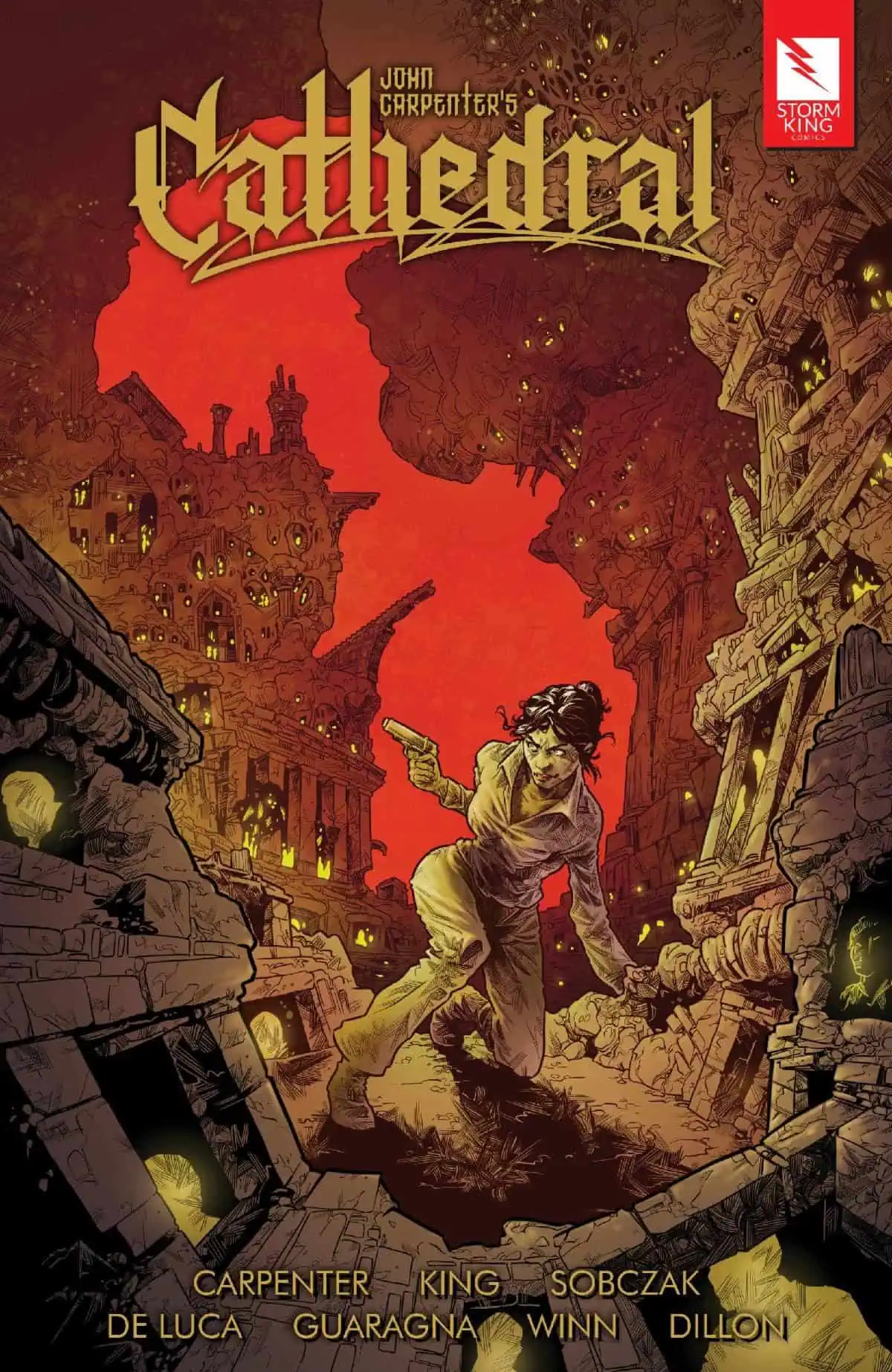
He wrote Cathedral with Sandy King and Sean Sobczak, with art from Federico De Luca and Luis Guaragna.
The companion album, made with Cody Carpenter and Daniel Davies, has each track aligned to a chapter of the book, released by Sacred Bones on August 7th.
Carpenter Has Always Done Things His Own Way
That independent streak never showed up late in his career; it’s been there since the very beginning. Carpenter’s breakthrough arrived in 1978, when Halloween came together as a scrappy independent production and grew into one of the most influential horror films ever made. He directed it, co-wrote it with Debra Hill, and composed its now-iconic score himself. That single project reveals almost everything about how Carpenter operates. When something needed doing, he simply did it.
From there, he moved fluidly through horror, science fiction, action and comedy. Quietly, he assembled one of the strangest and most distinctive filmographies of his generation, from The Fog and Escape from New York to The Thing, Christine, Starman, Big Trouble in Little China, Prince of Darkness and They Live. Some of these landed immediately. Others struggled at the box office and only found their audience years later, once critics and fans caught up to what Carpenter had been doing all along.
Even so, watch any of them today and they still feel unmistakably his. They carry his rhythm, his attitude and his deep suspicion of authority and institutions. Underneath nearly all of it runs the music, because Carpenter never just directed his movies. He gave them a pulse.
From Director to Recording Artist
Eventually, that relationship with music blossomed into an entirely separate career. Carpenter released Lost Themes, his first album outside of a film soundtrack, in 2015. Lost Themes II followed a year later, along with more albums, anthologies and live shows.
Consider the timing for a moment. Carpenter could have coasted comfortably as a celebrated filmmaker emeritus at this point in his career, fielding the same Halloween questions at retrospective after retrospective. Instead, he chose to become a touring musician.
Why not, though? That question seems to drive nearly every chapter of his career. Why not score your own movies, or make a strange little film exactly the way you see it? Why not release an album well into your sixties, launch a comics company, or score a graphic novel before it even exists as one? That last question leads directly to Cathedral.
Cathedral Began as a Nightmare
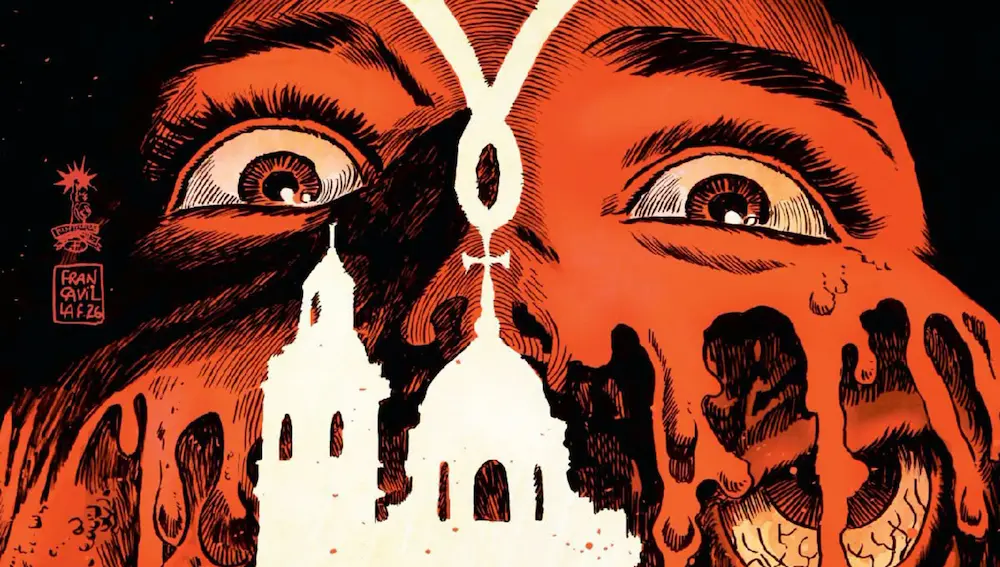
Carpenter’s newest project started somewhere fittingly eerie: a dream. He imagined an abandoned church in downtown Los Angeles, complete with an elevator that descended straight into hell. It’s a premise that could only have come from him. As Carpenter put it himself, the vision arrived as “a nightmare landscape deep underground,” populated by creatures he felt compelled to pull out of his own head. He wanted them in everyone else’s too.
Rather than rush the idea toward a conventional movie deal, Carpenter took a different path. He began building music around the concept with two of his closest longtime collaborators, his son Cody Carpenter and his godson Daniel Davies. The music came first this time, flipping his usual process on its head. On most of his films, Carpenter shot the footage, cut the edit, and then scored whatever already existed on screen. With Cathedral, he had a soundtrack in search of a story.
Then the next idea clicked into place: why not turn it into a graphic novel? Carpenter told the Associated Press that bringing his original vision to the screen the traditional way could easily cost hundreds of millions of dollars. A graphic novel offered something increasingly rare in modern Hollywood: real creative freedom. As it happened, he already knew someone who understood the comics business inside and out. His wife.
Inside the 120 Pages of Cathedral
Carpenter didn’t write Cathedral alone. He shares script credit with Sandy King and writer Sean Sobczak. Artists Federico De Luca and Luis Guaragna bring the story to the page, with colors from Ryan Winn and letters from Marshall Dillon.
Across 120 pages, the story follows Lieutenant Christine Marks and detectives Paul Hernandez and Steve Mayfield as they investigate a gruesome murder. The killing ties back to an abandoned cathedral sitting quietly in the middle of downtown Los Angeles, fenced off and long ignored by everyone who passes it.
What starts as a routine case quickly turns personal for Marks, since the killer took the life of her own father. Every step deeper into the church pulls the detectives closer to an ancient evil that has waited centuries to be found.
King has built a career around exactly this kind of story. She summed up the philosophy behind Storm King in one line: “Every dream should be a nightmare.” Reading Cathedral, she suggested, lets Carpenter’s dream become the reader’s own.
Sandy King Is Central to This Story
It undersells things considerably to call Sandy King simply “John Carpenter’s wife.” She built her own career as a producer, writer and editor across film, television and publishing long before Storm King Comics ever existed. Her collaborators included filmmakers like John Cassavetes, Francis Ford Coppola, Michael Mann, Walter Hill and John Hughes.
King also worked alongside Carpenter for decades. She earned production credits on Big Trouble in Little China, Prince of Darkness and They Live, then later produced In the Mouth of Madness, Village of the Damned, Vampires and Ghosts of Mars. Their creative partnership didn’t start with comic books, but the comics eventually gave it a new home. King founded Storm King Productions in 2012, where she serves as founder and editor of its comics division while Carpenter works as co-publisher and contributor. Together, they built a space where filmmakers, novelists, and comic artists could tell horror and science fiction stories completely outside the traditional studio system.
That distinction matters. Storm King isn’t a licensing shop slapping Carpenter’s name on merchandise; it’s a genuine publishing company with a genuine catalog.
Building an Entire Horror Universe
Storm King Comics has grown steadily since it launched. Its lineup now includes John Carpenter’s Asylum, the anthology series John Carpenter’s Tales for a HalloweeNight, John Carpenter’s Tales of Science Fiction, John Carpenter’s Night Terrors and Dark & Twisted. The company even reaches younger readers through John Carpenter Presents Storm Kids, which introduces horror, sci-fi and fantasy to a new generation of fans.
Every title circles back to the same idea: storytelling first. Some stories originate directly with Carpenter and King, while others come from writers and artists they’ve pulled into their orbit. Set against the backdrop of Carpenter’s Hollywood career, that setup becomes especially compelling. He no longer needs to convince a studio executive that a project fits this quarter’s release strategy. He and King simply built their own place to tell it.
Cathedral Pulls Every Thread Together
That’s exactly why Cathedral feels like the ultimate Carpenter project heading into 2026. It brings together nearly every strand of his creative life in one package: horror, visual storytelling, music, collaboration, Sandy King, Cody Carpenter, Daniel Davies and total creative independence.
What began as a nightmare turned into music. The music inspired a bigger story, which then became a graphic novel through Storm King Comics. The album itself deepens that connection even further. Carpenter built each track to align directly with a chapter of the book, so reading Cathedral while listening becomes its own kind of experience. Sacred Bones released the album on August 7th, timed to land right alongside the graphic novel.
In a real sense, it’s a movie that never needed to become a movie. More importantly, nobody had to wait around for a studio to greenlight it. Carpenter and King simply made it happen. There’s something wonderfully old-school about that process, even as it feels completely modern.
From a nightmare
to a graphic novel.
Hollywood Changed. Carpenter Didn’t.
Carpenter hasn’t shied away from discussing how dramatically the film business has shifted around him. Speaking with the Associated Press about Cathedral, he described today’s movie industry as increasingly corporate and risk-averse. Rather than spend his energy fighting that system, he found other outlets that keep him creatively fulfilled.
That choice says a great deal about him. Carpenter didn’t stop creating when the industry changed; he simply changed his delivery system. That distinction matters more than it might first appear. For decades, filmmakers needed studios because movies were enormously expensive to make and distribute. Today, a storyteller can move freely between film, streaming, music, comics, graphic novels and games. Carpenter seems completely at ease doing exactly that, likely because he was never all that interested in the machinery surrounding creativity in the first place. He was interested in making things.
The Master of Horror Is Still Having Fun
That thought stuck with me long after I left Midsummer Scream. Plenty of filmmakers eventually turn into walking museums, where every conversation loops back to something they made three or four decades earlier. Carpenter has certainly earned that kind of reverence. Halloween alone would secure his place in film history. Add The Thing, Escape from New York, They Live, The Fog and Big Trouble in Little China to the list, and his influence becomes nearly impossible to measure.
Yet Carpenter doesn’t seem interested in standing still beside his own legacy. He’s still making music, still building comics, still chasing strange ideas that start with elevators descending into hell. He clearly relishes every minute of it. Surrounded by Sandy King, Storm King Comics, and generations of horror fans at Midsummer Scream, Carpenter didn’t come across as someone protecting a legacy. He came across as someone having fun.
He’s the Master of Horror, certainly. But more than that, he’s living proof that creative people don’t need permission to keep creating. Sometimes an idea starts as a dream. Sometimes it costs too much to make as a movie. So you find another way: you make the music, call your wife, and turn the idea into a graphic novel instead.
John Carpenter never actually left horror. He just stopped waiting for anyone to hand him the green light.
Will you be adding John Carpenter’s Cathedral graphic novel to your collection?