
They had little money and no stars, yet these filmmakers turned their limitations into the very thing that frightened audiences. From a Pittsburgh farmhouse to a grimy bathroom in Saw, here’s how five low-budget horror films changed the way Hollywood makes and sells fear.
Five Low-Budget Horror Films That Rewrote Hollywood’s Rules
They had little money and no stars. Yet these filmmakers turned their limits into the very thing that frightened audiences, and Hollywood has chased their formula ever since.
Hollywood has spent decades and fortunes trying to manufacture fear. Studios have commissioned elaborate creature effects and cast bankable stars, convinced that scale delivers scares. Yet some of the most influential low-budget horror films ever made came from filmmakers who could barely afford film stock. That shortage forced them to discover something the studios kept missing. Fear does not live in the spectacle. It lives in the audience’s imagination, and a clever director can reach it with an ordinary house and a well-timed silence.
The five low-budget horror films below did more than frighten moviegoers. Each one changed how horror gets made and sold. Each one also proved that an independent production could beat the studio system on its own turf. As Halloween approaches, these movies deserve a second look. They work as entertainment, and they also work as case studies in how a small idea can reshape a genre.
1. Night of the Living Dead (1968): The Monster That Ate the Old Rules
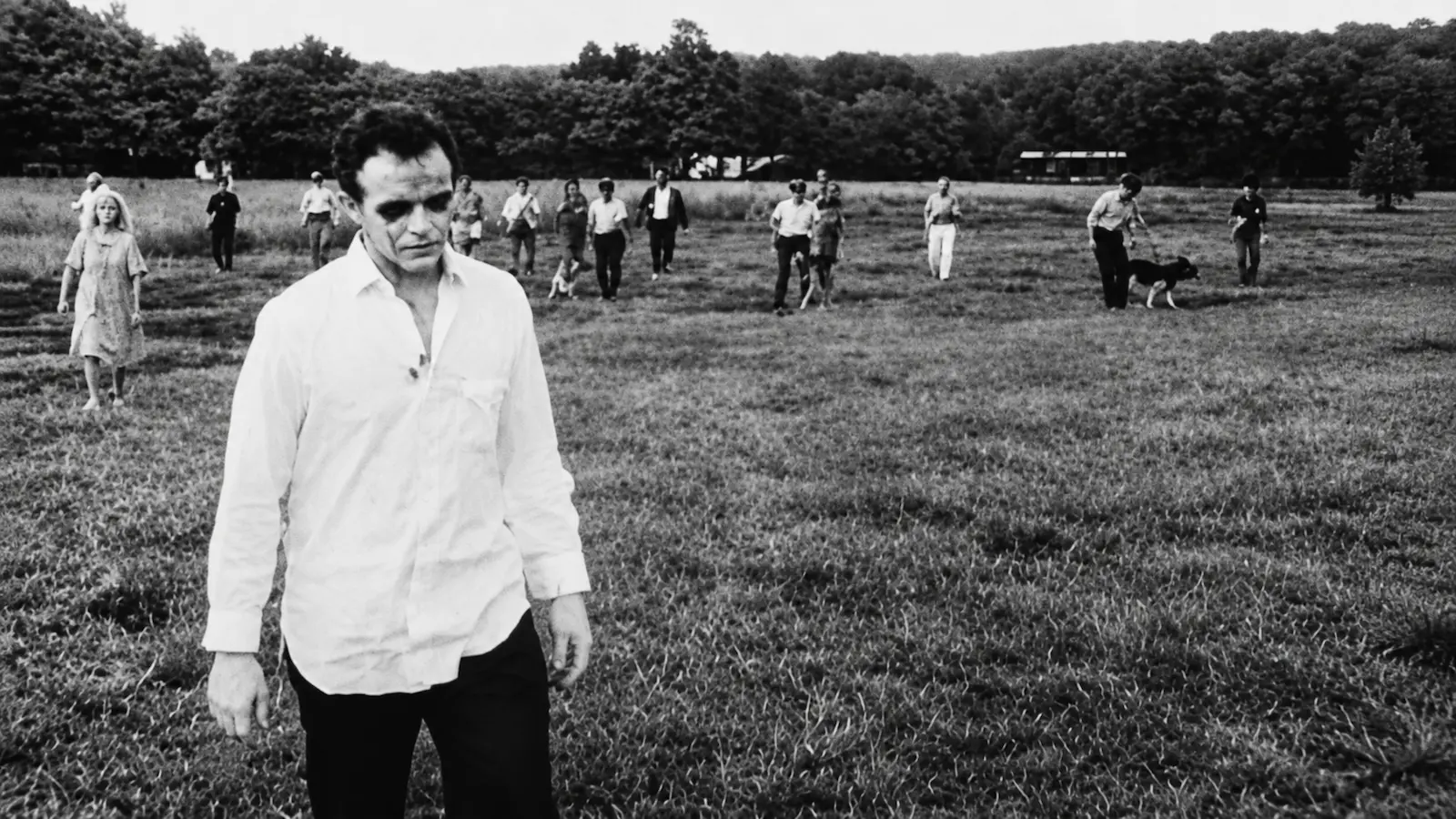
Before George A. Romero brought his cameras to a farmhouse outside Pittsburgh, the movie zombie belonged to another tradition. Hollywood portrayed the walking dead as hollow servants bound to a voodoo master. Those figures seemed more pitiable than threatening. Romero, working with roughly $114,000 and a crew of local collaborators, imagined something far more dangerous. His corpses rose on their own and hungered for human flesh. They multiplied until civilization itself began to buckle. Curiously, nobody in the film ever calls them zombies. The characters call them ghouls, which may be the biggest missed branding opportunity in horror. Still, Romero’s rules have governed the genre for more than half a century.
The Enemy Inside the House
Romero and co-writer John Russo trapped a handful of strangers inside the farmhouse. Then they let the real drama unfold among them. While the dead pressed against the boarded windows, the survivors argued over strategy. Their refusal to cooperate proved nearly as lethal as anything outside. Duane Jones anchored the story as Ben, a resourceful man who takes charge as everything collapses. Casting a Black actor as the hero of an American horror film in 1968 was a rare choice. Romero always maintained that Jones earned the part with the best audition. Still, the film arrived during one of the most turbulent years of the civil rights era. Its devastating final scene forced audiences to confront the link between fear and prejudice. That reading landed whether the filmmakers intended it or not.
Poverty as Atmosphere
Romero shot in black and white because he had to, and that necessity became an asset. The grainy images resembled television news footage of the period, which lent the nightmare immediacy. Meanwhile, the unremarkable farmhouse made the horror feel like it could happen down any rural road. The film’s frank violence also shocked viewers raised on the polite restraint of studio horror.
The money told its own story. The film earned more than 250 times its production budget. That return set the commercial template low-budget horror films have chased ever since. In 1999, the Library of Congress added it to the National Film Registry. By then, Romero’s ghouls had spread from drive-in screens into nearly every corner of popular culture. He had created a monster flexible enough to represent almost anything a society feared.
2. The Texas Chain Saw Massacre (1974): Horror Without the Supernatural
Six years later, Tobe Hooper drove the genre somewhere even more unsettling. Made for approximately $140,000, The Texas Chain Saw Massacre follows young travelers who stumble onto a family of killers. Hooper stripped away every trace of the supernatural. He planted his monsters among rotting farmhouses and rusted machinery, the remnants of a declining farm economy. Nothing on screen seemed impossible, and that plausibility became the film’s sharpest weapon.
The Making of Leatherface
Hooper and co-writer Kim Henkel built their central horror around Leatherface. The hulking killer hides behind masks stitched from human skin. The crimes of Wisconsin murderer Ed Gein, which had already inspired Psycho, provided partial inspiration. Still, the character quickly became something entirely his own. Gunnar Hansen played him through movement and labored breathing, communicating in squeals rather than words. His shifting masks hinted at different personalities. Meanwhile, his cowering relationship with his family revealed something pathetic beneath the menace. Leatherface possessed no supernatural power at all. That absence frightened audiences most, because it meant someone like him could actually exist.
What the Camera Didn’t Show
Hooper shot on 16mm film during a brutal Texas summer, with unknown actors on a punishing schedule. The movie’s reputation for gore, however, far exceeds what actually appears on screen. Hooper suggested most of the violence through editing and sound design. The actors’ reactions carried the weight, and audiences filled in the gruesome details themselves. The approach paid off at the box office, where the film took in roughly $30 million domestically. It also became a blueprint that low-budget horror films still follow today. Above all, it proved that the images an audience imagines will always outrun a special effects budget.
3. Halloween (1978): Evil Moves to the Suburbs
By the late 1970s, independent filmmakers understood that danger hits hardest in familiar places. John Carpenter carried that insight straight into middle-class America. Produced for roughly $300,000 to $320,000, Halloween follows the killer Michael Myers. Michael breaks out of a psychiatric hospital and returns to his hometown of Haddonfield, Illinois. Romero and Hooper had stranded their victims in remote farmhouses. Carpenter instead set his story on quiet residential streets lined with comfortable homes. The implication landed with unnerving force. Evil no longer waited at the end of a dirt road. It stood on the sidewalk across the street.
A Face With Nothing Behind It
Carpenter and co-writer Debra Hill conceived Michael as an absence more than a character. The screenplay often calls him the Shape, a label that strips away any personality. The film offers almost no explanation for his behavior. His famous appearance came straight from the bargain bin. Production designer Tommy Lee Wallace altered a cheap Captain Kirk mask and painted it ghostly white. Never underestimate a discount rack, because this one gave cinema one of its scariest faces. The result was a blank face that revealed nothing. Audiences found that emptiness more terrifying than any snarl. Jamie Lee Curtis provided the counterweight as Laurie Strode, an ordinary teenager with quiet competence. That competence carries her through the longest night of her life. Laurie became the template for the resourceful survivor at the heart of countless slasher films.
The Formula Hollywood Couldn’t Stop Copying
Carpenter worked on a tight schedule and composed the score himself. His spare piano theme became one of the most recognizable motifs in movie history. Patient camera work and long suspense sequences did the rest. Earlier films had explored similar territory, but Halloween revealed how much money low-budget horror films could make. The industry noticed immediately. A wave of imitators followed, with Friday the 13th leading the charge. Meanwhile, Michael Myers anchored a franchise that still returns to theaters today. Carpenter had shown that a modest concept, executed with confidence, could outlast the studios’ best efforts to copy it.
4. The Blair Witch Project (1999): Selling the Myth Before the Movie
Two decades later, a horror film arrived that looked nothing like a Hollywood production. Daniel Myrick and Eduardo Sánchez made The Blair Witch Project for an estimated $35,000 to $60,000. They presented it as the recovered footage of three student filmmakers who vanished in the Maryland woods. The movie offered no creature effects and no recognizable stars. Instead, audiences squinted through shaky handheld images and listened to frightened voices in the dark. Viewers strained to make sense of whatever lurked beyond the camera’s reach. The directors had turned their technical limitations into the story’s central device.
Performances That Felt Like Evidence
Myrick and Sánchez cast Heather Donahue, Michael C. Williams and Joshua Leonard as fictionalized versions of themselves. Then they sent the actors into the woods with a loose outline rather than a polished script. The directors fed them situations and instructions while letting them improvise. As the performers grew exhausted and frightened, their bickering took on a raw authenticity. No rehearsed dialogue could have matched it. The film’s most important character, however, never appears at all. The Blair Witch exists only through rumors and the strange objects that turn up outside the tent. By refusing to show her, the filmmakers handed the job of imagining her to the audience. Every viewer built a version more frightening than any effects team could design.
Marketing as Mythology
The campaign behind the film proved nearly as influential as the film itself. The filmmakers built an elaborate fictional history for the Blair Witch, complete with past disappearances. They presented it on a website that read like documentation of real events. A television mockumentary blurred the line even further. Internet culture was still taking shape, and the strategy invited audiences to investigate the legend themselves. Some moviegoers walked into theaters genuinely unsure whether the footage was real.
The business story proved just as remarkable. After the film’s Sundance premiere, Artisan Entertainment bought its distribution rights for $1.1 million. That modest bet paid off when the movie earned roughly $249 million worldwide. The return sent every studio hunting for low-budget horror films of its own. The found-footage wave that followed eventually produced Paranormal Activity and Cloverfield. More lasting still, the film showed Hollywood that an online audience could join the storytelling before buying a ticket.
5. Saw (2004): A Franchise Born in One Room
Five years after Blair Witch, two young Australian filmmakers faced the same obstacle as everyone on this list. Director James Wan and writer Leigh Whannell wanted to make a feature. They knew no financier would back an expensive one from first-timers. So they designed a story that could unfold almost entirely in a single location. Made for approximately $1.2 million, Saw opens with two strangers waking up in a filthy industrial bathroom. They are chained to pipes on opposite walls. Neither man knows how he got there, and both soon realize someone has drafted them into a deadly game. The premise cost little to film and gripped audiences from the first frame.
The Philosophy of Jigsaw
Wan and Whannell gave their villain something earlier horror icons lacked, which was a worldview. John Kramer, known as Jigsaw, believes that most people squander their lives. So he builds elaborate tests that force victims to choose between sacrifice and death. Think of him as the world’s most aggressive life coach. Tobin Bell played him with an eerie calm that made his lectures nearly as disturbing as his traps. Michael Myers never explains himself, but Jigsaw explains himself constantly. He genuinely believes he is teaching his victims to value survival rather than murdering them. That contradiction gave the character a lasting identity. Meanwhile, Billy, the ghoulish puppet that delivers his messages, gave the franchise its signature image.
Proving the Concept
Before anyone would finance the feature, Wan and Whannell shot a short proof-of-concept film. Once the money arrived, they worked fast and leaned on confined spaces and a carefully layered mystery. That mystery builds toward a final twist. Later sequels grew fixated on gore and baroque traps, but the original relied on psychological tension. The film grossed more than $100 million worldwide. That made it one of the most profitable low-budget horror films of its decade. It also launched a franchise that claimed the Halloween box office season after season. Wan and Whannell went on to build several of modern horror’s biggest series. Both careers began in a single grimy room.
What These Low-Budget Horror Films Teach Us About Fear
Although these five films span nearly four decades, they share a defining trait. Each production converted a limitation into a creative advantage. Romero used ordinary locations and unfamiliar faces to make the end of civilization feel close at hand. Hooper relied on suggestion and grim realism instead of expensive effects. Carpenter turned a cheap mask and a spare piano melody into an icon. Myrick and Sánchez used consumer cameras and a young internet to make a fictional nightmare feel true. Wan and Whannell, meanwhile, built a twisting thriller around a premise that barely needed a second set.
Underneath those differences, every one of these filmmakers grasped something larger productions often forget. Audiences do not need to see the monster in order to fear it. They need a reason to believe that something terrible is about to happen. The most enduring horror concepts tend to be the simplest ones. Think of a corpse that refuses to stay dead, or a voice on a tape recorder demanding an impossible choice. A spare idea works like an open invitation, and audiences accept it by supplying the fear themselves.
The Next Generation of Independent Horror
Today’s independent filmmakers work with tools Romero and Hooper could hardly have imagined. Digital cameras and affordable editing software have erased many old technical barriers. Crowdfunding and online distribution have opened new paths to financing and audiences. Making a movie, however, has never been the same as finding an audience for it. Streaming platforms offer real opportunity, but they also bury independent work inside vast franchise libraries. A viral moment on social media rarely translates into a sustainable career. Those same pressures shape independent animation, which DerksWorld follows in its Animation coverage. Our Industry section digs into the dealmaking side of the story.
Even so, independent horror keeps proving the value of an unusual idea. Hollywood rarely discovers its next movement through market research or another reboot of familiar intellectual property. More often, a small group of filmmakers makes something the industry never saw coming. Sometimes all they have is a borrowed farmhouse or a camera in the woods. Occasionally, a discount Halloween mask is involved. The budget may be small, but a nightmare built on a great idea can haunt audiences for generations.
DerksWorld