Mickey Mouse Public Domain Explained: What It Means and What Happens Next
Which Version of Mickey Mouse Is in the Public Domain?
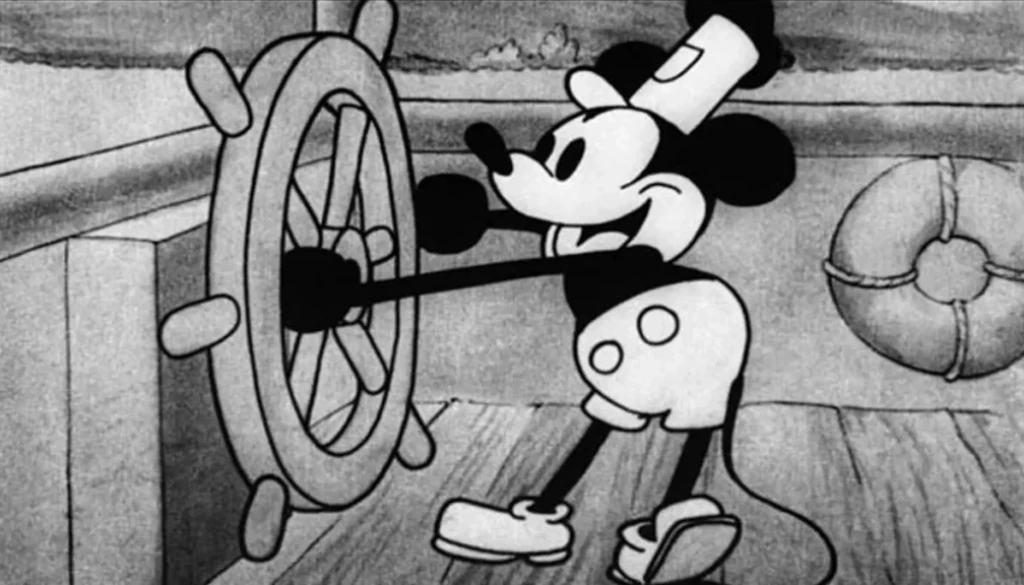
Only one version of Mickey Mouse entered the public domain in 2024: the version that appears in the 1928 animated short Steamboat Willie.
Directed by Walt Disney and Ub Iwerks, Steamboat Willie is historically significant as one of the first animated shorts to successfully synchronize sound with moving images. It introduced audiences to a mischievous, rough-edged Mickey Mouse whose personality and design differ noticeably from the character audiences recognize today.
This distinction is critical. The public domain status applies only to what appears on screen in that 1928 film. Later versions of Mickey Mouse—those refined visually and narratively over the decades—remain protected. Other early Mickey cartoons, such as Plane Crazy and The Gallopin’ Gaucho, remain under copyright until 2025.
What Does “Public Domain” Actually Mean?
When a creative work enters the public domain, its copyright protection expires. That allows the public to use, share, adapt, and reinterpret the work without needing permission or paying licensing fees. Public domain works belong to everyone and form part of our shared cultural heritage.
However, entering the public domain does not mean a character is suddenly free from all legal restrictions. Copyright expiration does not erase trademark protections, and in the case of Mickey Mouse, that difference is essential.
Related: Read our explainer on how public domain works for famous characters.
Copyright vs. Trademark: Why Disney Still Has Control
Copyright and trademark law serve very different purposes. Copyright protects creative expression for a limited period of time, ensuring that works eventually become available to the public. Trademark law exists to prevent consumer confusion by protecting brand identity.
Disney continues to hold extensive trademark rights in Mickey Mouse. These trademarks cover branding, logos, merchandise, and the association between Mickey Mouse and the Walt Disney Company. While copyright protection expires, trademarks can last indefinitely as long as they are actively used in commerce.
As a result, creators may legally use the Steamboat Willie version of Mickey Mouse, but they may not present that use in a way that implies Disney’s endorsement or confuses consumers about the source of a product. Courts have consistently ruled that trademark law cannot be used to override public domain rights, but it can restrict how public domain material is marketed and presented.
Why Early Mickey Is Different From Modern Mickey
The Mickey Mouse of 1928 is visually simpler, more impulsive, and far less polished than the modern version. Over nearly a century, Disney refined Mickey’s appearance, personality, and role as a brand ambassador.
Those later developments are not part of the public domain. Creators cannot use modern Mickey’s design, personality traits introduced after 1928, or any elements that audiences primarily associate with Disney’s contemporary brand.
In practice, this means any use of early Mickey must be carefully limited to what existed in Steamboat Willie alone.
We’ve Seen This Before: Winnie the Pooh and the Public Domain
Mickey Mouse is not the first iconic character to face this transition. In recent years, A. A. Milne’s original Winnie-the-Pooh entered the public domain, followed by additional characters later. Almost immediately, creators experimented with reinterpretations—some thoughtful, others deliberately provocative.
In cases like this, corporate versions with distinctive branding and later design elements remain protected, while the earliest versions become available for new creative uses. The public domain does not guarantee artistic quality. What it guarantees is creative freedom.
Why Horror Versions Appear First
When well-known characters enter the public domain, horror is often the first genre to respond. Familiar characters reimagined in dark or unsettling contexts generate immediate attention, particularly in an algorithm-driven media landscape.
These projects often rely on shock value rather than long-term storytelling. They may grab headlines, but they rarely define the lasting cultural impact of a public domain work. Over time, more meaningful reinterpretations tend to emerge, and early Mickey Mouse is likely to follow that pattern.
Disney’s Position on Mickey Mouse Going Forward
Disney has been clear that it intends to continue protecting Mickey Mouse through trademark law. The company has stated it will actively guard against consumer confusion and unauthorized uses that misrepresent the brand.
Modern versions of Mickey Mouse remain unaffected by the expiration of Steamboat Willie’s copyright. Mickey continues to play a central role in Disney’s storytelling, theme parks, and merchandise, and that role will not diminish simply because one early film has entered the public domain.
This is not Disney losing Mickey Mouse. It is Disney adapting to a legal framework that has always existed.
The Significance of Mickey Mouse Entering the Public Domain
This moment matters not because of what might be exploited, but because of what it represents. Every major franchise begins as an original idea, protected for a time, and eventually destined to become part of the broader cultural landscape.
The public domain is not an ending. It is the long tail of cultural relevance. For creators today, the lesson is clear: the characters and stories being created now may one day belong to everyone. Ownership shapes the present, while the public domain shapes the future.
Mickey Mouse endured not because of copyright alone, but because of storytelling, craftsmanship, and emotional connection. That same truth will determine which creative works survive the next century.
Public Domain Is Continuity, Not Chaos
Public domain status does not erase legacy. It extends it. It ensures culturally significant works continue to inspire new generations in new ways.
Mickey Mouse entering the public domain is not the end of a story. It is a reminder of how culture evolves—and why original creation matters more than ever.