Cult Classic Movies: Why They Never Really Die
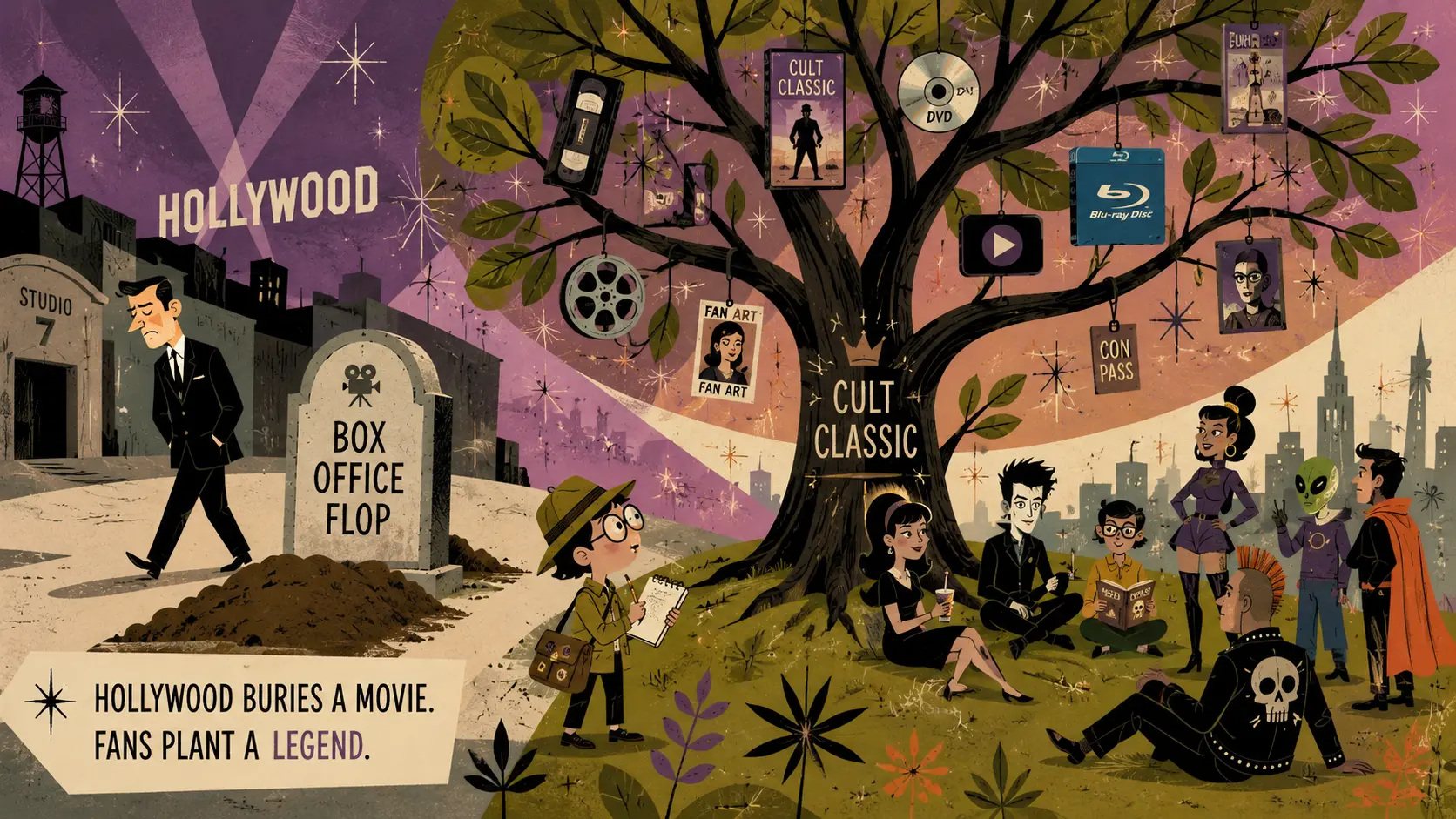
Hollywood releases a movie. Audiences decide whether it becomes a cult classic movie.
Cult Classic Movies: Why They Never Really Die
Hollywood spends billions chasing blockbusters, but some of the most beloved films in history bombed on arrival. Here’s how five of them clawed their way back.
Every year, studios pour billions of dollars into finding the next blockbuster. They study audience data, license familiar franchises, and blanket the culture with marketing before opening weekend even arrives. And yet some of the most beloved films in history become cult classic movies by skipping that formula entirely. They open quietly, get overlooked, vanish from theaters within weeks, and then claw their way back years later with an audience that refuses to let them go.
That’s the strange, stubborn magic of a cult movie.
Unlike a traditional hit, a cult classic doesn’t earn its reputation on opening weekend. It earns it slowly, through word of mouth, home video, midnight screenings, and streaming algorithms that keep putting the right film in front of the right person years after the marketing budget ran dry. A studio can control how a movie gets released. It can’t control whether that movie gets a second life.
A box office flop isn’t always a cultural failure.
Five films, five completely different paths, one shared outcome: cult classic status.
Audiences, not studios, decide what becomes immortal.
The Rocky Horror Picture Show: The Audience Becomes the Show
When The Rocky Horror Picture Show hit theaters in 1975, nobody predicted it would become one of the longest-running theatrical releases ever. Its box office numbers gave no hint of the phenomenon to come. Then audiences did something nobody at the studio planned for: they showed up in costume, shouted dialogue back at the screen, and started throwing props during their favorite scenes.
Watching the movie wasn’t the reason to go to the theatre. Performing it in front of and with other enthusiasts in a shared experience became the focus.
Fifty years later, the film still belongs less to its creators than to the fans who turned every midnight screening into live theater. You can dig into the film’s history on IMDb’s page for The Rocky Horror Picture Show.
Blade Runner: Sometimes the Audience Just Needs Time
Not every cult film wins its audience overnight. Some arrive a little early.
Blade Runner landed in 1982 to a lukewarm reception, sandwiched between summer blockbusters that offered bright, optimistic visions of the future. Ridley Scott’s rain-soaked, morally murky take on Los Angeles felt out of step with what audiences wanted at the time. Films like E.T. the Extra-Terrestrial, Star Trek II: The Wrath of Khan, and Poltergeist captured the emotional mood of that era.
Then home video did what theaters couldn’t. New cuts of the film sparked fresh debate, and a new generation of viewers found the questions it asked about identity and consciousness more relevant with each passing decade. Today, plenty of critics rank it among the most influential science fiction films ever made. Read more on IMDb’s Blade Runner page.
Office Space: DVDs Gave It a Second Life
Few films illustrate the power of home entertainment quite like Office Space.
When Mike Judge’s workplace comedy opened in 1999, almost nobody went to see it. It bombed, then disappeared from theaters within weeks. That should have been the end of the story.
Instead, DVDs, cable reruns, and office water-cooler conversations rewrote its fate. As more people clocked into cubicle jobs, the film’s satire stopped feeling exaggerated and started feeling personal. Lines from the movie worked their way into everyday office vocabulary, and a flop became a touchstone. It also became an engine for creating popluar internet memes. Check out IMDb’s Office Space page for more.
A pattern worth noticing: three of these five films needed home video to survive. Theatrical release windows are short. VCRs, DVDs, and now streaming libraries gave flops the one thing a box office run never offers, a second chance.
The Iron Giant: When Word of Mouth Beats a Marketing Budget
Sometimes a great movie fails simply because nobody hears about it.
The Iron Giant arrived in 1999 with glowing reviews and a marketing campaign that barely made a dent. For many, the movie poster that graced bus stops and shopping malls did little to inform audiences what it was. Most families never even knew it was in theaters.
But the story didn’t stop there. Parents who caught it started recommending it to other parents. Animation fans championed Brad Bird’s direction. Kids who discovered it on video grew up and introduced it to their own kids. Slowly, it climbed toward its current reputation as one of the best animated films ever made, proof that passionate fans can out-market any studio campaign. Visit IMDb’s page for The Iron Giant to learn more.
The Big Lebowski: Some Movies Build a Whole Community
Some films don’t just find an audience. They build one.
The Big Lebowski underperformed when it opened in 1998. The Coen brothers’ shaggy-dog comedy about a bowling-obsessed slacker didn’t look like a hit on paper, and box office numbers agreed.
Then something shifted. After it became available on VHS, fans started rewatching it, quoting it, and eventually organizing around it: festivals, costume contests, bowling tournaments, entire weekends built in its honor. “The Dude” stopped being a character in a movie and became a lifestyle people recognize on sight. Explore the film’s legacy on IMDb’s Big Lebowski page.
From box office flop
to cultural institution.
Hollywood Doesn’t Make Cult Classic Movies. Audiences Do.
These five films span different decades and different genres, but they all arrived at the same place through different roads. One turned viewers into performers. Another needed a couple of decades to be understood. One got rescued by the VCR, another by relentless word of mouth, and one built a full-blown fan culture around a bathrobe and a White Russian.
None of that can be bought with a marketing budget.
Studios measure success in opening weekends and box office returns. Audiences measure it differently. They remember the movies that speak to them, pass them on to friends, revisit them every few years, and eventually hand them down to a generation that wasn’t even alive when the film came out.
That might be the real lesson buried in every one of these cult classic movies: a box office flop isn’t always a cultural failure. The next great cult movie might already be sitting in theaters right now. If history is any guide, we won’t recognize it until years from now, when audiences, not studios, decide it deserves to live forever.