Why Saving Popular Culture Matters
A visit to the Lucas Museum got me thinking about the cartoons, illustrations, films, and other scraps of popular culture we once tossed aside as disposable, and what saving them can teach us about ourselves.
Why Saving Popular Culture Matters
A visit to the Lucas Museum got me thinking about the cartoons, illustrations, films, and other scraps of popular culture we once tossed aside as disposable, and what saving them can teach us about ourselves.
I walked into the Lucas Museum this past weekend planning to spend a few hours looking at art the way most people look at art, strolling, pausing at a label, moving on. Somewhere between the first gallery and the second, a thought I hadn’t visited in decades caught up with me and refused to let go. In college, my professors told me, flatly, that cartoons and film art would probably never make it into museums. The art world of that era didn’t count them as art, not in any way that mattered. Critics filed cartoons under entertainment and film artwork under commercial work, while newspapers, not galleries, claimed the comic strip. Growing up, I’d heard an even blunter verdict: cartoons were the “junk food of art.”
I never completely understood why. Perhaps it came down to embellishment. A cartoon doesn’t carry the layered technique of a great oil painting: the complex relationships between color, light, and shadow, the buildup of paint, the rendering of fabric and skin, or the technical virtuosity that can make you stand in front of a centuries-old canvas and wonder how another human being pulled it off. Those things matter. But simplicity doesn’t make something less sophisticated, or less worthy of our attention. Sometimes simplicity is the accomplishment.
Popular art is not merely entertainment. It is a record of what people saw, valued, feared, laughed at, and imagined.
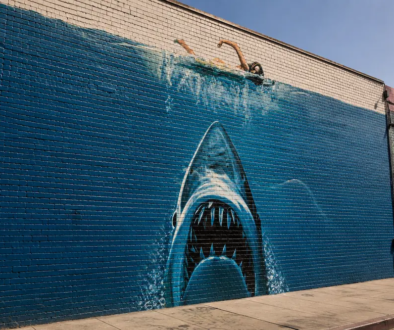
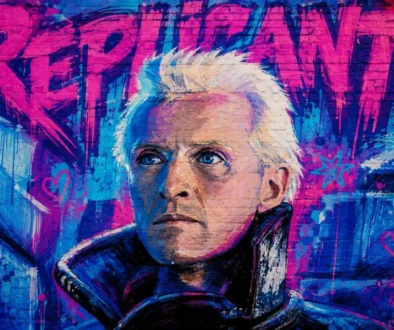
Cartoons, film art, illustration, graffiti, and comics preserve cultural history just as surely as traditional painting does.
Saving the original work also preserves something reproduction cannot: the evidence of human decisions, corrections, and craft.
Inside the Galleries
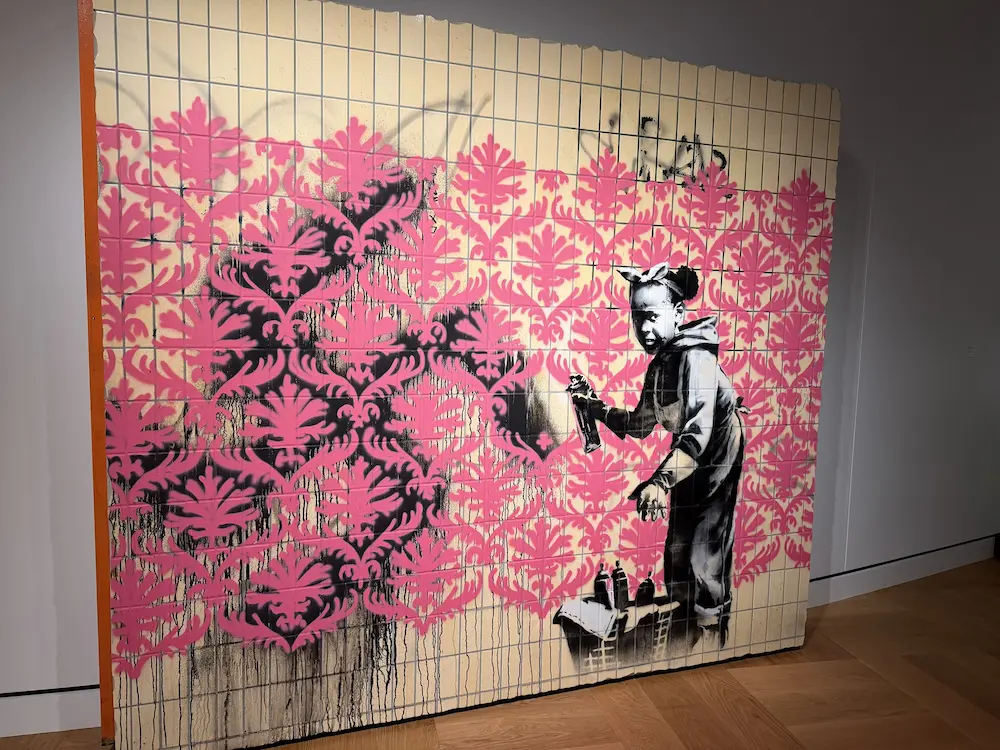
So there I was, decades after professors warned me cartoons didn’t belong in museums, standing in galleries where Peanuts hung beside Winnie the Pooh, where anime shared wall space with Bamse, where graffiti and comic panels and hand-painted movie posters sat under glass, lit and labeled and treated with the same hush usually reserved for oil on canvas. A cluster of kids pressed close to a case of original comic art, tracing the pencil lines with their eyes the way I once traced them with a pencil of my own. I found that enormously satisfying, and it seemed fitting that it took George Lucas, of all people, to make it happen.
Art Is a Record of Us
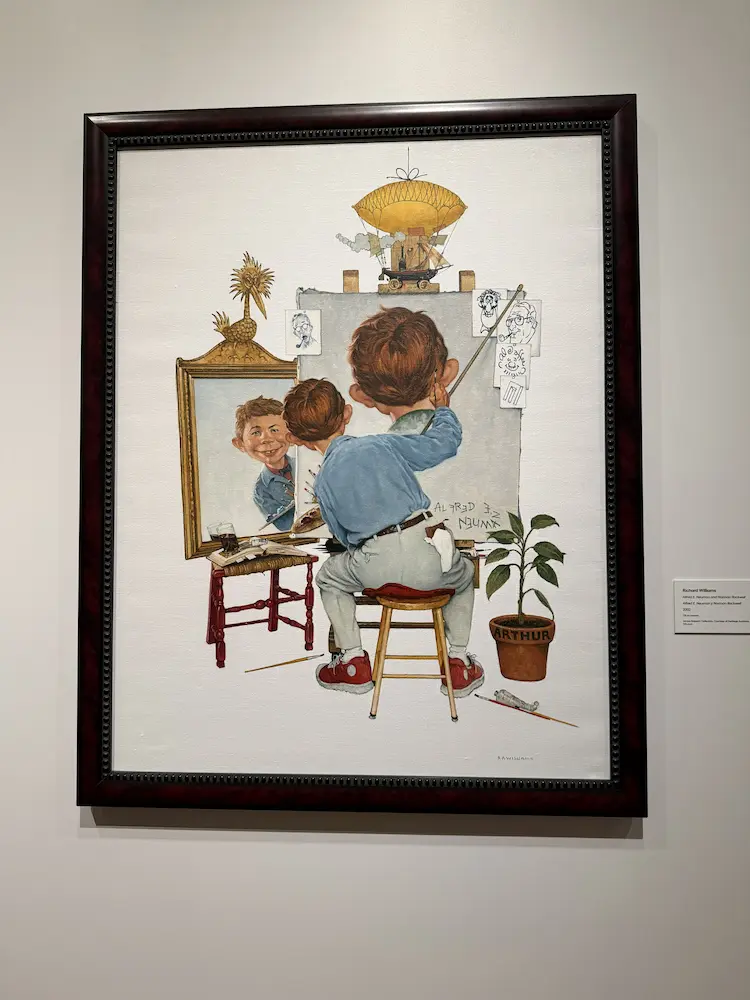
I’ve always thought art does something far more important than decorate a wall or entertain an audience. Art records human history at a particular time and place, through the eyes and hands of the people who were there. Renaissance painters did it. The Impressionists did it. Norman Rockwell did it. Cartoonists do it. Their visual languages could not be more different, yet each one leaves behind evidence of a human being looking at the world and deciding what mattered enough to show someone else.
Study a Renaissance painting, and you’re not just admiring a beautiful object. You’re reading a document about religion, power, wealth, beauty, politics, and the way people understood their place in the universe. Impressionism opens another window entirely. Suddenly we’re seeing cafés, theaters, parks and railway stations. Industrialization is transforming cities and landscapes, while artists are chasing ordinary people and fleeting moments of light and movement across the canvas.
None of these paintings is a history book, yet history lives inside them. The same holds for popular art. A cartoonist, illustrator, animator, photographer or filmmaker may exaggerate reality, satirize it, romanticize it, or invent an entirely new world, but something of the culture they lived in always slips into the work. Art doesn’t just show us what existed. It shows us how somebody felt about what existed. That distinction matters.
A Painting Has Layers: Even When We Can’t See Them
One of the traps we fall into when looking at art is assuming the first thing we see is everything that’s there. I’ve come to think of paintings almost like a Photoshop file. Open a finished image in Photoshop, and you see one complete picture, but underneath it, there can be dozens of layers. Turn one off and something vanishes; turn another on, and you discover something that shifts the meaning, or the depth, of the whole image. Individually, the layers can look almost plain; stacked together, they produce something far richer. Art can work the same way, not as physical layers, but as layers of meaning.
What the Flowers Are Really Saying
Stand in front of a Dutch Vanitas painting from the seventeenth century, and you’ll see what I mean. At first glance, it’s a beautifully rendered vase of flowers surrounded by books, fruit, jewelry, musical instruments, other objects arranged just so. It would be easy to admire the brushwork and walk away thinking you’d seen a lovely still life, but you’ve only opened the first layer.
Lean in, and the objects start talking. Flowers stand for beauty and its inevitable decay. A skull makes mortality explicit. An hourglass or a clock reminds us that time is draining away, second by second, whether we notice or not. Books and scientific instruments represent human knowledge and accomplishment, while jewelry and other luxuries suggest wealth and the futility of believing that things can protect us from death. Even the flowers hide another layer: some of these elaborate Dutch bouquets combine species that bloom months apart, in arrangements that could never have existed exactly as painted. The artist wasn’t just recording a vase sitting on a table. The artist was building an argument. Suddenly, it isn’t a painting of flowers anymore.
It’s a conversation about mortality, knowledge, prosperity, beauty, faith, and the passage of time. Then we add another layer: what those symbols reveal about the society that produced them. And another: why this particular painter chose these particular objects, and arranged them this particular way. Centuries later, we’re still peeling back the layers.
Rockwell’s America
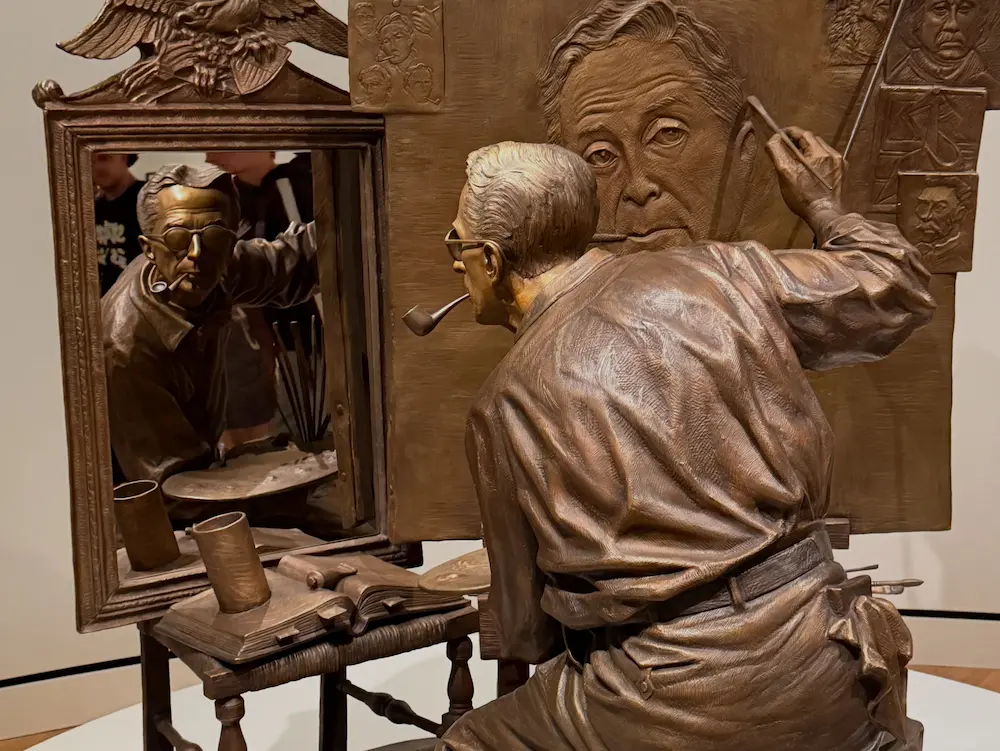
Norman Rockwell gives us a more recent example of how art becomes a record of its time. Look at his work, and you find families crowded around dinner tables, children caught mid-mischief, doctors, teachers, shopkeepers, and neighbors the whole cast of postwar American life. A boy sits shirtless on a doctor’s exam table, more curious than afraid. A Thanksgiving table groans under a turkey nobody in the room can quite believe. The clothing, the furniture, the architecture, the countless incidental details, all of it preserves pieces of twentieth-century American life. Yet Rockwell wasn’t a camera.
He selected. Then he exaggerated. He edited. He told stories. What we’re looking at isn’t America as it existed. It’s America as Rockwell perceived it, filtered through what he found funny, sentimental, troubling, hopeful, or worth our attention. As the country changed, his work changed with it. That subjectivity doesn’t make his work less useful as a historical record. If anything, it makes it more interesting. A photograph might show us what a street looked like in 1945. An artist can suggest what living on that street actually felt like. Art gives history a human point of view.
Sometimes simplicity
is the accomplishment.
The Sophistication of a Simple Line
Which brings me back to cartoons, and that old line about them being the “junk food of art.” Maybe we confused complexity with importance. A Charles Schulz drawing looks almost absurdly plain beside a Renaissance painting. Schulz never needed elaborate perspective, layers of color, or painstakingly rendered anatomy to tell us Charlie Brown had lost, again. A few lines could carry Lucy’s confidence or Linus’s insecurity, and just as easily send Snoopy sailing off into some private fantasy where the rules of reality no longer applied. Consider what an accomplishment that actually is.
The cartoonist has to understand exactly how little information the human brain needs. Shift the angle of a line, the tilt of an eyebrow, the posture of a character, the space between two figures, and the emotional meaning of the whole panel can flip. Simplicity isn’t proof an artist had less to say. Sometimes it means the artist figured out how to say more with less. An oil painting and a four-panel comic strip aren’t solving the same artistic problem, so why judge one by the other’s rules? They speak different visual languages, both fluently.
Popular Culture Is the Art We Actually Lived With
There’s another reason popular art deserves preservation: for millions of people, it was the only art they experienced every day. Not everyone grew up visiting major museums, but nearly everyone opened a newspaper and read the comics. They went to the movies, watched cartoons on Saturday morning, bought comic books off a spinner rack, stared at posters in a theater lobby, and pored over illustrations in magazines and children’s books. A kid might spend far more hours studying the drawings in Winnie the Pooh than studying any Renaissance painting. Those images settle into our visual vocabulary long before we understand we even have one. They also tell future generations something about us.
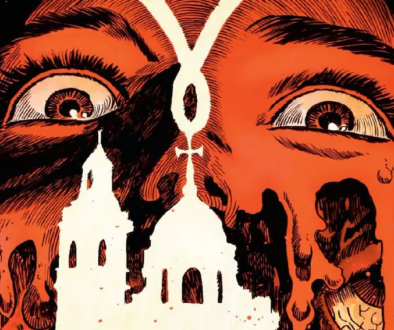
Cartoons preserve our sense of humor. Science fiction preserves what we imagined. Horror reveals what frightened us. Children’s illustrations show how adults pictured childhood itself. Graffiti preserves the voices of people the culture around them chose not to hear. Even fantasy records reality in its own sideways way. An artist can invent a galaxy that never existed and still hand future historians an enormous amount about the society that dreamed it up.
The Past Becomes the Future
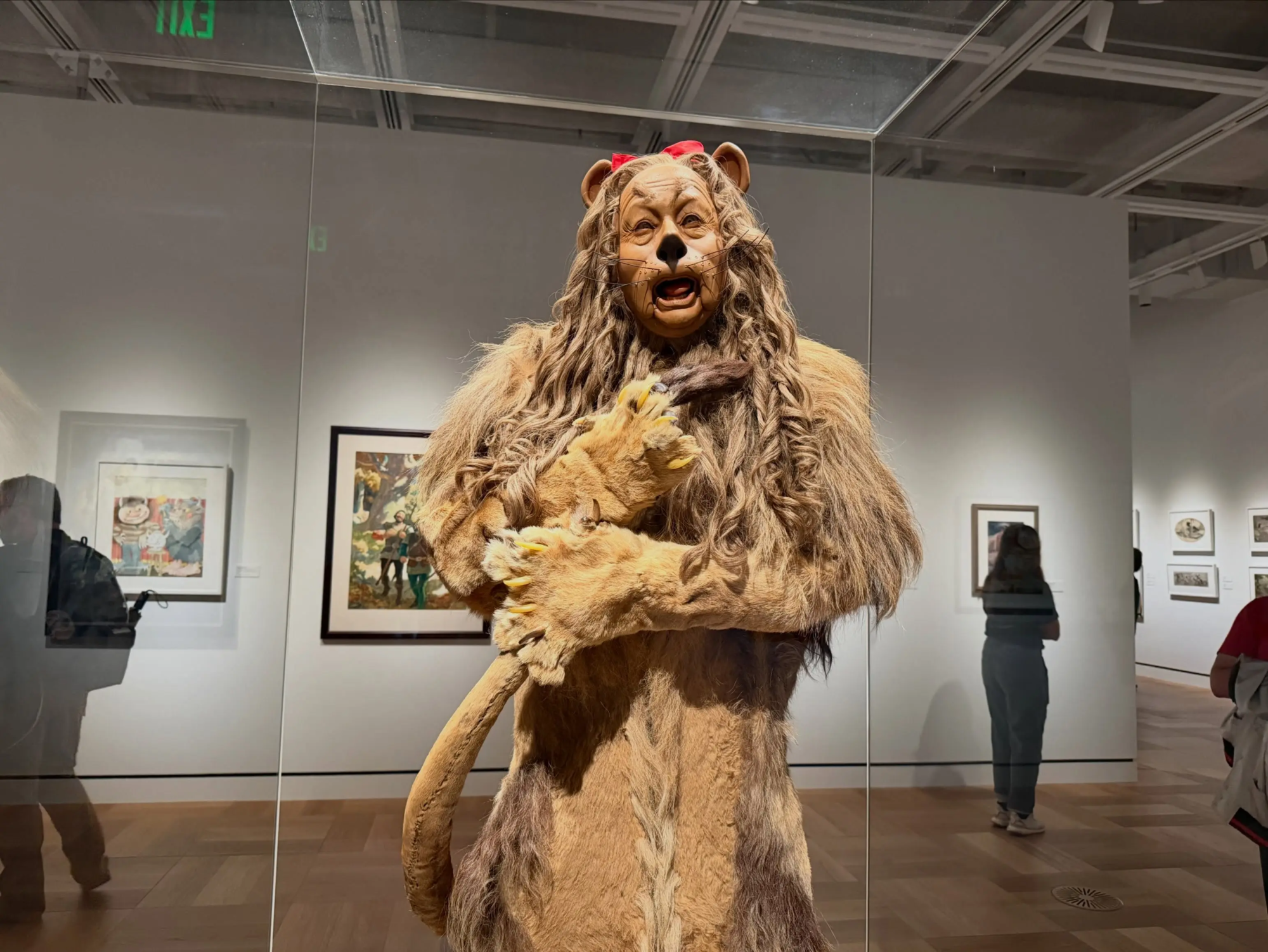
George Lucas himself may be one of the best arguments for why preserving popular culture matters. Star Wars didn’t arrive out of nowhere in 1977. Lucas had absorbed the popular culture that came before him: old movie serials, science fiction, mythology, Westerns, pulp adventures, comics, and cinema from around the world. Things one generation had written off as disposable entertainment became raw material another artist could rearrange into something new.
Then something remarkable happened. Star Wars became part of the cultural memory of the next generation. Filmmakers, artists, designers, and storytellers absorbed Lucas’s work and folded it into their own influences, spinning something else entirely out of the mix. That’s how culture moves: the past becomes raw material for the future. Preservation, then, isn’t nostalgia. It keeps that creative chain intact.
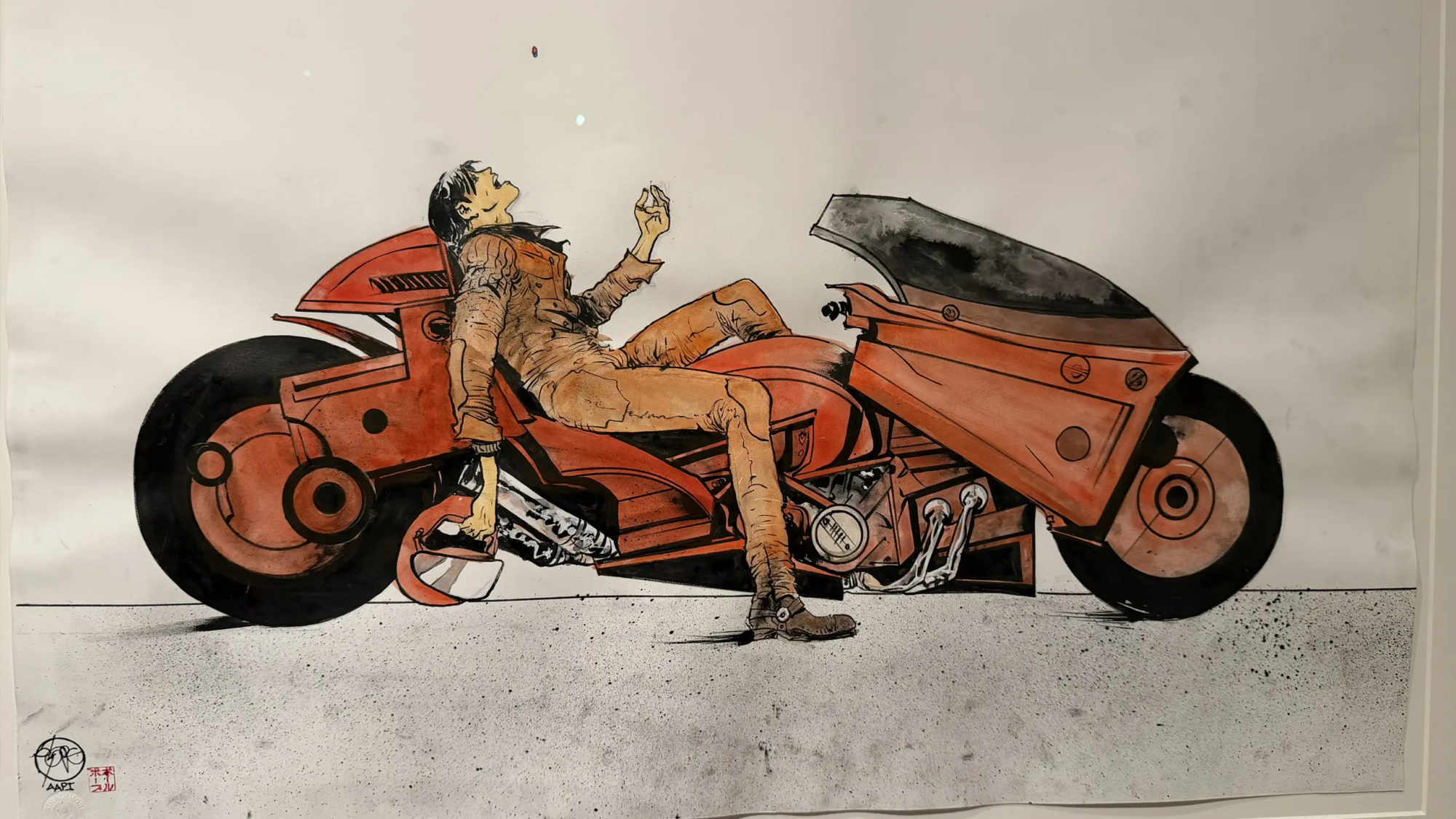
Preservation is not only about keeping the finished image. Original artwork can preserve erased lines, corrections, abandoned ideas, and the physical evidence of an artist thinking through a problem.
Someone Had to Save This Stuff
Walking through a museum also makes you realize how easily that chain could have snapped. Someone had to save these things. That meant looking at an original drawing made for a newspaper, a comic book, an animated film, or a motion picture, and deciding not to pitch it once its commercial purpose had run out. It meant recognizing that the sketch, the production drawing, the illustration, might one day tell us something the finished, published version never could.
Original artwork preserves decisions. Sometimes you can see an erased line, a correction, an earlier idea ghosting beneath the finished one, evidence of an artist wrestling a problem into submission. Those marks are evidence of thought. That’s one of the things I find so important about preserving the physical artifacts of art. They don’t just preserve an image. They preserve evidence of the human being who made it.
Who Decides What Counts as Art?
That’s why those college professors kept surfacing in my mind as I walked through the Lucas Museum. The cartoons hadn’t changed. Peanuts didn’t suddenly turn artistically significant because a museum hung an original Charles Schulz drawing on its wall. Winnie the Pooh didn’t grow more important because someone slid it behind glass. What changed was our willingness to recognize the importance that had been sitting there the whole time.
For a long time, we’ve policed an artificial boundary between “fine art” and the pictures that filled everyday life. One side supposedly deserved preservation and contemplation. The other was written off as commercial entertainment. History may eventually find that boundary a little ridiculous. Five hundred years from now, someone trying to understand the twentieth and twenty-first centuries may study our movies, cartoons, advertising, comic books, photographs, graffiti and illustrations for exactly the reason we now study the visual culture of centuries past. They’ll be trying to understand us, and they’ll find layers.
George Lucas Did It Again
Something is fitting about George Lucas being one of the people willing to make this argument at this scale. Across his career, he has shown, again and again, what happens when someone takes popular culture seriously, including the forms of entertainment earlier generations dismissed as disposable. Now he’s done it again. He’s built a place where cartoons, illustration, film art, comics, photography, graffiti and other forms of visual storytelling don’t have to apologize for being what they are. A comic strip doesn’t need to impersonate a Renaissance painting to earn its preservation. Why should it?
A seventeenth-century painter constructing an impossible bouquet and Norman Rockwell painting an American family are doing something very different from Charles Schulz sending Charlie Brown under another kite-eating tree. Yet each one leaves something behind: a way of seeing and a way of thinking, along with a fragment of the world in which that person lived.
Walking through the Lucas Museum, I understood that’s ultimately what I’d been looking at all along. These weren’t just drawings, paintings, cartoons, and artifacts of popular culture scattered under glass. They were pieces of human history that people in different times and places had made with their own hands, each one holding evidence of how someone once saw their world.
Years ago, my professors told me this work would never belong in a museum. I’m glad they were wrong, and I’m glad George Lucas decided it was worth saving. Preserving art was never about protecting the past from the future. It’s about making sure the future can still find the past, because we preserve art for two reasons: memory matters, and imagination needs a memory to draw from.
Memory matters,
and imagination needs a memory to draw from.