Blade Runner Box Office: The 1982 Flop That Became a Classic
Sometimes a great movie doesn’t fail because it’s bad. Sometimes it fails because the audience hasn’t caught up to it yet.
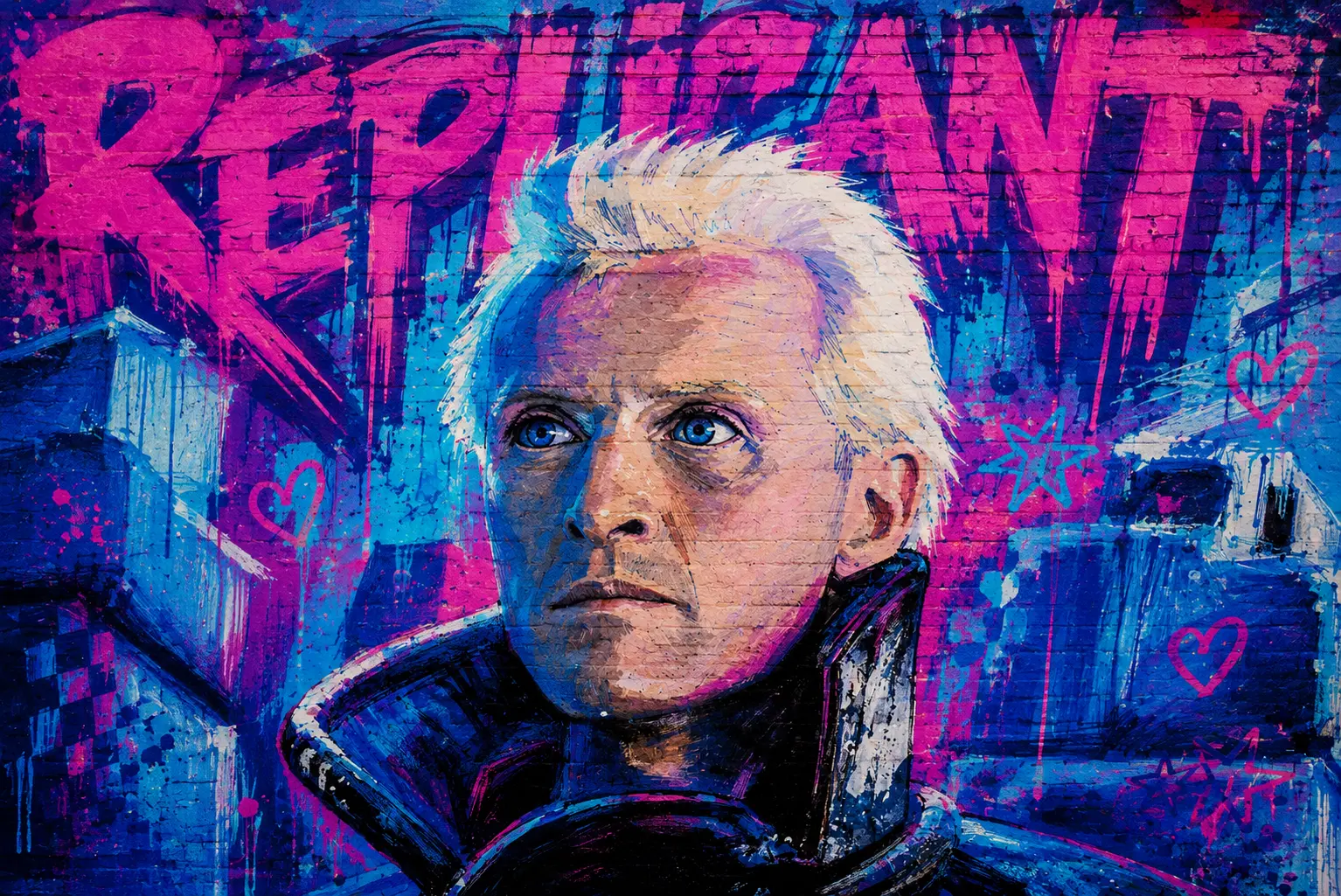
Blade Runner Box Office: The 1982 Flop That Became a Classic
In the summer of 1982, Blade Runner bombed at the box office, split critics down the middle, and got buried by E.T. Four decades later, it’s the film everyone else gets measured against.
The Blade Runner box office was a disaster in the summer of 1982. Four decades later, the film is untouchable.
I was there on opening weekend. Like a lot of moviegoers that summer, I couldn’t wait to see Blade Runner. Ridley Scott had already directed Alien, one of the great science fiction horror films, and Harrison Ford was riding the momentum of Raiders of the Lost Ark and Star Wars. Every trailer promised another unforgettable science fiction adventure.
I wanted to love it. I walked out conflicted instead.
Based on the book Do Androids Dream of Electric Sheep?, the film looked unlike anything I’d ever seen, but it was also a difficult watch. As a teenager, I found its deliberate pacing, its philosophical drift, and its emotionally distant characters hard to sit with. Looking back, I don’t think I was disappointed because the movie was bad. I was disappointed because it wasn’t the movie I’d been sold.
Forty-plus years later, Blade Runner is regarded as one of the greatest science fiction films ever made. Its fingerprints show up everywhere, in film and animation, architecture, fashion, and video games.
So what happened?
After revisiting the film and digging into its original release, I don’t think there was one culprit. Several things went wrong at once, and none of them alone would have sunk it.
The Blade Runner box office numbers looked like a disaster against a stacked summer of competition.
Critics couldn’t agree on the film. Audiences weren’t ready for it either.
Home video, not theaters, is what finally made it a classic.
The Summer of 1982 Was Nearly Impossible to Win
Blade Runner opened on June 25, 1982, and it wasn’t even the only science fiction film that hit theaters that day. John Carpenter’s The Thing opened the exact same weekend, and both films were steamrolled by a third-week juggernaut nobody could touch. Audiences that summer were also choosing between E.T. the Extra-Terrestrial, Star Trek II: The Wrath of Khan, Poltergeist, Conan the Barbarian, Rocky III, and Tron.
Every one of those films promised something immediately accessible: adventure, wonder, action, comedy, horror. Blade Runner promised something else.
The Movie We Expected Wasn’t the Movie We Got
This may have been the biggest hurdle of all.
The trailers sold an exciting Harrison Ford science fiction picture from the director of Alien. That’s exactly what I showed up expecting. What Ridley Scott delivered instead was much closer to a futuristic film noir, and the studio’s own marketing worked against it: as one retrospective put it, the film was sold as an action movie built around Harrison Ford’s image, not the meditation it actually was.
The movie wasn’t built around set pieces. It lingered on atmosphere, architecture, music, silence, and questions about identity, mortality, and what it means to be human.
Audiences celebrate those qualities today. In 1982, a lot of us weren’t ready for them.
The Mood of the Early 1980s
Watching the film again decades later, something else stood out to me.
The early 1980s carried a stubbornly optimistic cinematic spirit. Even movies with dark subject matter tended to balance suspense against adventure, humor, or hope. E.T. celebrated childhood wonder. Raiders of the Lost Ark revived old-fashioned serial adventure. Star Trek II mixed tragedy with heroism. Even Alien, for all its terror, worked as a tense survival thriller with a clear goal and a straight line to follow.
Blade Runner broke from that pattern entirely. Its world felt crowded, polluted, lonely, dystopian, and morally unsettled. The beauty lived in rain-soaked streets, towering neon, haunting music, and quiet reflection rather than bright colors or clean victories.
It played less like a summer blockbuster and more like an arthouse film wearing the costume of a science fiction epic.
Critics Couldn’t Agree Either
Audiences weren’t alone in their confusion.
Roger Ebert gave the film three stars but still called it a visual triumph paired with a thin story. Pauline Kael went much further in The New Yorker, dismissing the film’s chilly detachment and arguing it left the audience with nothing to hold onto. The original Variety review was blunt about the film’s commercial prospects, warning that its bleak tone would make the budget hard to recover.
Almost every critic agreed that the film looked extraordinary. Almost none of them agreed on what to make of it.
The Blade Runner Box Office Numbers Told Their Own Story
The box office bore this out. Blade Runner opened to $6.1 million against a reported $28 to $30 million budget, and it finished its 1982 run around $27 million domestically, not enough to crack that summer’s top ten. E.T. was still sitting at number one in its third weekend and would not move from that spot. The Blade Runner box office collapse looked even sharper next to the summer’s biggest hit.
The theatrical cut wasn’t even the film Ridley Scott wanted audiences to see. Studio-mandated changes added a voiceover Harrison Ford famously disliked delivering, along with a tacked-on happy ending that clashed with everything that came before it. Scott would spend the next twenty-five years and seven different versions of the film trying to correct course, a process that didn’t fully resolve until the 2007 Final Cut.
A pattern worth noticing: the film’s reputation didn’t turn around in theaters at all. It turned around on a shelf, in a rental store, on a television broadcast years after the marketing budget was long gone.
Home Video Changed the Conversation
Unlike a lot of blockbusters, Blade Runner rewards repeat viewing. Every pass reveals something new in the production design, the Vangelis score, the performances, the questions underneath it all.
Home video gave audiences room to revisit the film without the weight of opening-weekend expectations. Slowly, the conversation shifted away from whether the movie delivered enough action and toward what it was actually trying to say. Ridley Scott later described watching the film grow a fan base almost by accident, spreading through late-night television, rock videos, and word of mouth long after its theatrical run had ended.
That may be the moment Blade Runner finally found its audience.
So Why Didn’t It Succeed at First?
There wasn’t one reason. Several factors worked against the film at the same time.
It opened during one of the most competitive summers in Hollywood history. The marketing promised action and delivered introspection. Audiences expected another Harrison Ford adventure and got a noir meditation on mortality. Its pacing and philosophical weight challenged mainstream viewers. I remember the critics on television split sharply. The theatrical cut wasn’t the film Scott wanted to release. And its greatest strengths only became visible on repeat viewing, something opening weekend never offers.
No single reason doomed the film. Together, they built a perfect storm.
From box office flop
to sci-fi landmark.
Why It Worked in the End
Hollywood tends to judge a movie by its opening weekend. History judges it differently.
Blade Runner didn’t disappear after leaving theaters. It grew quietly through VHS, LaserDisc, DVD, television broadcasts, and conversations between fans who kept finding it years apart. Decades later, the questions about artificial intelligence, memory, identity, and what separates humans from machines feel more urgent than ever.
Sometimes audiences aren’t wrong. Sometimes they’re just meeting a film before its time has arrived.
Maybe that’s Blade Runner‘s real legacy. It never changed to fit its audience. Its audience eventually changed to meet it.