Why Young Audiences Are Discovering Movies Made Before They Were Born
A generation raised on digital images is falling for practical effects, imperfect craftsmanship, and movies that still feel unmistakably human.
Why Young Audiences Are Discovering Movies Made Before They Were Born
Young viewers are discovering that old movies do not feel old when the storytelling still works — and the craftsmanship behind them may matter more in the age of AI than ever before.
It started with a scroll through YouTube reaction videos, and it turned into something I couldn’t stop noticing.
Young viewers were sitting down to watch movies from the 1970s and 1980s for the first time — films made decades before they were born. Yet instead of treating these movies like museum pieces, they got completely swept up in them. They laughed. They jumped. Uncomfortable scenes made them squirm, and they questioned things the characters said. Again and again, I heard some version of the same reaction:
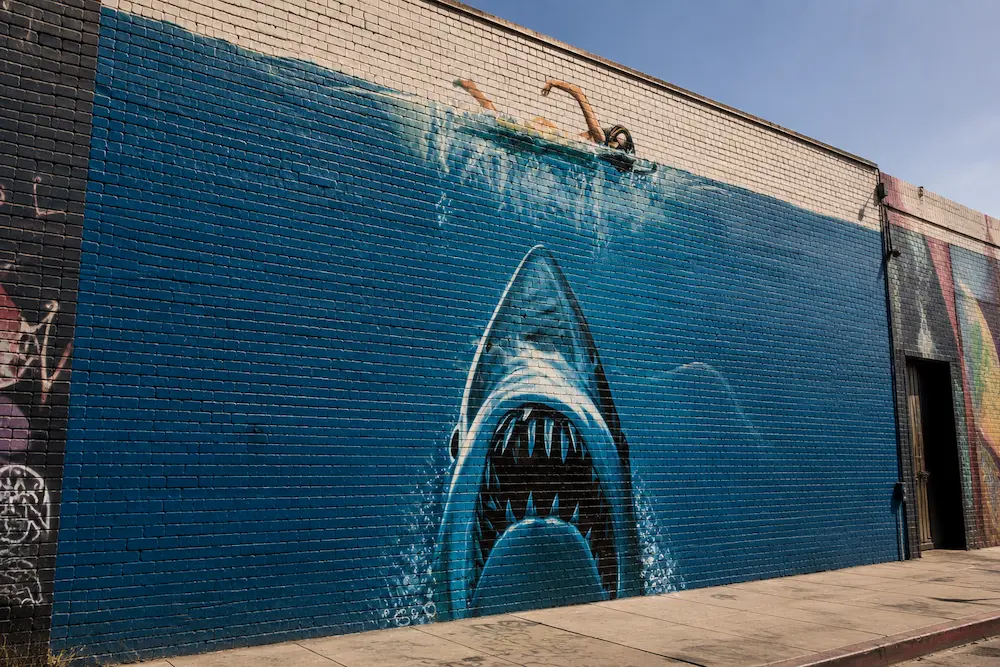
That line stuck with me. These are viewers who grew up with digital effects, streaming, smartphones, YouTube, and now artificial intelligence. They have access to more moving images in a single day than earlier generations could have imagined. And yet put Jaws in front of them, and something unexpected happens: a fifty-year-old movie still makes them jump out of their seat.
Young audiences are not simply rediscovering old movies. They are discovering the craft behind them.
Practical effects, physical locations, human timing, and visible limitations can make a film feel more tangible — even when the illusion itself is imperfect.
In an era of AI-generated imagery, evidence of human decisions may become part of what audiences value most.
Jaws Still Knows Exactly When to Make You Jump
Watching younger viewers react to Jaws has been one of the most fascinating parts of this whole trend.
Someone will confidently announce that movies don’t scare them anymore. Then Ben Gardner’s head comes floating through the hole in his wrecked boat — and they jump anyway. A beat later, they’re laughing at themselves for falling for it.
Here’s the twist: that scene wasn’t built with sophisticated computer-generated imagery. Steven Spielberg actually went back and reshot the moment because he wanted one more scream out of the audience, recreating part of the boat in editor Verna Fields’ swimming pool and fine-tuning the timing of the head’s appearance until it landed perfectly.
What Spielberg understood is something no piece of software can hand you automatically: timing. He knew precisely how long to make the audience wait, and precisely when to shatter that silence. More than fifty years later, the mechanism still works exactly as designed.
Maybe the Limitations Were Part of the Magic
Jaws also happens to be one of filmmaking’s great lessons in turning limitations into strengths.
The mechanical shark, nicknamed Bruce, famously didn’t work half the time — a fairly serious problem for a movie about a killer shark. But Spielberg couldn’t just open a laptop and swap in a digital replacement. He had to solve the problem the hard way, on set, with the tools available to him.
So instead of the shark, audiences got the barrels. Point-of-view shots glided beneath the surface. John Williams’ score did the work a visible monster couldn’t. Characters stared at something just out of frame. Most of all, audiences got to wait — and the waiting became the scare.
The shark’s mechanical failures forced Spielberg and his team to suggest its presence rather than constantly show it off. Spielberg himself later admitted the malfunction likely made the film scarier than it would have been otherwise. That’s craftsmanship born out of necessity, not choice — and it raises a real question about whether younger audiences are responding to exactly that kind of forced ingenuity more than we tend to give them credit for.
When the shark failed,
the suspense got better.
The Exorcist Doesn’t Scare Quite As It Used To, But the Craft Still Lands
Jaws isn’t the only film putting this theory to the test.
When younger viewers finally sit down with The Exorcist, they rarely react with the sheer terror that gripped audiences on its opening weekend. Decades of horror movies, found-footage scares, and genre parodies have desensitized modern viewers in a way 1973 crowds simply hadn’t been yet. But something else fills the gap: appreciation.
Today’s viewers tend to zero in on the mood director William Friedkin builds scene by scene, and on the practical effects that still hold up more than fifty years later — Dick Smith’s makeup work transforming Linda Blair into something unrecognizable, the mechanical rig behind the infamous head turn, the levitation, the guttural voice work. They can point to exactly why those effects would have terrified an audience walking in cold on its opening weekend, right around Christmas 1973. By multiple accounts, that’s precisely what happened: theaters reportedly kept medical staff on standby as viewers fainted, vomited, or fled the aisles.
There’s a second layer of astonishment, too — the sheer fact that a major studio released something this graphic, tackling supernatural horror and demonic possession this directly, in the first place. The Exorcist wasn’t just shocking; it was unprecedented, the first film of its kind to bring that subject matter into mainstream theaters with that level of intensity. It went on to become the first horror movie ever nominated for the Academy Award for Best Picture. For viewers discovering it decades later, that context reframes the entire experience. They’re not just watching a scary movie. They’re watching the moment a genre broke new ground.
Can Audiences Actually Tell When Something Is Real?
Both Jaws and The Exorcist raise the same underlying question, and it’s harder to answer cleanly than it first appears.
Can an audience somehow sense that what’s on screen actually existed in front of a camera? I wouldn’t claim that scientifically. Computer-generated imagery can absolutely create extraordinary emotional experiences, and some of today’s best filmmakers blend practical and digital techniques so seamlessly that most viewers couldn’t tell you which is which even if you paused the frame.
So this isn’t an argument against CGI, and it’s certainly not an argument that old filmmaking was inherently superior. But perceived authenticity does seem to shape the viewing experience. Research into CGI and audience immersion has looked at how the perceived realism of characters, environments, performances, and narrative situations influences how emotionally engaged a viewer becomes.
Maybe audiences aren’t identifying the technique itself. Maybe they’re responding to its consequences.
When actors stand on an actual boat in an actual ocean, their bodies react to that environment in ways they can’t fake. Physical light hitting a physical object behaves the way light actually behaves. If something breaks on set, filmmakers have to improvise. A camera with real physical limitations forces someone to make a hard decision about where to put it. And when filmmakers can’t simply generate anything imaginable with a keystroke, they’re forced to decide what the audience truly needs to see. Every one of those constraints leaves a fingerprint on the finished film.
The Craft Becomes Part of the Entertainment
That fingerprint is exactly what shows up in the comments under these reaction videos.
Young viewers are often just as fascinated by how older movies were made as by the movies themselves. How did they do that? Was that a real stunt? Did they actually build that thing? Was that really filmed on location? Suddenly, the filmmaking process becomes entertainment in its own right.
Jaws isn’t impressive today because its shark looks more convincing than anything a modern effects studio could produce — it obviously doesn’t. Contemporary visual-effects artists could build a far more anatomically accurate shark without much trouble. What’s genuinely impressive is understanding what the filmmakers had to pull off to get those images onto film in 1975. That knowledge adds a whole new layer to the experience: you’re watching the story, but you’re also watching people solve a problem in real time.
A Generation Surrounded by Perfect Images May Value Imperfection
This same instinct might explain a lot of what’s happening outside of movies, too.
Younger consumers have driven a renewed interest in vinyl records, film cameras, physical media, and vintage clothing, objects that previous generations assumed were headed for extinction. There’s a real irony in that: a generation raised on virtually unlimited digital convenience is actively rediscovering things that are slower, more physical, and less than perfect.
Industry observers have even connected Gen Z’s moviegoing habits to an appetite for films that feel “handcrafted,” where shooting on film, practical effects, and visible human choices become part of the draw rather than something to hide. Old movies fit naturally into that same movement. A scratch on the print isn’t necessarily a flaw. A practical effect doesn’t need to be flawless to work. A stunt looks more dangerous precisely because a real person actually performed it. The imperfection itself becomes proof that human beings made the thing — and now that generative AI can produce increasingly convincing images almost instantly, that proof may matter more than ever.
Imperfection can function as evidence. A visible seam, a practical effect, a dangerous-looking stunt, or a physical location reminds the viewer that somebody actually had to make a decision, build something, and capture it.
They’re Also Discovering a Completely Different Culture
Of course, the filmmaking isn’t the only thing catching younger viewers off guard. The dialogue can be just as jarring.
Watch enough reactions to movies from the 1970s, ’80s, and even ’90s, and eventually someone says something that stops a younger viewer cold. “Did he really just say that?” Sometimes the room erupts in laughter. Sometimes the reaction is genuinely uncomfortable. Either way, the viewer usually recognizes immediately that the same line probably wouldn’t survive in a mainstream movie made today.
That’s the moment watching an older movie becomes something more than entertainment. Movies function as accidental time capsules — they preserve hairstyles, cars, apartments, attitudes, language, workplaces, gender expectations, humor, and social behavior exactly as they existed the moment the film was made. Some of it holds up beautifully. Some of it hasn’t aged well at all. And some of it forces a real reckoning with just how dramatically cultural boundaries can shift within a few short decades.
You Can Be Offended and Still Be Curious
This part of the conversation deserves some care, because it’s easy to flatten it into “people could say anything back then.” That’s not quite true.
Every era draws its own social boundaries — those boundaries just move over time. Some jokes and stereotypes in older movies genuinely deserve criticism. Some portrayals really did hurt people. Cultural progress isn’t imaginary just because someone happens to miss a particular style of comedy.
Still, I’ve noticed something else in younger viewers watching these films: they can be shocked by an old movie and fascinated by it at the same time. They’re not necessarily endorsing what a character says — they’re trying to understand the world in which someone could say it in the first place. Something is refreshing, even, about encountering art from another era without being able to retroactively rewrite it. The movie can’t see your reaction, and the actor isn’t going to issue a statement tomorrow morning. Nor is the studio going to argue with you online. The film exists as it was made, and you’re the one who has to decide what you think about it.
Old Movies Don’t Know They’re Old
Maybe the strangest part of watching someone discover a classic for the first time is realizing that, for them, the ending genuinely hasn’t happened yet.
They don’t know who survives. They don’t know which line becomes iconic, or that a particular scene went on to influence hundreds of movies that followed it. So, when a first-time viewer watches Jaws, they’re not sitting down with “one of the great films of the 1970s”; they’re just watching a shark movie. And then, suddenly, they’re genuinely scared. That gives the rest of us a rare chance to experience the film all over again, through somebody else’s eyes.
The Internet Did Something Unexpected to Film History
Streaming and YouTube were supposed to push entertainment relentlessly forward. Instead, they quietly built one of the largest informal film-history classrooms the world has ever seen.
A 23-year-old can watch a movie from 1975 tonight, then immediately pull up interviews with the filmmakers, dig into behind-the-scenes footage, learn exactly how the effects were pulled off, and read about the production. Then they can turn on a camera and share their first reaction with thousands of other people. In the process, the old dividing line between “current entertainment” and “film history” starts to disappear. Jaws doesn’t have to belong only to 1975 anymore. Alien doesn’t have to belong only to 1979. Blade Runner doesn’t have to belong only to 1982. A movie becomes current again the moment someone discovers it, no matter when it was made.
Maybe That’s What We’re Really Responding To
I don’t think young audiences are rejecting technology. They use more of it than any generation before them ever has. And I don’t believe practical effects automatically make a movie better, either. Plenty of bad movies came out in 1975 too.
However, audiences do seem to be growing more sensitive to something harder to quantify: intentionality. You can feel it when somebody thought carefully about where to put the camera. You can feel it when an editor waited one extra second before making the cut. It shows up when actors are genuinely interacting with an environment instead of simply occupying a frame in front of a green screen. And it shows up again when filmmakers ran into a real problem and had to invent a real solution.
That’s what’s really underneath the phrase “real filmmaking.” Young viewers aren’t asking Hollywood to throw away its computers — they’re responding to evidence of human decisions. And in an era when technology can manufacture increasingly convincing images with fewer and fewer human fingerprints, that evidence may become more valuable, not less.
Maybe that’s exactly why a mechanical shark that barely worked can still make someone born decades after its release jump out of their chair.