Why We Play: When Video Games Became Somewhere We Go
Video games were once treated as competition for television. Somewhere along the way, they became communities and shared worlds where the audience doesn’t just watch the story. It lives inside it.
We Were Measuring the Wrong Thing
Video games were once treated as competition for television. Somewhere along the way, they turned into something far bigger than competition. They became communities and shared worlds where the audience doesn’t just watch the story. It lives inside it.
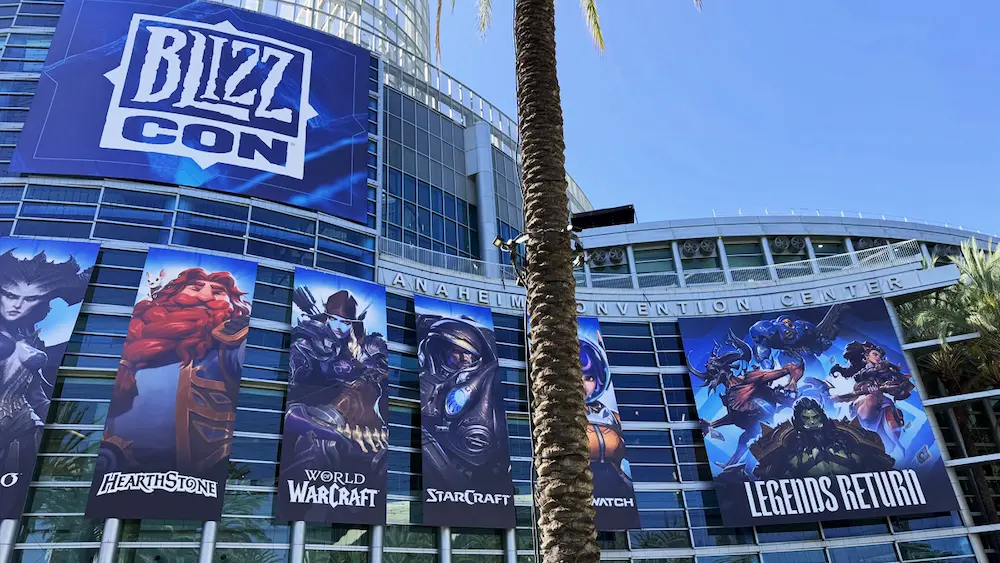
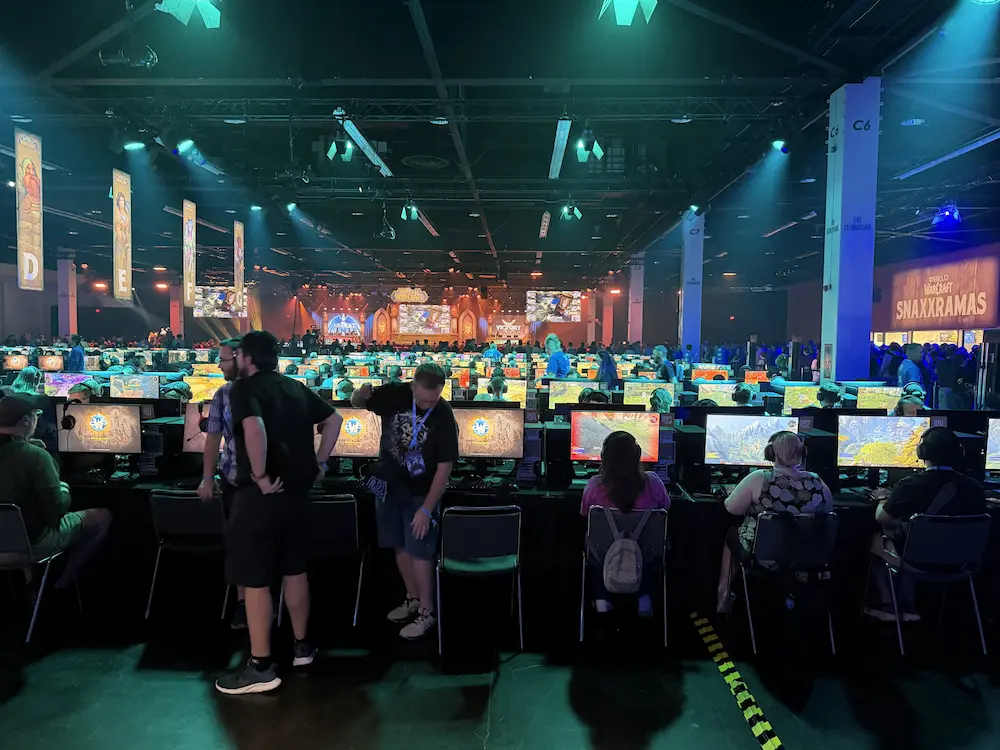
I went to a Blizzard Entertainment party this week and ended up in a conversation about television. That might sound like an odd topic at a gathering full of people from the gaming world. But someone asked me a simple question: do more people play video games now than watch television? I didn’t know the answer. The question, though, sent me back more than two decades.
In 2004, when shows like Lost and Desperate Housewives were reshaping network television, Nielsen ratings mattered enormously. Every morning, people across the television business wanted to know what America had watched the night before. At the same time, another form of entertainment had begun quietly demanding some of those same hours. It was video games, and the television industry tended to treat gaming as a competitor rather than a companion. If someone spent an evening playing a game, that person wasn’t watching ABC, NBC, CBS or Fox. The business measured entertainment mostly in eyeballs and hours.
Twenty-two years later, I stood at a Blizzard party talking with people who live and work inside gaming culture. In fact, it made me wonder whether television had misunderstood what it was actually competing against all along. Gaming was never just another screen. It was becoming another way for people to be together.
Gaming has evolved beyond something people simply play. For millions, games have become places where friendships, communities, traditions, and even relationships take shape.
The audience is no longer outside the story. Players participate in it, reshape it, retell it, and build their own experiences inside the worlds developers create.
Attention may bring people into a game. Community can be what keeps them there for decades.
The Audience Became the Participant
According to the Entertainment Software Association’s 2026 Essential Facts report, 212.3 million Americans ages 5 to 90 play video games for at least an hour every week. That’s 67 percent of the population studied. The average player isn’t a teenager anymore, either. The average American video game player is now 37 years old. Globally, the picture gets even bigger. Newzoo forecasts roughly 3.7 billion video game players worldwide in 2026. The global games market is on track to reach close to $214 billion this year.
Yet those figures don’t fully explain what I saw and heard at that party. What interested me wasn’t how many people play. It was why they keep coming back. When people talked about gaming that night, they kept circling back to the people they play with rather than the games themselves. One mentioned the friend who logs on at the same hour every night. Another brought up the stranger who’d become a fixture on the team, part of a loose circle of players who now feel like old friends, even though most of them have never actually met. Ultimately, that shift, from counting hours to counting relationships, changes the entire conversation.
A Person Waits on the Other Side of the Screen
Traditional entertainment creates relationships too. A song can lodge itself permanently into one particular afternoon of someone’s life. A film can follow a person around for thirty years without them ever choosing to think about it again. But those relationships only run in one direction. Someone makes something, and someone else receives it.
By contrast, gaming changes that equation because another human being is often right there with you. Sometimes that person is just across town; other times, they’re on the other side of the planet. Every so often, that relationship outlasts the game itself, continuing long after everyone else has forgotten the game existed.
Indeed, the ESA’s 2026 research backs this up in striking terms. Nearly half of all players, 49 percent, say games keep them connected to friends and family they might otherwise drift from. A similar share, 47 percent, say gaming introduced them to someone they never would have crossed paths with otherwise. Pew Research has found much the same pattern in its own surveys of younger players. Many describe games as the place where their closest friendships actually took shape.
Even more striking, more than a third of ESA’s respondents, 37 percent, say that someone turned out to be a good friend, a spouse, or a partner. At that point, calling gaming merely entertainment starts to feel like an understatement. The game may have introduced the people. But the relationship belongs to them.
The game may have introduced the people. But the relationship belongs to them.
The Game Becomes a Place That Doesn’t Physically Exist
Maybe that’s the part of gaming culture that outsiders struggle to understand. A game can become a place, not metaphorically but emotionally. For instance, players come to know its geography the way they know their own neighborhood. Its rules make sense to them instinctively, the kind of sense that would take an outsider months to earn. Somewhere in the back of their mind sits its entire history. Its characters feel less like strangers than like recurring faces at the same bar.
Along with all of that comes a private vocabulary, one that means everything to the people inside a game and almost nothing to anyone standing outside its door. Most importantly, they build memories there. Urban sociologists have a name for spaces that work this way, places that aren’t home and aren’t work but somehow hold a community together anyway. Ray Oldenburg called it a third place. By that definition, plenty of games qualify.
Consider a phrase like, “Remember that night when we…” We usually attach those words to actual places, like a restaurant everyone still brings up or a road trip that went sideways. Maybe a concert nobody can quite agree on the details of anymore. In other words, gamers can finish that same sentence with an event that happened in a world that technically doesn’t exist anywhere except on a server. The memory, however, is completely real, and so are the people who shared it.
Playing Together Becomes a Ritual
At one point in the evening, someone described just how tight these communities get once they’ve had time to settle. A guild or a squad stops feeling like a rotating cast of strangers. It starts feeling like a standing appointment. People show up at the same hour week after week. Nobody sends a reminder. They’ve just come to expect each other.
Listening to it, I kept thinking about a pull I recognized. I’ve felt it walking into a place of worship on a Sunday morning, or finding my usual seat before a symphony. I’ve felt it standing shoulder to shoulder with strangers, waiting for a band to take the stage. The setting changes. The instinct underneath it doesn’t.
Ritual, Not Religion, Explains the Pull
I’m not suggesting gaming functions as a religion in any spiritual sense. I mean something narrower: the ritual and the sense of belonging that come from showing up, week after week. In fact, watching a group of players fall into their usual rhythm reminded me of exactly that. People build community the same way wherever they gather, whether the room is a cathedral or a raid dungeon. They recognize each other on sight and fall into roles nobody had to assign. Picking up last week’s conversation comes just as naturally as it does for old friends. Then they go make something worth talking about next time. The technology is new. The instinct underneath it is ancient.
Britannica’s entry on ritual makes essentially the same case. Repeated shared practice has worked as social glue across human cultures for as long as those cultures have existed. In fact, researchers have since put a number on that feeling. A 2024 field study published in PLOS One backs it up. People who took part in a shared ritual showed stronger bonds with fellow participants than those who sat it out.
The technology is new. The instinct underneath it is ancient. People have always created rituals around the places and communities that give them a sense of belonging.
The Story Doesn’t End When the Game Turns Off
Then there’s a layer to all this that barely existed a generation ago, and it has grown into something enormous. Plenty of people who love a game have never touched the controller. Some would rather watch someone else play it, letting a stranger’s running commentary become the whole experience. Others get pulled into an argument about what a character should have done differently, or lose an entire hour to some fan’s elaborate theory about how the story actually ends.
As a result, watching someone play has become its own form of entertainment, complete with its own celebrities. Some of those people now make a living because millions would rather watch than play themselves. The scale backs that up. The analytics firm Stream Hatchet tracked roughly 17 billion hours of live-streaming viewership in the first quarter of 2026 alone. Most of it was built around gaming content.
In other words, gaming built its own entertainment ecosystem on top of itself. The player turned into an audience. Before long, the audience started turning into creators, and some of those creators became full-blown influencers and entertainers. A single game, then, can generate more stories than its developers ever intended to write. There’s the story built into the game itself. And there’s a second story: the one that emerges while people actually play, messier and more memorable than anything scripted. Players carry that story with them, retelling it to each other the way people retell a wild night out. Somewhere in that retelling, careers get built. That starts to look remarkably similar to the broader entertainment business.
Every Successful World Eventually Creates Storytellers
This may be where gaming and Hollywood have more in common than either side likes to admit. Both industries depend on storytelling, and the real difference lies in who gets to participate in telling it. A filmmaker builds a world and invites an audience to observe it from the outside. A game designer builds a world and invites an audience to walk directly into it.
The media scholar Henry Jenkins had a name for where this leads. In fact, he coined the term transmedia storytelling back in the mid-2000s. It describes a world told across many platforms and many hands, until no single creator controls the narrative anymore.
But someone has to build the world before anyone can walk into it. That’s the part of gaming’s content story people rarely stop to consider. When people talk about content creation today, they usually picture one person. Maybe a YouTuber alone in a bedroom, or a streamer narrating into a webcam. Gaming complicates that picture. The audience-turned-creator story described above is real, but underneath it sits something far less solitary. Building the world itself takes an entire team pulling in the same direction. Writers, engineers, artists, and producers, often numbering in the hundreds, work for years before a single player ever logs on. Nobody thinks of a studio like that as a content creator. That’s exactly what it is, just organized more like a film production than a bedroom vlog.
Once You’re Inside, Anything Can Happen
Once people step inside, unpredictable things start happening that have nothing to do with the story the designers wrote. Friendships take root that outlast the game itself, and old rivalries flare up and somehow become half the fun. Whole traditions get invented by the community and passed down like family recipes. Everyone inside understands them right away; everyone outside finds them mysterious.
Players invent their own characters and identities within these worlds, and influencers reshape how everyone else understands what happened. Fans build a second culture on top of the first one, an entire layer the original creators never planned for. As a result, the intellectual property becomes something larger than whatever its creator initially released. It becomes a platform for other people’s experiences.
Hollywood has spent decades trying to engineer franchises that audiences will love. By contrast, gaming has already shown what happens when people are allowed to live inside those franchises together.
From “Did You See It?” to “Were You There?”
I keep coming back to television because it offers such a useful comparison. When Lost became a phenomenon, part of its power came from the community built around it. People watched an episode and immediately needed to talk about it with somebody, anybody. They wanted to work out what the numbers actually meant, or whether the island was ever going to make sense. The internet amplified those conversations, but the broadcast episode stayed at the center of the experience. Millions of people could ask each other the same question the next morning: did you see what happened last night?
Gaming offers something subtly different. A group of players can instead ask each other, “Do you remember what happened to us last night?” That one word, us, changes everything. In other words, the audience isn’t recalling something it witnessed from a distance. It’s remembering something it helped create.
Do you remember what happened
to us last night?
Why Meet in Person When the Community Is Digital?
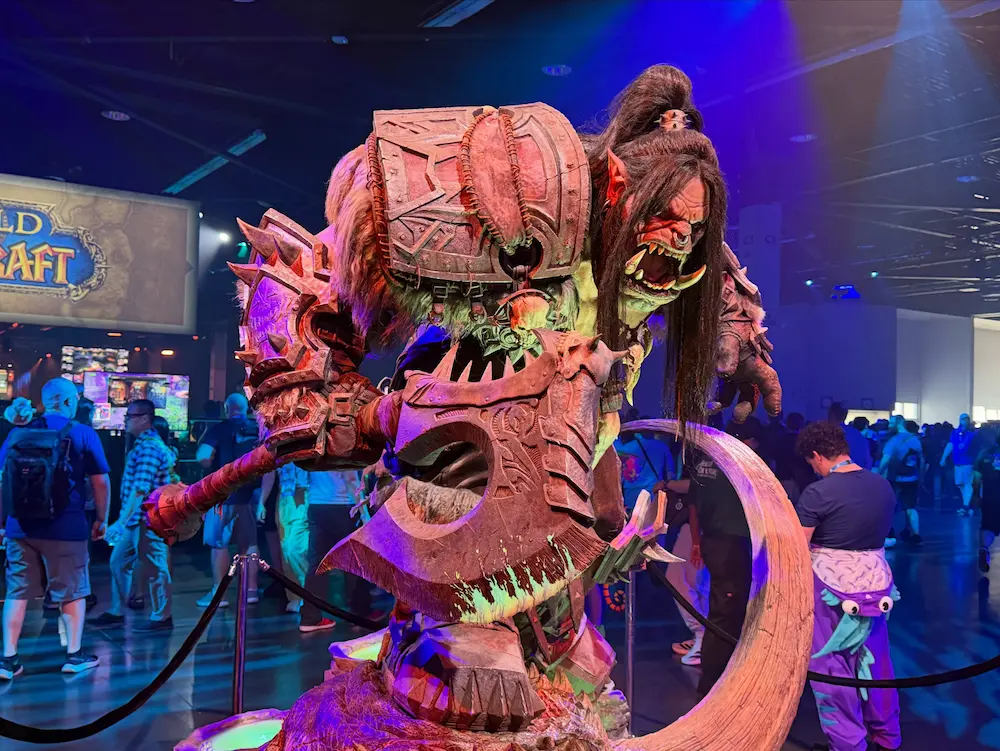
That question brings me back to gatherings like the one I attended this week. It also applies on a larger scale, to conventions like BlizzCon. If gaming already connects people digitally, why do so many of them travel across the country to meet in person? Virtual communities, it turns out, eventually want a physical ritual of their own. Music fans need to stand in the same room as a band they’ve only ever heard through headphones, and comic book readers need to walk a convention floor once a year just to be around people who get it. Underneath both is the same pull: people want to stand next to others who understand exactly why something matters to them.
As a result, a gathering like that turns an invisible community visible. The username finally gets a face, and the person you’ve only spoken to through a headset suddenly stands in front of you. The fictional world becomes the reason real people end up occupying the same physical room. For a few days, something that normally lives scattered across thousands of computers, consoles, and phones suddenly has an address.
Gaming Isn’t Waiting to Become Pop Culture
One mistake people outside gaming still make is describing it as an emerging form of entertainment. It isn’t waiting for its moment. In fact, it arrived a long time ago. Newzoo expects 3.7 billion people to play games worldwide in 2026 and forecasts the global games market at approximately $214 billion this year. In the United States, roughly two out of every three people the ESA surveyed play on a weekly basis.
Gaming doesn’t sit on the edge of popular culture anymore. Gaming is popular culture. A game developer now commands the kind of attention a film producer used to own. That means red carpets, sold-out livestreamed premieres, and headlines that once belonged only to movie openings. Twenty years ago, nobody would have guessed the person behind a game could carry that kind of cultural weight. But that’s exactly where things have landed.
And underneath all of it sit the stories. Some were built on purpose by professional writers. Others took shape because millions of players wandered into a world and started writing themselves into it.
We Were Measuring the Wrong Thing
That brings me back to the question someone asked me at the party. Do more people play games than watch television? There are ways to try to answer that. But comparing television audiences with gaming audiences is trickier than it sounds. The two industries measure behavior in entirely different ways. Still, I’m no longer convinced that’s the most interesting question to ask.
For decades, television judged itself by a single number: how many people sat down to watch. Gaming has quietly built its own definition of success, and it has almost nothing to do with counting eyeballs. It has everything to do with what happens after someone logs in. A stranger becomes a regular. A regular becomes a friend. Somewhere along the way, people who never would have crossed paths start showing up for each other, night after night. Eventually, a fictional world turns into the place where that actually happened. Television never thought to track a number like that. In fact, it might be the only number that matters.
That may be the larger story of gaming. We once believed video games were competing with television for people’s attention, and in a narrow sense, they were. But while the industry kept watching the ratings, something far more interesting was happening underneath the surface. Games were quietly turning into communities, and those communities were developing rituals of their own. In turn, those rituals turn players into storytellers. They turn a fictional universe into the place where an actual relationship begins.
Maybe billions of people don’t play video games only because they want to escape the real world. Sometimes they log in because someone they already know is waiting on the other side.
Sometimes they log in because someone they already know
is waiting on the other side.