
Before The Simpsons redefined what animation could be, there was a 1970s series that quietly used the language of cartoons to explore a world that was anything but childlike. Wait Till Your Father Gets Home cartoon arrived before adult animation became mainstream. In many ways, television didn’t yet know how to classify it. It looked […]
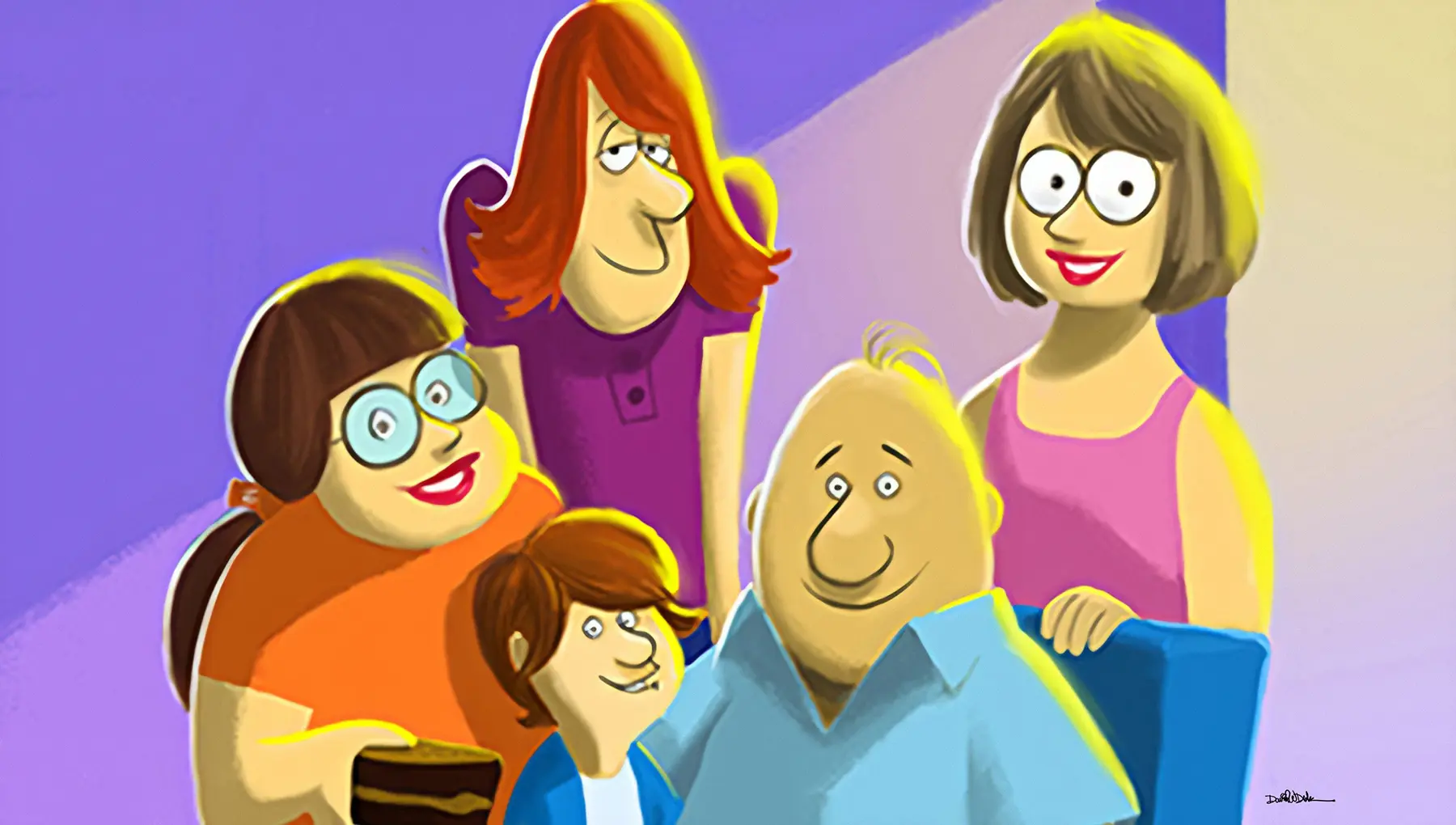
Wait Till Your Father Gets Home cartoon arrived before adult animation became mainstream. In many ways, television didn’t yet know how to classify it. It looked like a cartoon. It moved like a cartoon. It even carried the rhythm of a sitcom. However, the material underneath clearly targeted adults, not children.
That contrast is what makes the series interesting now. Although people rarely mention it alongside later landmark shows, it stands as an early attempt to speak to adult audiences through animation. As a result, it feels less like a forgotten oddity and more like a missing link between two eras of television.
“It looked like a cartoon, but it didn’t behave like one.”
A Cartoon Out of Time: Wait Till Your Father Gets Home Cartoon
When Wait Till Your Father Gets Home appeared in the early 1970s, television had already pushed animation into a narrow box. Networks treated cartoons as children’s programming. Most aired on Saturday mornings or in after-school blocks.
This show ignored those expectations. It aired in prime time, alongside programming aimed at adults. That shift immediately changed how it felt. Suddenly, a familiar visual style appeared in a space where it didn’t quite belong. That tension gave the show its identity.
At the center is Harry Boyle, a middle-class father trying to navigate a changing culture. His family and neighbors reflect the social and political tensions of the time. Because of that, the show uses domestic comedy as commentary, not escape.
For a general overview of the series, see Wikipedia’s entry. You can also watch the opening sequence below.
Seeing It Through the Eyes of a Child
I remember watching Wait Till Your Father Gets Home as a kid. Even then, something felt off.
The show aired late, well after the usual cartoon hours. By that point in the evening, animation had already “ended” for the day. So when this appeared, it felt like it had slipped into the wrong time slot.
At the time, I didn’t find it especially interesting. I didn’t understand what it was about. The themes, jokes, and conversations went right over my head. Still, I watched it because it was animated.
That alone kept me there. The format felt familiar, even when the content didn’t. I watched something meant for adults through the lens of a child.
“Adult ideas, packaged in the visual language of childhood.”
One moment still stands out. In the opening town sequence, there’s a scene that clearly wasn’t meant for kids. Yet it plays under a laugh track. That choice makes the moment feel casual, almost acceptable. As a child, I didn’t fully process it, but I knew something about it didn’t fit.
View this post on Instagram
Why the Wait Till Your Father Gets Home Cartoon Was Not for Kids
This tension sits at the heart of the show. On one level, the animation makes it easy to watch. On the other hand, the content speaks directly to adults. The Wait Till Your Father Gets Home cartoon tackles generational conflict, cultural shifts, and social change in a way children simply wouldn’t grasp.
Because of that, two viewers could watch the same episode and walk away with completely different experiences. A child might focus on movement and characters. An adult would recognize the satire and commentary.
Today, that layered storytelling feels normal. Shows like The Simpsons and King of the Hill rely on it. Back then, however, it still felt experimental. Television hadn’t fully embraced animation as a serious medium for adult storytelling.
The Show’s Modern Relevance
What makes Wait Till Your Father Gets Home resonate now isn’t just its age. It’s how familiar its structure feels. The series centers on a family trying to understand a world that keeps shifting around them.
That idea still applies today. Cultural change moves quickly, while generational divides feel sharper. Public debates grow louder. The home becomes a place where those tensions play out.
“Decades before adult animation became a genre, this show was already testing how far cartoons could go.”
View this post on Instagram
Why So Few People Remember It
Despite its ambition, the show didn’t leave a lasting cultural footprint. It arrived before audiences fully accepted adult animation.
At the same time, live-action sitcoms tackled similar issues more directly. As a result, animation didn’t seem necessary for that kind of storytelling. The show ended up caught in between—too adult for kids, too much of a cartoon for adults.
That positioning made it easy to overlook. Later shows refined the formula and received the credit. Meanwhile, this one faded into the background.
Looking Back Now
Looking back, what stands out most is the experience of watching it as a child. At the time, it felt odd and out of place. Now, it feels like a bridge between eras.
The show didn’t fully belong to children’s programming. It also didn’t fully land with adult audiences. Instead, it existed in between, testing boundaries television hadn’t yet defined.
That’s exactly why it matters. It proves that adult animation didn’t suddenly appear decades later. Someone had to try it first.
Related reading: Explore more on Classic Cartoon Writing: Why These Cartoons Weren’t for Kids