
There is something strangely familiar about Rocky and Bullwinkle when you watch it today, especially when viewed through the lens of Rocky and Bullwinkle and the internet. At first glance, it looks like a relic from another era—limited animation, simple character designs, and a pace that seems almost quaint compared to modern media. However, the […]
Rocky and Bullwinkle and the Internet: A Cartoon Ahead of Its Time
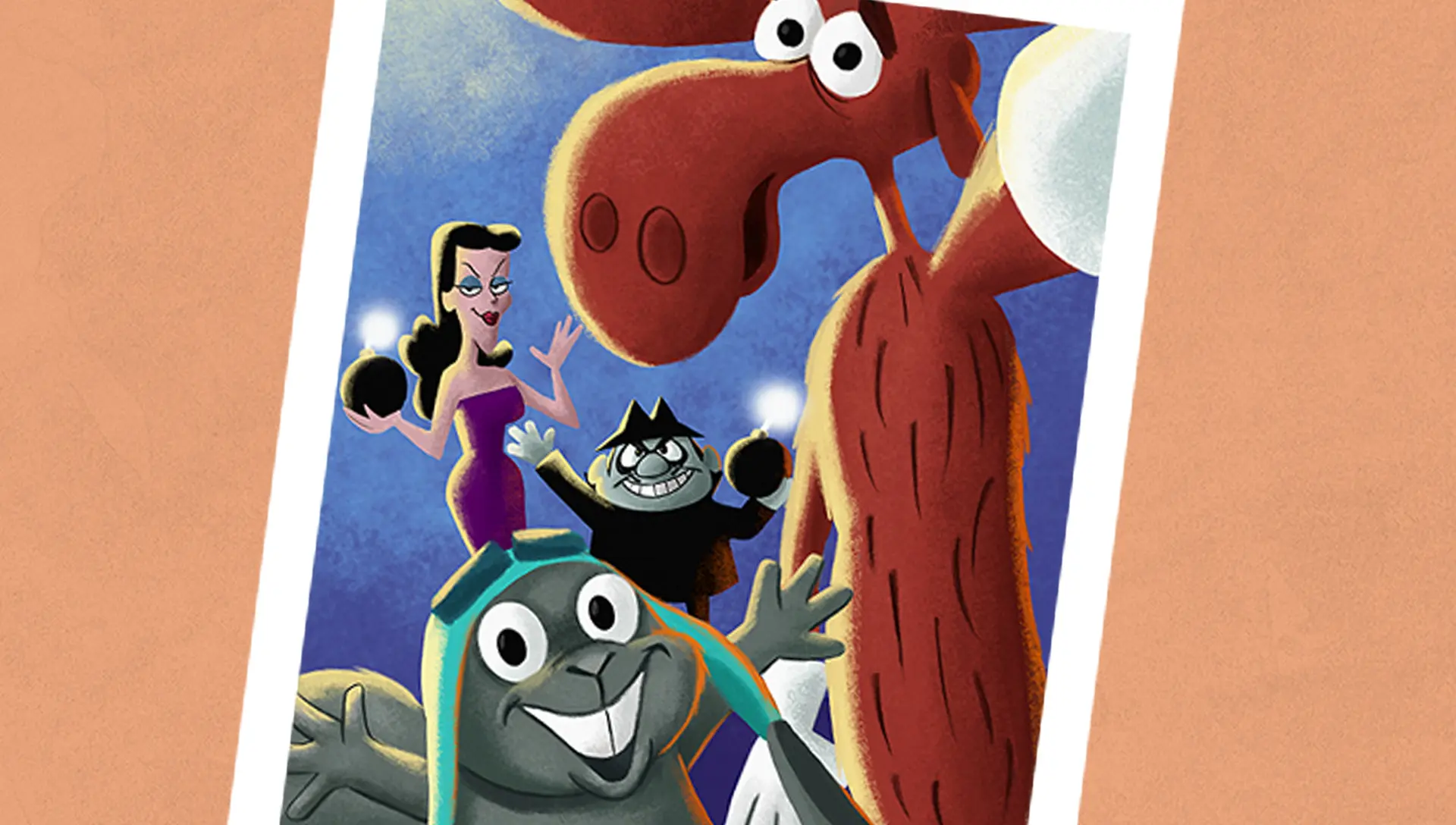
There is something strangely familiar about Rocky and Bullwinkle when you watch it today, especially when viewed through the lens of Rocky and Bullwinkle and the internet. At first glance, it looks like a relic from another era—limited animation, simple character designs, and a pace that seems almost quaint compared to modern media. However, the longer you sit with it, the more it begins to feel less like a product of the past and more like a prototype for the present.
In fact, while the series never set out to predict the internet, it inadvertently mirrors how we now consume content in the age of TikTok, YouTube, and algorithm-driven feeds. That realization doesn’t just make the show nostalgic—it makes it oddly contemporary.
A Show Built Like a Feed
Unlike most television of its time, Rocky and Bullwinkle was not structured as a single, continuous story. Instead, each episode unfolded as a collection of short segments—Fractured Fairy Tales, Peabody and Sherman, Dudley Do-Right, and the main Rocky and Bullwinkle narrative—each with its own tone, rhythm, and comedic style.
This format, which once felt unconventional, now feels instantly recognizable. Today’s audiences are accustomed to moving rapidly between different types of content, often within seconds. One moment, it’s a comedic sketch; the next, a historical explainer; then a parody. The show’s structure mirrors that exact behavior, offering variety not as a bonus, but as the core experience.
“Rocky and Bullwinkle wasn’t just telling a story—it was offering a sequence of content experiences, one after another.”
Consequently, what once looked like a limitation of early television now reads as a surprisingly modern design philosophy. The show doesn’t ask viewers to commit to a single narrative thread; instead, it invites them to engage in pieces, much like scrolling through a feed.
Cliffhangers and the Birth of Retention
If the structure feels modern, the pacing feels even more so. The central storyline was famously broken into serialized cliffhangers, each ending with a playful “tune in next time” tease. At the time, this was a clever way to bring audiences back week after week.
Today, however, the same technique resembles something else entirely: retention strategy.
Modern platforms thrive on keeping viewers engaged, often by creating loops of anticipation and payoff. Whether it’s a multi-part TikTok story or a YouTube series broken into digestible segments, the goal is the same—to keep the audience watching just a little longer.
“Every cliffhanger in Rocky and Bullwinkle feels like an early version of ‘Part 2 coming soon.’”
In that sense, the show doesn’t just resemble modern content—it operates by the same psychological principles that define it. Media researchers have explored how serialized storytelling drives engagement, a concept now central to streaming and digital platforms (Nielsen).
View this post on Instagram
Meta Humor Before Meta Was a Thing
Another striking similarity lies in the show’s self-awareness. Characters routinely broke the fourth wall, the narrator interrupted the action, and jokes often acknowledged the absurdity of the story itself. This wasn’t just humor—it was commentary on the act of storytelling.
At the time, this approach was unusual. Today, it’s everywhere.
Modern audiences are deeply familiar with content that knows it’s content. From TikTok creators addressing the algorithm to shows like Rick and Morty or Deadpool, meta humor has become a defining feature of contemporary media.
Yet Rocky and Bullwinkle was already doing this decades earlier, treating its own narrative as something flexible, interruptible, and open to commentary.
View this post on Instagram
Fast, Dense, and Built for Rewatching
Perhaps the most surprising connection is the density of the writing. The show moves quickly, layering puns, cultural references, and visual gags in rapid succession. Many of these jokes are easy to miss on a first viewing, which creates a different kind of engagement—one that rewards attention and repetition.
This, too, feels familiar.
In the modern landscape, content is often designed to be rewatched, shared, and revisited. Jokes become memes, references gain traction over time, and meaning accumulates through repeated exposure. While Rocky and Bullwinkle existed long before this ecosystem, its writing style aligns closely with it.
Scholars and historians have long pointed to the show’s sophisticated writing and satire (see Smithsonian Magazine), reinforcing its reputation as more than just a children’s cartoon.
Why Rocky and Bullwinkle and the Internet Still Matter Today
And yet, despite all these parallels, Rocky and Bullwinkle has not experienced the kind of cultural resurgence one might expect. It exists in the margins—occasionally rediscovered, sometimes rebooted, but rarely embraced at scale by younger audiences.
This creates an interesting contradiction.
The show feels like it belongs to the internet era, yet it is not circulating within it in a meaningful way. Its structure, humor, and pacing all align with modern sensibilities, but its presence within contemporary platforms remains limited.
This is where the connection between Rocky and Bullwinkle and the internet becomes impossible to ignore.
“Rocky and Bullwinkle didn’t predict the internet—but it accidentally anticipated the way we think, watch, and laugh today.”
Ultimately, what makes the show worth revisiting is not nostalgia, but recognition. Because sometimes, what looks like innovation is really rediscovery—and sometimes, the internet looks a lot like a flying squirrel and a moose from the 1960s.
DerksWorld