Watching Hollywood Shift in Real Time: What I Saw During the Strikes—and What It Means Now
Sometimes you don’t realize you’re witnessing a turning point until you step back, observe, and then confirm what you’re seeing.
A Rare Moment to Step Outside the Machine
A couple of years ago, during what I now see as the beginning of a Hollywood industry reset, the strikes involving SAG-AFTRA and the Writers Guild brought much of the entertainment industry to a halt. While most people were understandably focused on the immediate disruption, I found myself doing something different—I stepped back and started observing what was really happening beneath the surface.
Normally, the industry moves too quickly for that. You’re jumping from one project to the next, solving problems in real time, and rarely stopping long enough to analyze the system you’re operating inside. However, during the strikes, that rhythm broke. In that pause, I began looking at the industry from multiple angles—not just emotionally or professionally, but structurally.
Because I’ve seen both sides—the studio perspective and the realities of union labor—I didn’t interpret the moment as a simple conflict. Instead, it felt like a convergence of forces, each reacting to pressures that extended far beyond the negotiations themselves.
An Intersection of Forces No One Could Fully Control
What became clear very quickly was that the timing of the strikes was not isolated. In fact, they arrived at a moment when the industry was already undergoing significant transformation. Artificial intelligence was advancing at an accelerated pace, raising real questions about the future of creative work. At the same time, audience behavior was shifting, particularly among younger viewers who were consuming content in shorter, faster, and more mobile-driven formats.
Meanwhile, the economics of streaming—once seen as the long-term solution—were beginning to show cracks. Studios were spending heavily, yet returns were uncertain, forcing a reassessment of how content was financed and distributed.
As all of these pressures converged, it became increasingly difficult to view the strikes as a standalone event. Instead, they were part of a larger moment—a kind of industry-wide intersection where multiple transitions were happening simultaneously.
“There was too much in play. No one side could truly steer the outcome.”
Testing Instinct Against Reality
At that point, I had a strong sense that what I was witnessing wasn’t temporary. However, instinct alone isn’t enough—especially in an industry where perception can often be misleading. So I did what I always try to do when something feels significant: I cross-referenced it.
I started digging into reporting from sources like the Los Angeles Times, which documented a sustained decline in production activity across Los Angeles, with filming levels falling well below the heights of what had been called “Peak TV.” At the same time, broader industry analysis pointed to a contraction in employment, with tens of thousands of jobs disappearing across film, television, and media over a relatively short period.
Further research, including economic reports from institutions such as the Milken Institute, suggested that this wasn’t simply a cyclical downturn. Instead, it was being described as a structural reset—an adjustment in how the entertainment industry fundamentally operates.
Seeing those independent data points align with what I had observed firsthand confirmed something important: this wasn’t just a feeling. It was a pattern—and part of a much larger Hollywood industry reset already underway.
From Observation to Confirmation
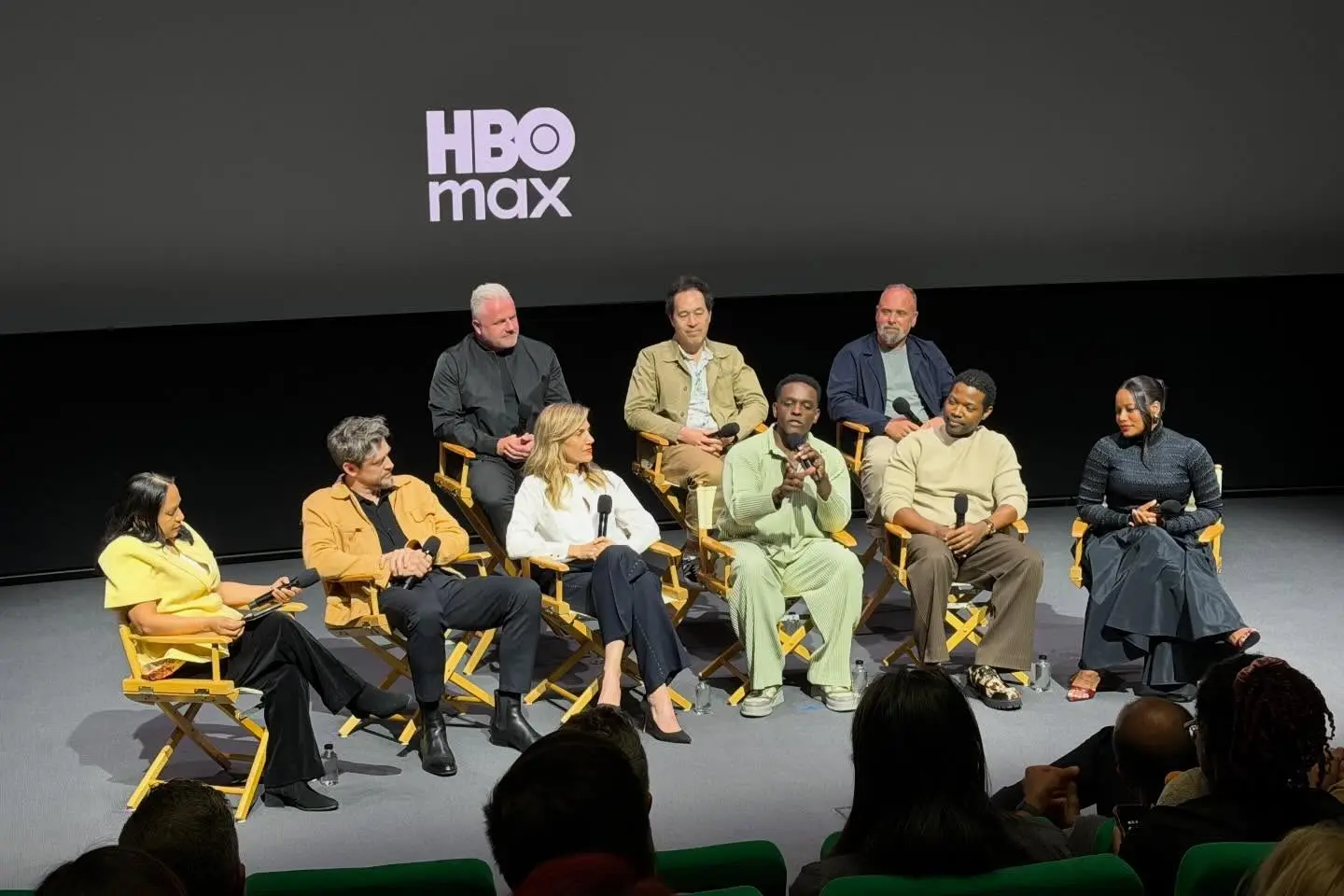
That understanding stayed with me, but it wasn’t until recently that it fully clicked into place. At a screening event for It: Welcome to Derry, I found myself in conversations with people from across the industry—working professionals who form the backbone of this business.
What stood out wasn’t any single story, but the consistency of what I heard. People spoke about fewer opportunities, longer gaps between projects, and an overall sense that the industry had not returned to its previous rhythm.
“It never really bounced back.”
Hearing that repeatedly from different individuals reinforced the idea that this wasn’t isolated frustration. It was a shared experience—and consistent with what you would expect during a Hollywood industry reset.
The Human Impact Behind the Numbers
When you connect those conversations with the research, the picture becomes clearer. The decline in production and employment isn’t just an economic trend—it’s something being lived in real time by thousands of individuals.
These are not the people who dominate headlines. They are the crew members, the artists, the technicians—the professionals whose work sustains the industry from the ground up. As the system shifts, they are the ones absorbing much of the impact.
That human layer is often missing from broader discussions, yet it is essential to understanding what this moment truly represents.
Why This Hollywood Industry Reset Feels Different
I’ve been around this industry long enough to know that slow periods aren’t new. We’ve all seen cycles where things pull back for a bit and then eventually pick up again. That’s part of the business. So at first, you want to believe this is just another one of those moments—that things will settle and we’ll get back into a rhythm.
But the more I’ve sat with it, and the more conversations I’ve had, the more this feels different.
What makes it different isn’t just that work slowed down. It’s that everything seems to be shifting at the same time. Technology isn’t starting in the background anymore—it’s beginning to affect how creative work gets made directly. At the same time, audiences aren’t consuming content the way they used to, and the business model itself doesn’t feel as stable as it once did.
When you look at all of that together, it stops feeling like a normal slowdown and starts feeling like something more foundational is being reworked. You hear about companies like Bad Robot rethinking where they operate, and it reinforces the idea that this isn’t isolated.
That’s when it really clicked for me. This doesn’t feel like the industry hitting pause.
It feels like it’s in the middle of changing into something else—and we’re still figuring out what that is.
View this post on Instagram
Seeing the Shift While It Happens
Looking back, what stands out most is not just what happened during the strikes, but the perspective they provided. For a brief moment, the industry slowed down enough to make its underlying dynamics visible.
That visibility made it possible to observe connections that are often hidden in day-to-day activity. It allowed for a clearer understanding of how different forces—labor, technology, economics, and culture—interact within the same system.
If you’re exploring how these shifts connect to broader creative trends, you may also find this perspective useful:
exploring the future of storytelling and creative work.
Final Thought: This Is Still Unfolding
The more I reflect on what I saw then and what I’m seeing now, the more it becomes clear that we are not looking at a finished story. This Hollywood industry reset is still unfolding.
The industry is not disappearing, but it is evolving in ways that challenge long-held assumptions about stability, opportunity, and growth.
The question now isn’t whether things will return to what they were.
The question is what comes next—and who is prepared to recognize it while it’s happening.